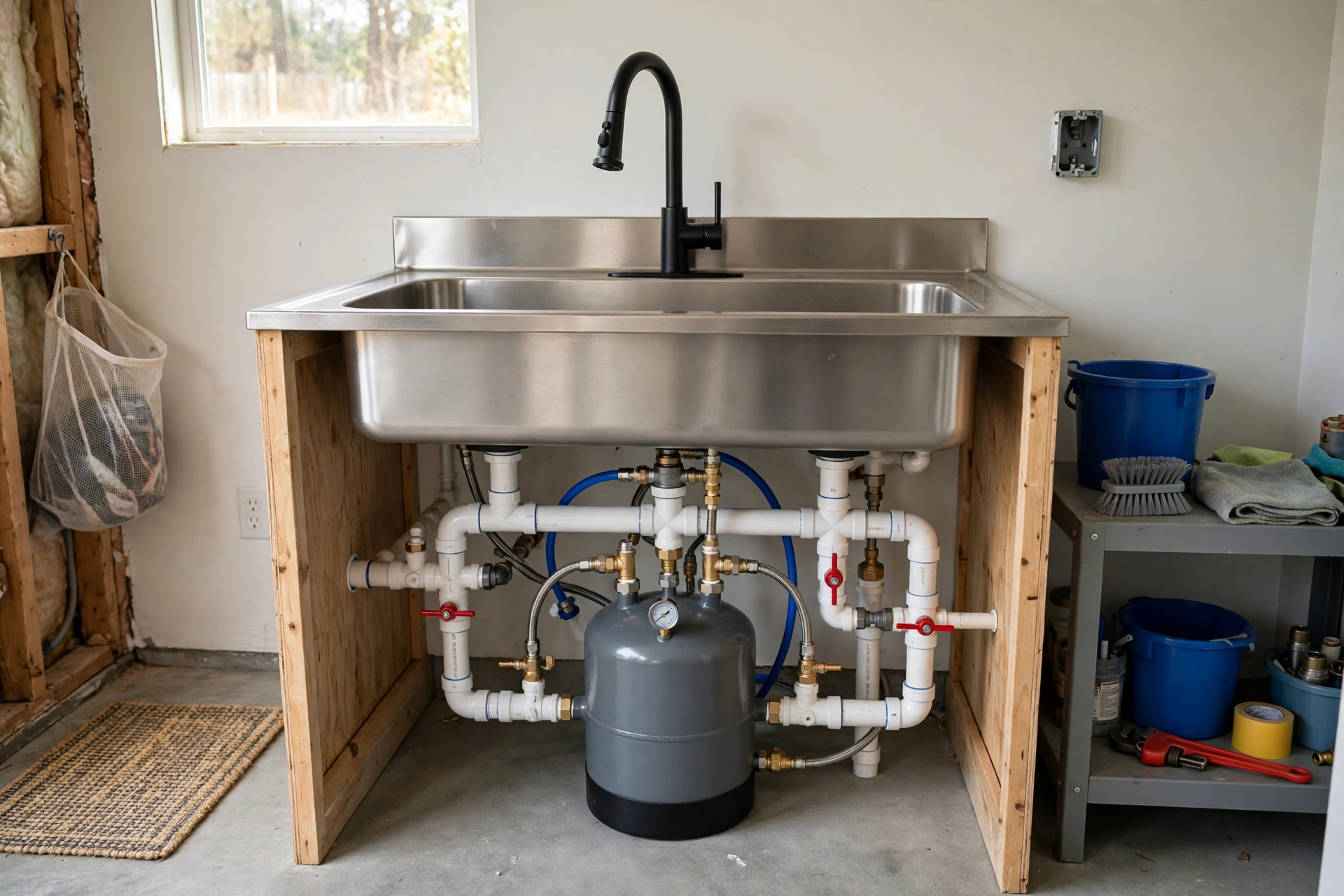
A utility sink is the hardest-working fixture in many homes, and also the most wasted source of reusable water. Every load of hand-washing, every mop bucket, every rinse of muddy boots sends lightly used water straight down the drain, even though that same water could flush a toilet or water the garden. The short answer is that a utility sink with integrated recycling captures that greywater, filters it, stores it briefly, and redirects it to a non-drinking use — and the whole system can be built around standard plumbing parts without a full renovation. This guide explains how to design the sink, the diverter, the filter, and the storage so the system is safe, legal, and genuinely useful, rather than a complicated gadget that gets bypassed within a month.
Why a Utility Sink Is the Best Greywater Source in the House
Not all greywater is equal. Water from a kitchen sink carries food particles, fats, and oils that clog filters and turn rancid in storage. Water from a shower is clean but hard to collect without major plumbing work. A utility sink sits in the sweet spot: its water is lightly soiled — mostly rinse water, hand-washing, and mop water — and the sink is usually in a garage, laundry room, or utility space where a diverter valve, a filter, and a storage tank can be fitted without disturbing the rest of the house. The sink is also used in short, predictable bursts, which makes it easy to size the collection and storage around real usage rather than guesswork.
How a Sink-to-Storage Recycling Loop Works
The loop has five stages, and each one is simple on its own. First, water leaves the utility sink through a diverter valve fitted below the trap. In the drain position, water flows to the sewer as normal. In the recycle position, it flows to a filter instead. Second, a coarse filter removes hair, grit, and lint, because anything that reaches the storage tank must be small enough not to block a pump or a toilet valve. Third, the filtered water enters a storage tank, usually 50 to 100 gallons for a residential system, fitted with an overflow back to the sewer so the tank can never flood the room. Fourth, a small pump moves the stored water on demand to its reuse point, most often a toilet cistern or a garden irrigation line. Fifth, the whole system drains back to the sewer automatically if it is not used, so stale water never sits for days.
The diverter valve is the heart of the design, and it deserves care. The best valves are the simple mechanical type that replace the sink’s drain pipe and switch between drain and recycle with a lever. They use standard fittings, need no electricity, and fail safe: if anything goes wrong, the water goes to the sewer. Avoid automatic diverter systems that rely on sensors and solenoids unless you are comfortable maintaining them, because a failed sensor can send greywater where it should not go, or send clean water to the sewer for weeks before anyone notices. Simple, visible, and manual beats clever and hidden for a system that runs every day.
- Diverter valve below the trap switches the sink between sewer and recycle with a single lever.
- Coarse filter first removes hair, grit, and lint before water reaches the tank or the pump.
- Storage tank with overflow holds 50 to 100 gallons and can never flood the room.
- Small pump on demand moves stored water to the toilet cistern or the garden only when needed.
- Automatic drain-back sends stale water to the sewer if the tank is not used within a day.
One design rule matters above all others: greywater must never be stored for longer than 24 hours. After a day, bacteria multiply rapidly in stored greywater, and the water starts to smell and becomes a health risk. The system must therefore be sized so the tank empties daily through normal use, and it must drain itself to the sewer automatically if it does not. A tank that holds a week’s worth of water is not a bigger system; it is a hazard.
Choosing the Sink, Taps, and Drain Assembly
The sink itself should be deep, wide, and tough. A standard utility sink is usually a single deep bowl, often stainless steel or heavy-duty plastic, mounted at a comfortable working height with space underneath for the diverter and filter. Stainless steel is the best choice for a recycling installation because it is easy to clean, resists staining from dirty water, and does not absorb odors. A double-bowl sink is unnecessary for recycling and only complicates the drain assembly, so a single generous bowl is the right call.
Taps matter more than they appear to. A single lever mixer with a pull-out spray is ideal, because it lets you rinse the sink itself quickly after each use and keeps the drain clear of debris. Fit a removable strainer basket in the drain outlet to catch the larger solids before they reach the diverter valve; a strainer that is emptied after every use does more for the filter’s lifespan than any amount of downstream engineering. And fit an isolation valve on the hot and cold supplies, so the sink can be serviced without shutting off water to the whole house.
- Deep single-bowl sink in stainless steel, mounted with clear space underneath for the diverter and filter.
- Lever mixer with pull-out spray for rinsing the sink and clearing debris after each use.
- Removable strainer basket in the drain outlet to catch solids before they reach the diverter.
- Isolation valves on both supplies so the sink can be serviced without shutting off the house.
If the sink is in an unheated garage or outbuilding, insulate the supply pipes and the diverter assembly, and fit a drain-down point so the system can be emptied before a hard frost. Frozen greywater in a diverter valve will crack the housing and flood the room on the first thaw, which is a miserable way to learn about winterization.
Filters, Surge Tanks, and Storage Sizing
Filtration for a utility sink system is a two-stage job. The first stage is mechanical: a washable mesh filter, usually 100 to 200 microns, that catches hair, lint, and grit. This filter sits between the diverter and the tank, in a clear housing so you can see when it needs cleaning. The second stage is the tank itself, which acts as a settling chamber: heavier particles sink to the bottom, where a drain valve lets you flush them out monthly. Biological treatment — using microorganisms to break down organic matter — is available in larger systems, but for a single utility sink it is usually unnecessary, provided the water is used within 24 hours and only for toilet flushing or garden irrigation.
Sizing the tank is a simple calculation. Estimate the sink’s daily greywater output, multiply by the number of days you want to store it, and divide by the treatment efficiency if you are filtering heavily. For a utility sink used for hand-washing, mopping, and rinsing, a family typically generates 40 to 80 litres a day, so a 50 to 100 gallon tank covers a day of storage with room for a surge — a washing machine emptying nearby, for example. Fit a surge tank near the collection point if the sink shares the system with any other source, because a sudden inflow can overwhelm a small tank and push untreated water into the overflow.
| Component | Typical specification | Why it matters |
|---|---|---|
| Mesh filter | 100–200 microns, washable | Stops hair and grit reaching the pump |
| Storage tank | 50–100 gallons, opaque | One day of storage; opaque walls stop algae |
| Surge tank | 20–30 gallons near the sink | Absorbs sudden inflows without overflow |
| Pump | Small submersible or inline | Moves water on demand to toilet or garden |
| Overflow to sewer | Full-bore, with air gap | Tank can never flood the room |
Routing Recycled Water to Toilets and the Garden
The two best uses for recycled utility sink water are toilet flushing and garden irrigation, and they have different requirements. Toilet flushing needs a pump and a small header tank, because the water must arrive at the cistern with enough pressure to fill it reliably. The simplest arrangement is a pump that tops up the cistern from the storage tank whenever the cistern level drops, with a mains water backup that takes over automatically if the storage tank is empty. Label every pipe in the recycled loop with purple or green tape, and fit a non-return valve so recycled water can never flow back into the mains supply.
- Toilet flushing needs a pump, a header tank, and a mains backup that takes over when storage is empty.
- Garden irrigation works by gravity from a raised tank, but only for ornamental planting, never vegetables.
- Label all recycled-water pipes clearly so no future plumber mistakes them for drinking water.
- Use biodegradable cleaners only at the sink, since everything poured down it reaches the garden.
Whatever the reuse point, keep the recycled loop completely separate from the drinking water supply. The two systems must never connect directly; any backup from the mains must pass through an air gap, a physical break in the pipe that water cannot flow back across. This is not a nice-to-have. It is the rule that keeps a water-saving system from becoming a contamination risk, and any competent plumber will insist on it.
Keeping Stored Greywater Safe: the 24-Hour Rule
Greywater is safe to handle and reuse when it is fresh, and it becomes a problem when it is stored. The 24-hour rule is the single most important safety principle in the whole design: no greywater should sit in the system for longer than a day. After 24 hours, bacterial counts rise sharply, the water develops a smell, and the risk of skin or stomach upset increases if anyone comes into contact with it. The system must therefore be designed to use the water or lose it, automatically, every single day.
- Size the tank for one day of use, so normal flushing or watering empties it daily.
- Fit an automatic drain-back on a timer or float switch, so stale water leaves within 24 hours.
- Clean the filter weekly and flush the tank monthly, on a fixed schedule rather than by appearance.
- Never use stored greywater on food crops, and never let children play in irrigation water.
If anyone in the household has a weakened immune system, or if the system will be used in a home with very young children, take the extra step of fitting a simple ultraviolet sterilizer on the pump outlet. It adds cost and a yearly lamp change, but it removes the last meaningful health risk from a system that is otherwise well designed.
Permits, Codes, and What Your Inspector Will Ask
Greywater rules vary widely by location, and the first step in any installation is a call to the local building control office or water authority. Some areas allow simple laundry-to-landscape systems with no permit at all; others require a full plumbing permit, a backflow prevention device, and an inspection before the system can be used. The inspector will usually ask four questions: is there an air gap between the recycled loop and the mains supply, is the storage limited to 24 hours, are the pipes labeled, and is the water used only for non-drinking purposes. If you can answer all four with a yes and show the fittings, the inspection is usually straightforward.
Utility Sink Recycling Questions: Water, Storage, and Safety
Can I recycle water from a kitchen sink in the same system?
It is better not to. Kitchen sink water carries food particles, fats, and oils that clog filters quickly and turn rancid in storage, even within 24 hours. Utility sink water is much cleaner, because it comes mostly from hand-washing, rinsing, and mopping. If you do want to include the kitchen sink, fit a separate grease trap and a finer filter, and expect to clean both far more often.
How much water can a utility sink recycling system actually save?
A typical family saves a meaningful amount, though the exact figure depends on how the sink is used. Greywater systems as a whole can cut household water consumption by 30 to 50 percent according to EPA estimates, and the utility sink alone can supply most of a toilet’s flushing water if the household flushes regularly. The biggest savings come in homes with large gardens, where the recycled water replaces mains water for irrigation during dry months.
Is recycled sink water safe for the garden?
Yes, for ornamental plants, lawns, and trees, provided the water is used within 24 hours and only biodegradable soaps and cleaners are used at the sink. Do not use greywater on vegetables, herbs, or anything eaten raw, and do not let it pool on the surface where children or pets can play in it. A drip line or subsurface irrigation is safer than a sprinkler, because it keeps the water off leaves and skin.
What happens if the storage tank is full and nobody uses the water?
The system must drain itself. A properly designed installation has an overflow to the sewer and an automatic drain-back on a timer or float switch, so the tank empties within 24 hours whether or not anyone flushes a toilet or waters the garden. If your system has no automatic drain-back, it is not finished, and the tank should not be left full.
Do I need a plumber, or can I install this myself?
A confident DIYer can fit the sink, the diverter valve, and the filter, because these use standard plumbing fittings. The pump, the connection to the toilet cistern, and the mains backup should be done or at least checked by a licensed plumber, because the air gap and the non-return valve are safety-critical and the local code requirements vary. Budget for a plumber’s half day even if you do the rest yourself.
Final Thoughts: A Utility Sink That Pays for Itself in Saved Water
A utility sink with integrated water recycling is one of the most practical water-saving projects a homeowner can take on. It uses standard parts, it fits in a space that is already wet and already plumbed, and it turns water that would have gone down the drain into water that flushes a toilet or feeds a garden. The design rules are simple: divert with a manual valve, filter before storage, store no more than a day’s worth, drain automatically if it is not used, and keep the recycled loop completely separate from the drinking water supply. Follow those rules, keep the filter clean, and the system will save water every day for years — quietly, safely, and without anyone having to think about it.

