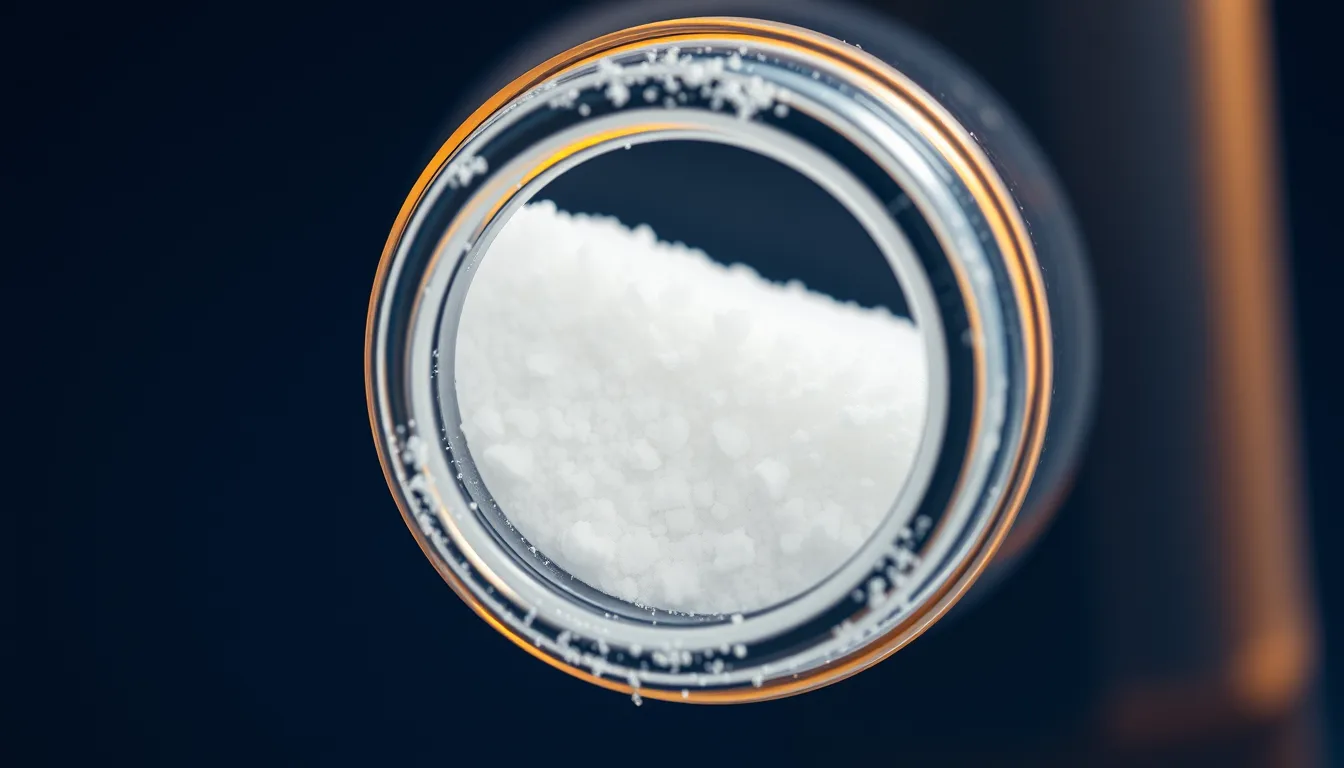
Lyophilization, or freeze-drying, is an essential post-synthesis processing methodology in peptide chemistry, structural biology, biochemistry, and preclinical pharmacology. Because polypeptide backbones are susceptible to hydrolytic cleavage, deamidation, beta-elimination, and diketopiperazine formation in aqueous media, long-term storage of synthetic peptides requires removing water while preserving secondary and tertiary structural integrity. In modern research settings, understanding the physical chemistry of the freeze-drying process is critical to obtaining stable, highly soluble, and biologically active peptide powders.
When preparing specialized compounds for in vitro assays, researchers frequently source certified KLOW-80 from Synthesis Peptides to ensure high batch consistency, optimal cake morphology, and rapid reconstitution kinetics in laboratory protocols. Characterizing the thermodynamics of the freezing, primary drying (sublimation), and secondary drying (desorption) stages allows analytical scientists to prevent collapse phenomena and maintain structural stability over extensive storage intervals across diverse experimental settings.
Thermal Transitions and Glass Transition Temperature (Tg’)
The foundation of a successful peptide lyophilization cycle lies in determining the critical formulation temperatures, notably the glass transition temperature of the maximally freeze-concentrated amorphous phase (Tg’) and the collapse temperature (Tc). If the product temperature exceeds Tc during primary drying, the structural matrix of the frozen cake softens and collapses, resulting in poor reconstitution solubility, elevated residual moisture, and accelerated chemical degradation kinetics.
Differential scanning calorimetry (DSC) and freeze-drying microscopy (FDM) are routinely utilized by process chemists to measure Tg’ and Tc prior to cycle design. Formulating peptides with suitable bulking agents or lyoprotectants—such as mannitol, trehalose, or sucrose—helps elevate the formulation’s glass transition temperature, creating an amorphous glass matrix that immobilizes the peptide molecules and inhibits conformational unfolding during sublimation under deep vacuum conditions.
Primary and Secondary Drying Dynamics
Primary drying involves the sublimation of frozen ice crystals under controlled vacuum and shelf temperature. The chamber pressure is maintained well below the vapor pressure of ice at the target product temperature, providing the thermodynamic driving force for sublimation without causing micro-collapse. Mass spectrometry and pirani gauge pressure differentials are monitored in real time to detect the exact sublimation endpoint across the entire batch.
Once all free ice has sublimed, secondary drying commences to remove bound water molecules adsorbed onto the internal surface of the peptide matrix. The shelf temperature is raised incrementally under high vacuum to desorb residual water down to optimal specifications, typically below 2% to 3% residual moisture. Achieving this low moisture threshold is crucial to prevent moisture-mediated aggregation and peptide backbone cleavage during ambient or refrigerated storage over extended periods.
Reconstitution Kinetics and Secondary Structure Preservation
Upon receipt in the laboratory, lyophilized peptide vials must be reconstituted according to strict biophysical guidelines. Reconstitution in sterile bacteriostatic water, deionized water, or specific isotonic buffers must avoid vigorous vortexing, which introduces air-liquid interfaces that promote peptide denaturation and fibrillation. Circular dichroism (CD) spectroscopy and dynamic light scattering (DLS) confirm that rehydrated peptides retain their native secondary conformations without forming sub-visible micro-aggregates.
Furthermore, evaluating the pH of the reconstituted peptide solution ensures that the compound remains within its optimal isoelectric stability window. Rapid changes in ionic strength or pH can trigger rapid peptide precipitation, confounding in vitro cellular assays and spectrophotometric measurements. Laboratory personnel should maintain consistent temperature monitoring and aliquot reconstituted samples to minimize repeated freeze-thaw cycles.
Analytical Quality Verification and Integrity Testing
Beyond physical cake appearance and solubility, every lyophilized batch must undergo rigorous analytical verification. Reversed-phase high-performance liquid chromatography (RP-HPLC) confirms chemical purity, while high-resolution mass spectrometry (HRMS) verifies intact molecular identity. Implementing comprehensive quality control protocols ensures that researchers receive biologically active, highly stable reagents that yield reproducible data across complex preclinical investigations.

