In modern corporate enterprises, distributed departments, remote workforces, and field personnel rely on operational database applications to drive daily business execution. While Microsoft Access remains an indispensable tool for inventory tracking, order management, financial calculation, and operational reporting, hosting Access files across traditional local area network drives or virtual private networks (VPNs) frequently introduces performance degradation, record locking, and database file corruption.
Adopting specialized enterprise Microsoft Access hosting provides the definitive architectural solution for organizations seeking high availability, lightning-fast remote performance, and continuous data integrity. By transitioning desktop database applications into high-performance, managed cloud environments, enterprises eliminate latency bottlenecks, protect mission-critical datasets from accidental corruption, and provide global multi-user access without undertaking risky, expensive software rewrites.
The Core Challenges of Running Access Over Wide-Area Networks
To understand why traditional file sharing environments struggle with Microsoft Access, it is important to analyze how the Jet/ACE database engine operates. When an Access database resides on a shared local network drive, database queries and computations are executed by the individual user’s workstation rather than the host server. Every time an employee filters a table, generates a report, or searches for records, large volumes of underlying data and index structures must travel across the network wire to the client machine.
Over high-speed local network cabling, this architecture functions reliably for small teams. However, when users connect over remote networks, Wi-Fi connections, or corporate VPNs, network latency drastically slows query response times from seconds into minutes. More critically, if a user experiences a momentary network disruption or VPN drop while committing a transaction, the shared Access file can become corrupted, forcing an unscheduled outage and locking out all concurrent users.
Architectural Principles of Managed Cloud Hosting for Access
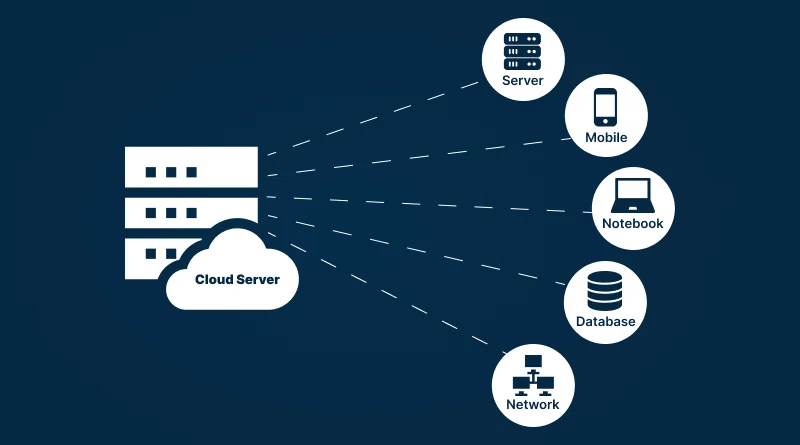
Enterprise cloud hosting overcomes these networking limitations by co-locating both the Microsoft Access frontend application and the backend database files inside the same ultra-high-speed data center network backplane. End users access the software through secure desktop and application streaming technologies, including Microsoft Remote Desktop Services (RDS), Azure Virtual Desktop (AVD), or Citrix Workspace.
This managed hosting architecture delivers decisive operational advantages:
- Sub-Millisecond Query Execution: Because the database engine and data files execute locally within the high-performance cloud server environment, complex calculations and extensive reports execute with sub-millisecond data transfer speeds. Only encrypted screen pixels, keystrokes, and mouse clicks travel across the user’s internet connection.
- Absolute Immunity to Network Drops and Corruption: If a remote employee loses internet connectivity, their cloud desktop session continues running safely on the server. Active transactions are never interrupted mid-stream, completely eliminating the root cause of database file corruption.
- Cross-Platform Universal Accessibility: Employees can securely access their complete Windows-based Microsoft Access database from macOS devices, iPads, Android tablets, Linux workstations, or Chromebooks from any location worldwide.
Enterprise-Grade Security, Redundancy, and Compliance
Managed enterprise hosting elevates legacy desktop applications into compliant, secure enterprise platforms. Hosted applications operate inside Tier-III and Tier-IV data centers equipped with robust multi-layer physical security, automated firewall defenses, intrusion detection systems, and industry compliance certifications including SOC 2, HIPAA, and ISO 27001.
Furthermore, cloud hosting environments provide centralized identity management with multi-factor authentication (MFA), automated role-based access permissions, and automated snapshot backups taken continuously throughout the day. In the event of user error or accidental record deletion, IT administrators can restore previous point-in-time snapshots in minutes, ensuring maximum business resilience.
Extending the ROI of Critical Business Applications
For organizations with significant historical investments in Microsoft Access applications, enterprise cloud hosting delivers immediate performance and reliability enhancements. It enables IT leadership to empower a distributed hybrid workforce while preserving proven business logic, eliminating infrastructure maintenance burdens, and providing a stable foundation for gradual, long-term cloud modernization.

