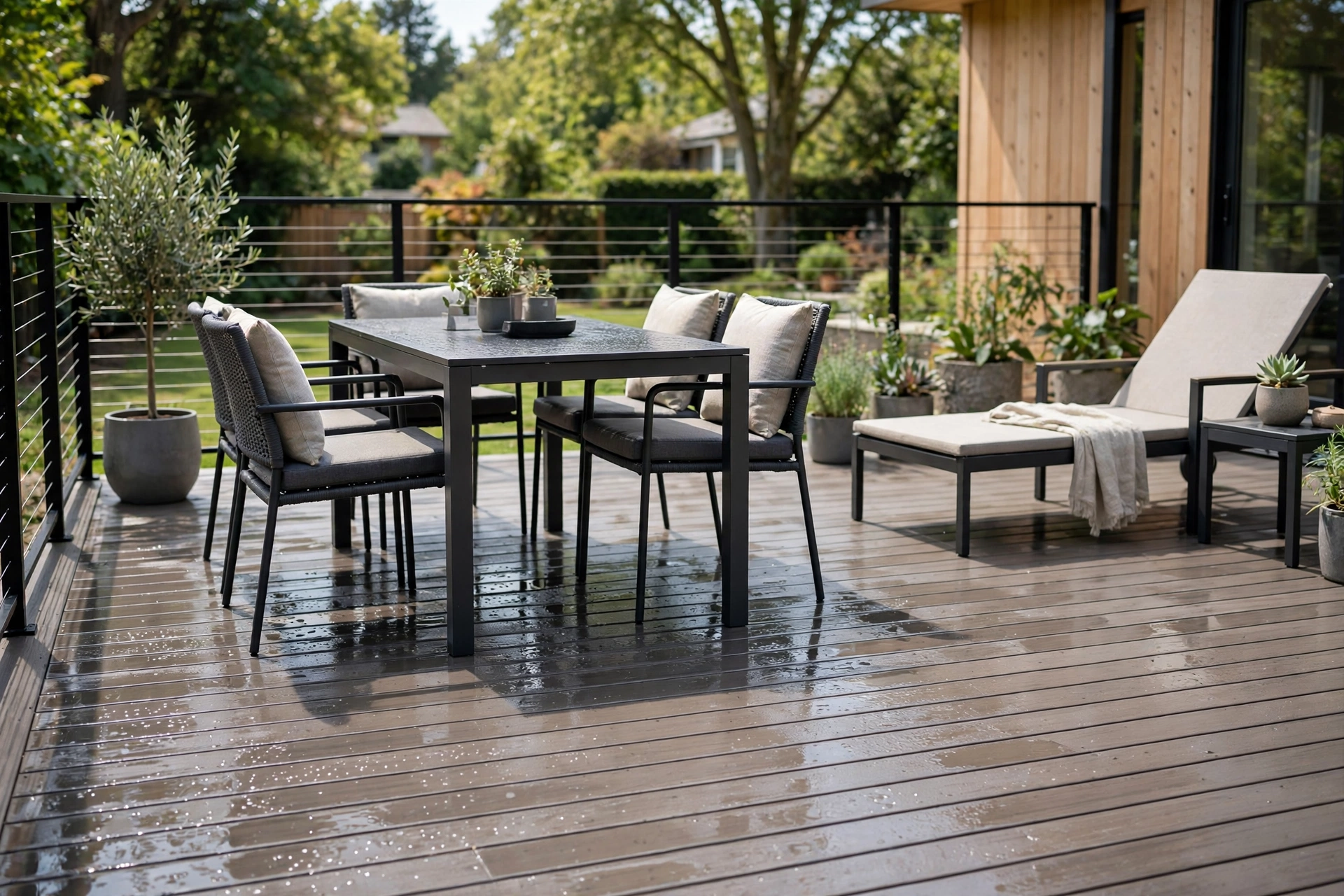
Composite decking earned its reputation honestly: it does not rot, it does not need sanding and oiling every spring, and it shrugs off the kind of weather that turns a timber deck grey in two seasons. That reputation has a downside, though. Plenty of homeowners hear low maintenance and translate it into no maintenance, and then they are surprised when the deck starts to look tired — a green film in the shady corner, a dark ring where the barbecue stood all summer, a pale patch where a planter sat for a year. None of that means the decking has failed. It means the surface has been quietly collecting everything the garden throws at it, and nobody has washed it off.
The good news is that keeping composite decking looking decent is a small job done regularly, not a big job done rarely. Ten minutes with a broom most weeks and a proper wash twice a year will keep most decks looking close to new for decades. The trick is knowing what the surface actually is, what damages it, and what most guides skip — the habits that quietly cause stains long before anyone notices them.
How Composite Decking Actually Gets Stained
To look after a composite deck you first have to understand what you are standing on. Most boards are a mix of recycled plastic and wood fibre, and the better ones carry a hard polymer cap over that core. The cap is what gives the board its stain resistance, but it is a surface finish, not armour. It will not rot, but it will collect a film of pollen, soil, leaf tannin, bird droppings, sunscreen, and barbecue grease, and if that film sits through a wet winter it turns into a stain or feeds a thin layer of mildew. The decking itself is fine; the dirt on top of it is the problem.
Uncapped boards are a different story. Without the polymer shell they are more porous, so they pick up stains faster, though they can usually be lightly sanded to lift a mark — something you should never do to a capped board, because sanding strips the cap and exposes the absorbent core underneath. That is why the first rule of composite care is also the most boring one: find out which boards you have. The brand and product line are often printed on the underside of a board or written in the original build paperwork, and the manufacturer’s care page will tell you exactly which cleaners and pressure settings are safe. Some warranties even depend on following those instructions, so a five-minute check can save an expensive argument later.
The other thing worth knowing is that most stains on composite decking are not really in the board at all. They are on it. That is genuinely good news, because a stain sitting on the surface can be washed away, while a stain soaked into timber often cannot. The whole maintenance routine that follows is built around that one fact: remove deposits early, gently, and often, and the deck will look after itself.
How Five Minutes a Week Prevents Most Stains
Ask any decking installer what actually ruins a composite deck and the answer is rarely a dramatic accident. It is the slow accumulation of ordinary things: leaves that sit for a month, a rug that never moves, a planter that leaks tannin every time it rains. A short weekly habit breaks that cycle before it starts, and it costs less time than making a cup of tea.
Sweep the deck with a soft broom, paying attention to the gaps between boards, because packed leaves and grit hold moisture against the board edges and block drainage.
Blow or rinse away pollen during heavy pollen weeks, since a yellow film left on the surface through a damp spell is one of the fastest routes to a green, slippery patch.
Move planters, pots, and outdoor rugs a few inches every couple of weeks so no single spot stays permanently shaded and damp, which is exactly where mildew starts.
Wipe up spills straight away — drinks, sauces, oils, and sunscreen — rather than leaving them to soak in, because most stain warranties only cover marks cleaned within about a week.
Check the area under the barbecue and the dining table after a weekend of cooking, and rinse it with the hose before grease has a chance to set into a dark ring.
Look at the soil or mulch beside the deck and trim back any shrubs that touch the boards, since constant contact keeps the surface damp and feeds algae growth.
None of this is glamorous, and that is precisely why it works. The homeowners with the best-looking ten-year-old decks are not the ones who bought the most expensive cleaner. They are the ones who swept the leaves off before the rain arrived. If you do nothing else in this article, do the weekly sweep — it genuinely does more than an hour of scrubbing later.
A Simple Seasonal Care Calendar for Composite Decks
Beyond the weekly sweep, a composite deck needs a deeper clean twice a year and a few seasonal jobs that match what the weather is doing. Doing the right job at the right time matters more than doing everything at once, because a deck cleaned in the wrong season just gets dirty again within a fortnight. This calendar is the one I would hand to a friend who has just moved into a house with a composite deck and no idea where to start.
| Season | Main job | Why it matters now | Time needed |
|---|---|---|---|
| Spring | Deep clean with soap and a soft brush | Clears winter grime, pollen, and biofilm before the outdoor season | About an hour |
| Summer | Weekly sweep and quick spill clean-ups | Barbecue grease and sunscreen stain fastest in warm weather | Five minutes a week |
| Autumn | Deep clean and clear the board gaps | Fallen leaves cause tannin stains and trap damp all winter | About an hour |
| Winter | Keep it clear of leaves and standing water | Damp, shaded corners grow mildew fastest in cold months | A few minutes a week |
| After storms | Rinse off mud and check drainage gaps | Storm debris packs into gaps and holds water against the frame | Fifteen minutes |
One seasonal job that most guides skip is checking what sits underneath the deck’s edges. Soil or mulch piled against the frame holds moisture against the timber below, and a deck that looks perfect on top can be quietly rotting underneath. A quick look under the edge boards each spring, and a gap of clear air between the soil and the frame, costs nothing and can add years to the structure.
Tackling the Stains Most Homeowners Actually Meet
Even a well-kept deck will meet a stain eventually, and the fix depends on what caused it. The mistake is reaching for the strongest cleaner first. Start with the mildest option — warm water and a mild soap — and only step up if the stain survives that. Working along the grain of the board with a soft-bristle brush, rather than scrubbing across it, keeps the surface looking even and avoids the faint swirl marks that show up in low sunlight.
- Grease and food stains. A manufacturer-approved composite cleaner or a mild household cleaner labelled safe for the surface, applied promptly, lifts most barbecue marks before they set.
- Leaf tannin and dark rings. These usually respond to soapy water and a soft brush; the ring under a planter is often tannin plus trapped damp, so moving the planter matters as much as the cleaning.
- Mould and mildew. Clean it off as soon as you see it with a composite cleaner labelled for mould and mildew, scrub gently, and rinse well — and then fix the shade and damp that caused it, or it will be back within weeks.
- Hard-water marks and limescale. Follow the board maker’s instructions for mineral deposits rather than guessing, because the wrong acidic cleaner can dull a capped surface permanently.
- Rust marks from furniture feet. Lift the furniture, clean the mark with a composite-safe cleaner, and put protective pads under metal feet so the same mark does not return after the next rain.
- Bird droppings and tree sap. Soften them with warm soapy water first, then lift them gently with the brush — scraping at a dried dropping with a metal tool is how scratches happen.
A word about bleach, because it comes up constantly: most manufacturers advise against it on capped boards, and for good reason. Chlorine-based cleaners can lighten the cap unevenly and leave a patchy finish that no amount of rinsing will fix. If a guide tells you to pour bleach on composite decking, that guide is written for timber, and following it is an expensive mistake.
Pressure Washing Without Wrecking the Cap
Pressure washing divides opinion, and the honest answer is that it depends on your boards. Some manufacturers allow it within strict limits; others advise against it entirely. If your care guide permits it, stay below about 1,500 PSI, use a wide fan-tip nozzle, keep the nozzle at least 30 centimetres from the surface, and keep the wand moving along the grain. A narrow jet held close will etch the cap, and the etched line will be visible every sunny afternoon for the rest of the deck’s life.
If you are unsure, skip the pressure washer altogether. A brush, a bucket, and a hose will clean a composite deck perfectly well, and they cannot damage it. The pressure washer is a shortcut, not a necessity, and the decks I see with the worst surface damage are almost always the ones somebody pressure washed too enthusiastically on a Saturday morning.
What if the deck already looks faded or patchy?
Some fading in the first months is normal as the board weathers, and it usually evens out. Patchiness that appears later is more often uneven dirt, a spill that was cleaned in one spot, or a rug that shaded one area while the rest weathered in the sun. A full deep clean, done evenly across the whole deck, is the first step before assuming the boards themselves are the problem.
Can I use a metal shovel or scraper on a composite deck in winter?
Avoid metal tools on the surface. A plastic shovel and a calcium-chloride de-icer are the safer combination, and any de-icer residue should be rinsed off once the ice has gone, because salt left sitting on the boards can leave its own marks.
Composite Decking Habits That Quietly Shorten Its Life
The most damaging habits are the quiet ones. Dragging heavy furniture across the boards leaves scratches that collect dirt. Leaving a rubber-backed mat in one place all winter traps damp underneath and breeds mildew in a perfect rectangle. Stacking wet firewood against the deck edge keeps the frame damp for months. None of these feels like damage at the time, which is why they keep happening.
The fix is mostly about lifting rather than dragging, moving rather than leaving, and giving the deck air. Put felt pads under furniture feet, choose mats you can lift and shake out, and keep anything wet or heavy from sitting in the same spot for a season. A deck that breathes stays clean far longer than a deck that is smothered, and the difference shows up within a single year.
Keeping Composite Decking Looking New: Final Thoughts
Composite decking really is low maintenance, but low is not none. The whole job comes down to three habits: sweep it weekly, wash it properly twice a year, and deal with spills and stains while they are still fresh. Everything else — the right cleaner, the pressure washer question, the seasonal calendar — is detail around those three habits.
If your deck already looks tired, do not assume it needs replacing. Give it one proper deep clean, done gently and evenly, move the planters and rugs that have been shading the same spots for years, and then judge it. Most homeowners are surprised by how much of the tiredness was just dirt. Start this weekend, while the weather is dry, and the deck will pay you back every time you step onto it this summer.
Composite Decking Care Questions, Answered
How often should I clean my composite decking?
Sweep it weekly or as needed, and give it a thorough wash at least twice a year, usually in spring and autumn. Decks under trees or in damp, shaded spots need the deep clean more often, and spills should be wiped up straight away rather than left for the next scheduled wash.
Can I pressure wash composite decking safely?
It depends on the manufacturer. If your care guide allows it, stay below about 1,500 PSI with a fan-tip nozzle held at least 30 centimetres away, and keep the wand moving along the grain. If the guide says no, or you are unsure, a soft brush and a hose will do the same job without any risk.
What cleaner is safe for composite decking?
Start with warm water and a mild soap or a biodegradable detergent, which handles routine dirt on most boards. For tougher marks, use a cleaner made for composite decking and approved by your board’s manufacturer. Avoid bleach, harsh solvents, and abrasive pads on capped boards.
Why does my composite deck get green and slippery in winter?
The green film is usually algae or mildew growing on the dirt and pollen that collect on the surface, especially in shady, damp corners. Clean it off promptly with a composite-safe cleaner, then reduce the shade and damp by moving planters, trimming nearby shrubs, and keeping the board gaps clear so water can drain.
How long should composite decking last with proper care?
Well-maintained capped composite decking commonly lasts 25 years or more. The boards themselves rarely fail first; it is usually the frame underneath or the surface finish that suffers when cleaning is neglected, which is why the simple routine in this article matters more than the brand on the box.

