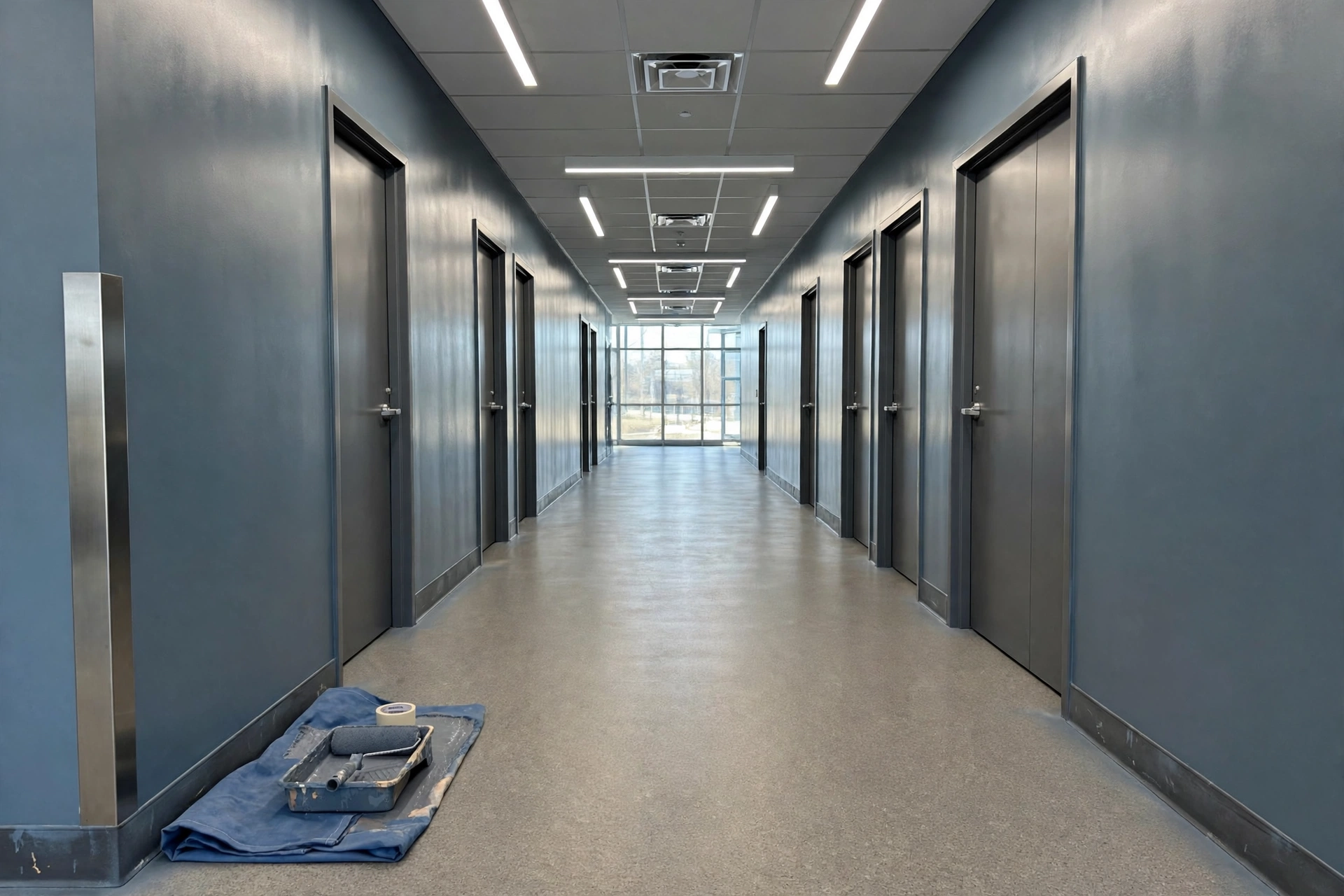
Walk through a busy family hallway at the end of a school day and the walls tell the story: backpack straps have left dark arcs at shoulder height, shoes have scuffed the skirting, and small hands have left prints beside every light switch. A hallway is not a quiet room that is admired from a sofa. It is a corridor that is brushed, bumped, and leaned on dozens of times a day, which is why the paint finish matters far more here than in a bedroom that is rarely touched.
The short answer is that a washable satin or eggshell finish on the walls, paired with a semi-gloss enamel on doors and trim, gives most family hallways the best balance of durability, cleanability, and appearance. Flat paint looks soft on day one but marks quickly and rarely survives scrubbing. High-gloss paint is tougher still, yet it shows every dent and patch in the plaster. The sections below explain how sheen works, which products suit which zone, and how preparation and colour choice protect the result.
Why Hallway Paint Fails First in a Busy Family Entryway
Hallways fail first because the damage is concentrated in narrow bands. The lower third of the wall takes kicks from shoes, vacuum cleaners, and toy wheels, while the middle band collects bag straps, coat hooks, and shoulders turning corners. Entryways add wet umbrellas, muddy paws, and parcels leaned against the wall. No single coat of ordinary paint is designed for that pattern of repeated, localised abrasion, so a finish chosen only for colour will look tired within months.
Traffic also brings cleaning, and cleaning is where many hallway paints quietly lose. A wall that cannot be wiped without going shiny in patches, a defect painters call burnishing, will look worse after it is cleaned than before. That is why washability and scrub resistance matter as much as the colour itself. A good hallway finish should accept a damp cloth and a mild detergent again and again without thinning, fading, or changing sheen in the cleaned area.
How Sheen Decides Whether Hallway Paint Survives Scuffs
Sheen describes how much light a dried paint film reflects, and it is a useful shorthand for toughness. Flat and matte finishes reflect almost no light, which hides wall imperfections beautifully, but their open, chalky surface traps dirt and resists cleaning. Eggshell adds a faint glow and a little more washability. Satin steps up again, with a soft pearl-like sheen that wipes clean far more readily. Semi-gloss and gloss form the hardest, slickest films, which is why they are the standard for trim, even though they expose every flaw underneath.
For hallway walls, the practical sweet spot is usually satin, with eggshell as the softer-looking alternative in a home without small children or pets. Washable matte products have improved and can work in a calmer hallway, but they still do not match satin for repeated scrubbing. The key point is to choose the sheen for the zone, not for the whole house: walls, lower walls, doors, and handrails can each carry a different finish, and the result will still look coherent if the colour is consistent.
Hallway Paint Finishes Compared for Family Traffic
Read the table as a trade-off rather than a ranking. A higher sheen is almost always tougher, but it is also less forgiving. That is why many painters use satin on hallway walls and reserve semi-gloss for the surfaces that are actually grabbed, kicked, and knocked: door frames, skirting boards, stair newels, and handrails. The colour can stay the same across both finishes, so the change in sheen reads as a deliberate detail rather than a mismatch.
Scuff-Resistant Paint Lines Worth Considering for Hallways and Entryways
Beyond sheen, the paint formulation matters. Scuff-resistant interior lines, such as Benjamin Moore Scuff-X and Sherwin-Williams Scuff Tuff, are made with harder resins that resist shoe marks and bag scrapes while still cleaning with soap and water. Premium washable lines such as Sherwin-Williams Emerald and Benjamin Moore Aura offer a similar benefit with a richer colour depth. These products cost more per gallon than a basic wall paint, but in a hallway that would otherwise need repainting every year or two, the saving is in labour and disruption, not just in the tin.
When shopping, look for the words washable and scrubbable on the label and check what they actually promise. Washable usually means the film survives a damp cloth and mild detergent. Scrubbable means it should withstand repeated abrasion without breaking down, which is the property a hallway really needs. If a product does not state a scrub rating, treat its durability claims with caution and test a painted sample board with a damp cloth and a shoe scuff before committing to the whole hallway.
Colour Choices That Hide Hallway Wear Without Darkening the Passage
Colour is a durability decision in a hallway, even though it is usually made for appearance alone. Very pale whites show every scuff as a grey or black mark, while very dark colours show pale chalky scuffs and dust in raking light from a front door. Mid-tone, warm neutrals with a little depth tend to be the most forgiving, because small marks blend into the tone rather than standing out against it. A colour with a warm undertone also flatters the artificial light that most hallways rely on.
Practical households often paint the lower third of a hallway wall in a slightly deeper tone, or add a painted dado rail with a tougher semi-gloss below it, so the hardest-hit band is both darker and harder. Another useful habit is to keep a small labelled pot of the exact wall colour and finish for touch-ups. A hallway will always need a small repair eventually, and a matched pot turns a weekend repaint into a ten-minute job.
Preparing a High-Traffic Hallway So the New Finish Actually Bonds
No premium paint fixes poor preparation, and hallway walls carry more grime than most rooms: furniture polish, hand oils, old scuff residue, and dust from the front door all sit on the surface and stop new paint bonding. Start by washing the walls with a mild detergent solution, then rinse and let them dry fully. Sand glossy or damaged areas lightly, fill dents and cracks with filler, and spot-prime repairs and any bare plaster before the topcoats go on.
Pay special attention to the edges of the job. Tape off trim, floors, and light switches after cleaning, and protect the floor with a drop cloth that will not slip underfoot in a narrow passage. Two thin coats almost always outlast one thick coat in a hallway, because a thick coat sags on vertical surfaces and cures unevenly. Allow the first coat to dry fully, following the tin, before the second coat, and resist the urge to touch up a tacky wall, which will pull the film and leave a patch.
Painting a Hallway and Entryway in the Right Order, Coat by Coat
Work from the top down and from the least-touched surfaces to the most-touched ones. Ceilings first, then walls, then doors and trim, so drips land on surfaces that have not yet been finished. Cut in the edges with a brush, roll the large wall areas with a sleeve suited to the wall texture, and keep a wet edge so roller marks do not dry into visible bands. In a long hallway, work in sections of one wall at a time rather than racing the full length.
- Remove hooks, switch plates, and door furniture where possible, and label the screws so refitting is painless.
- Roll in a consistent direction and reload the roller before it runs dry, which causes a patchy, thirsty-looking finish.
- Let each coat cure before rehanging coats, bags, and pictures, because a soft film marks far more easily than a cured one.
Ventilation matters in a narrow, enclosed hallway. Open the front and back doors if possible, or run a fan to move air through the passage, and keep the house ventilated until the paint has cured. Strong-smelling products should be avoided in a hallway used by children and pets, so a low-odour, water-based paint is the sensible default for most family homes.
Touch-Ups, Cleaning and Keeping Hallway Paint Looking New
A hallway maintenance routine is short but worth doing regularly. Dust the walls with a dry microfibre cloth, wipe fresh marks promptly with a damp cloth and a drop of mild detergent, and avoid abrasive pads, which cut through even a tough satin film. For stubborn scuffs, try a soft white eraser sponge on a small test area first, because it can dull the sheen if used aggressively. The goal is to remove the mark, not to polish the wall around it.
Plan a touch-up pass once or twice a year, ideally before guests arrive or before the darker winter months, when hallway light makes marks more visible. Use the stored pot of matching paint, feather the edges of the repair with a small brush, and accept that a touch-up on a satin wall may show slightly at first and settle as it cures. If a wall needs more than scattered touch-ups, repainting the full wall, corner to corner, will always look better than patching a large area.
Final Thoughts: Choosing a Hallway Finish That Still Looks Good After the School Run
The best hallway finish is the one that survives real family life without demanding constant attention. For most homes that means washable satin on the walls, semi-gloss on doors and trim, a forgiving mid-tone colour, and preparation that gives the paint something clean to grip. Spend the extra effort on washing, filling, and priming, keep a matched pot for touch-ups, and the hallway will still look intentional a year later, even after thousands of passes through it.
Hallway and Entryway Paint FAQs
What is the best paint finish for a busy family hallway?
Satin is the best all-round choice for most family hallway walls, because it balances washability with a soft look that does not expose every wall flaw. Eggshell suits a calmer hallway, while semi-gloss is better reserved for doors, trim, and skirting that take direct knocks.
Is eggshell or satin better for hallway walls with children and pets?
Satin is usually better in that situation, because it withstands repeated wiping and light scrubbing without burnishing. Eggshell can work, but it will show scuffs sooner and may need repainting more often in the busiest band of the wall.
Can I use flat paint in a hallway if I prefer how it looks?
You can, but expect more visible marks and a shorter life in a busy hallway. If the flat look matters, choose a washable matte product, accept gentler cleaning, and keep a matched pot for frequent touch-ups on the lower wall.
Should hallway trim be a different finish from the walls?
Yes, and this is standard practice. Semi-gloss or gloss enamel on doors, frames, skirting, and handrails gives those hard-hit surfaces a tougher, more wipeable film, while satin walls keep the passage from looking overly shiny.
How do I clean hallway walls without damaging the paint?
Dust first, then wipe with a damp cloth and a mild detergent, working gently and rinsing the cloth often. Avoid abrasive pads and strong solvents, test any eraser sponge in a hidden spot, and never scrub a wall that is still tacky from a recent coat.
How often should a high-traffic hallway be repainted?
With a washable satin finish and good preparation, many family hallways look good for several years with only touch-ups. Repaint the full wall when touch-ups become visible over a large area, or when the film has thinned from repeated cleaning.

