Walk past your windows on a cold morning and you can often feel the problem before you see it: a thin stream of cold air at the sill, a pane fogged from the inside, a sash that sticks every winter. Replacing windows fixes comfort, energy waste, and street appearance in a single project, but it is also easy to overspend on. Match the right frame, glass, and installation method to each opening, and spend the premium only where it pays back.
The short answer: for most homes, the affordable sweet spot is a double-pane, Low-E, argon-filled vinyl or fiberglass window with a U-factor of 0.30 or lower, installed as a pocket insert wherever the existing frame is sound, and as a full-frame replacement only where rot or water damage demands it. Spend the upgrade money on the street-facing elevation and the rooms you live in most, and judge every quote by its NFRC label rather than its sales pitch.
Why Old Windows Leak Heat Long Before the Glass Looks Bad
A window fails gradually, and the glass is usually the last thing to show it. Seals dry out, weatherstripping compresses, and frames swell and shrink with the seasons until small gaps open that you cannot see but can certainly feel. The U.S. Department of Energy notes that heat gain and heat loss through windows account for roughly 25 to 30 percent of residential heating and cooling energy use. Before pricing a single window, check every room on a windy day: hold your hand near the edges of each closed sash, look for fog trapped between the panes, and try every sash and lock. Fog between panes means the seal has failed and the insulating gas has escaped; that pane no longer insulates and cannot be wiped clean.
Reading a Window Label Without a Salesperson in the Room
Every new window carries an NFRC label. The U-factor measures how quickly heat passes through the whole assembly, frame, glass, and spacer included, on a scale from about 0.14 to 1.20. Lower is better: an old single pane rates around 0.90 to 1.10, a standard double pane around 0.35 to 0.50, and a double pane with Low-E coating and argon fill around 0.25 to 0.30. For cold climates aim for 0.25 or lower; for milder regions, 0.30 or lower is a solid, affordable target. The Solar Heat Gain Coefficient (SHGC) measures how much of the sun’s heat passes through the glass: in hot climates a low SHGC of 0.25 or less keeps cooling bills down, while in cold climates a higher SHGC of around 0.40 lets winter sun warm rooms for free.
Vinyl, Fiberglass, Wood, or Thermally Broken Aluminum: Picking the Frame That Fits Your Budget
The frame decides insulation, maintenance, and street appearance. Vinyl is the workhorse of affordable replacement: multi-chambered PVC frames trap air to slow heat transfer, they never need painting, they resist moisture and rot, and they cost the least. Fiberglass costs more but earns it in harsh climates, because it expands and contracts at nearly the same rate as glass, which keeps seals intact far longer, and it is strong enough for large contemporary openings with slim profiles. Wood insulates beautifully and suits traditional homes, but it demands regular painting or sealing; clad-wood windows solve this with a wood interior and a weather-resistant exterior, at a premium price. Aluminum gives the slimmest, most modern sightlines, but only buy thermally broken aluminum, where an insulating strip separates the inner and outer metal.
Pocket Inserts Versus Full Tear-Out: The Install Choice That Changes the Price
This is the single biggest cost lever in the project. A pocket insert, also called a retrofit window, removes only the old sash and glass and fits a complete new unit inside the existing frame. The trim stays, the wall stays closed, and a crew can finish an opening in roughly 30 to 60 minutes. Insert work typically runs 25 to 40 percent less in labor than full-frame replacement, and for a 10 to 12 window house the gap between an all-insert and an all-full-frame job is commonly several thousand dollars. A full-frame replacement removes everything down to the rough opening, and new flashing, a sill pan, frame, and trim go in. It costs more and takes two to four hours per opening, but it is the only way to inspect and repair what is behind the wall, and to change the window’s size or style. Choose inserts when the frame is square, dry, and free of rot; choose full-frame when there is soft wood at the sill, the frame is out of square, or you want a bigger opening.
Glass Packages That Earn Their Keep: Low-E, Gas Fills, and When Triple Pane Pays
Low-E coatings are microscopically thin metal layers that reflect heat while letting light through; they are the cheapest efficiency upgrade in the window and worth specifying on every unit. Argon gas between the panes insulates better than plain air and costs little extra. Double-pane Low-E with argon is the affordable standard and the right call for most climates. Triple-pane earns its premium in very cold regions, on north-facing elevations, and in noisy locations, where the extra pane also cuts sound. In hot climates, spend instead on a solar-control Low-E coating with a low SHGC rather than a third pane you do not need. A thicker glass package in a cheap frame is money wasted, and a poorly installed high-performance window can cancel years of energy savings.
Giving the Facade a Contemporary Face Without Rebuilding It
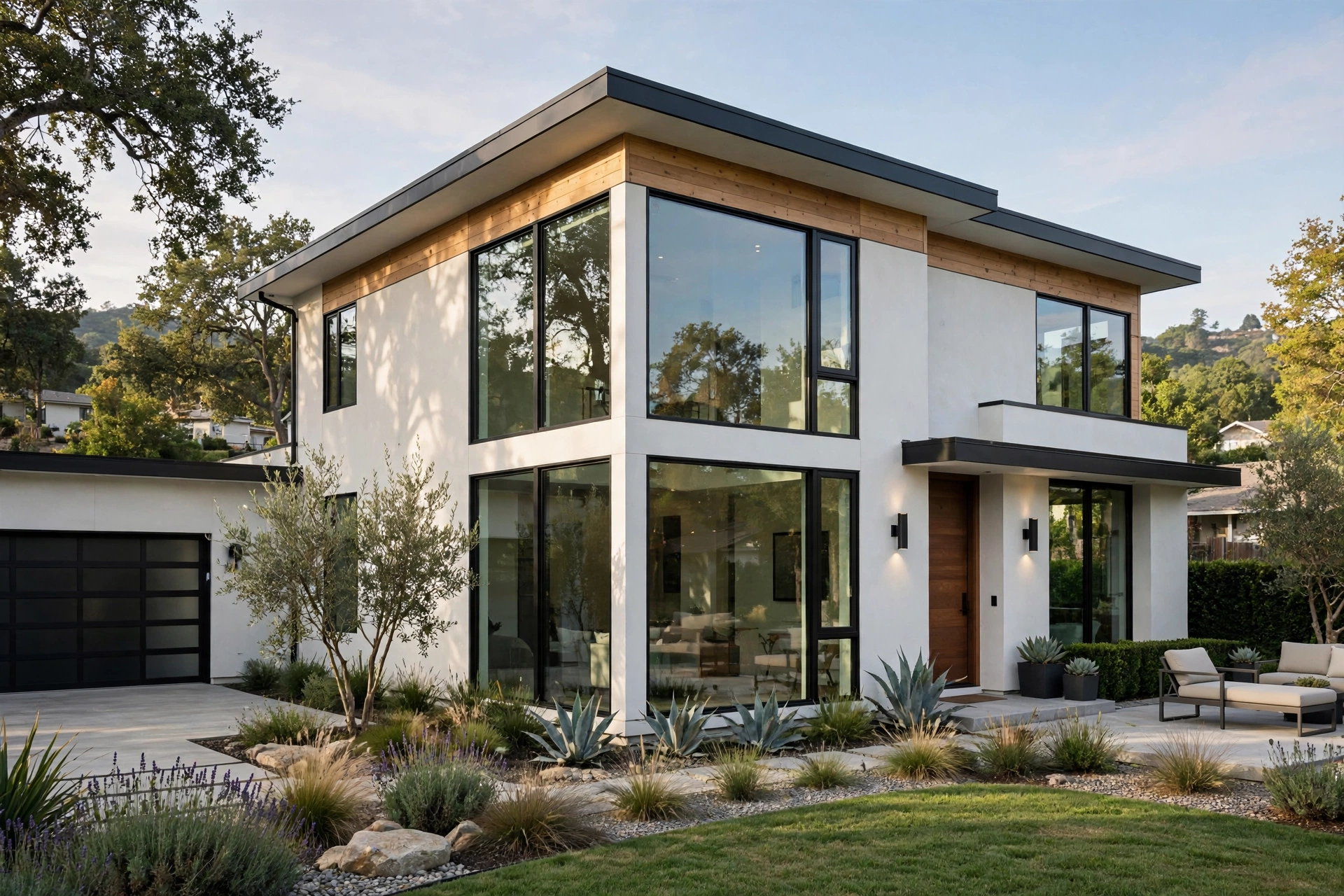
Replacement is also the cheapest facade renovation you will ever buy. Contemporary design favors clean lines, minimal ornamentation, and maximum glass, so the most effective moves cost little or nothing extra. Drop the fussy grids: plain glass or a simple perimeter grille reads instantly more modern than colonial muntins on a plain elevation. Where the budget allows, swap a double-hung for a casement, which cranks outward for an unobstructed view. Frame color does more work than any other single choice. Black or deep bronze frames outline each window like a picture frame, creating bold contrast against light siding, brick, or stucco. Custom dark colors typically add 15 to 25 percent to the base window price, so a budget trick is to put black frames on the front elevation only and standard white on the sides and rear.
A Room-by-Room Order That Keeps the Project Affordable
Very few homeowners need to replace every window at once. Start with the rooms that cost you comfort: the street-facing elevation for appearance, the bedrooms and living rooms you occupy most, and any opening with failed seals or rot. Get at least three comparable quotes: same glass package, same U-factor and SHGC targets, same install method per opening, and the same trim and disposal scope. Ask about off-season discounts, manufacturer rebates, and utility incentives before you sign.
Walk every room with a notepad: note drafts, fogged panes, sticking sashes, and rot, and rank openings worst-first.
Pick one standard unit specification for the whole house, then vary only color and style where the facade demands it.
Price the job both ways, all-insert and mixed insert plus full-frame, so the install-method gap is visible before you choose.
Book the worst rooms and the front elevation first; schedule the rest for the next quiet season.
After installation, test every sash, lock, and seal yourself before making the final payment.
Replacement Window Price Ranges to Budget Around
Prices vary with size, region, and specification, but published 2026 guides give a usable planning range. A standard vinyl insert generally runs a few hundred dollars per window installed, mid-range vinyl or fiberglass runs higher, and premium fiberglass, composite, or wood runs higher still, with a typical 10-window whole-home project landing roughly between $5,000 and $15,000 for standard work and more for large, custom, or full-frame jobs. Treat every figure here as an estimate for budgeting, not a quote: labor rates differ sharply by region. Energy savings are real but modest per window, typically on the order of a hundred or so dollars per window per year depending on climate and utility rates, so payback usually runs several years.
Replacement Slip-Ups That Quietly Undo a New Window’s Insulation
Most disappointing replacements are not bad windows; they are good windows installed carelessly. The classic failure is skimping on air sealing: foam and caulk around the frame are not cosmetic, they are the insulation, and gaps left behind the trim leak exactly like the old window did. Another is reusing a rotted frame for an insert to save money, which traps the damage in the wall and guarantees the new unit fails early. Oversized units, missing sill pans and flashing, and Low-E coatings chosen for the wrong climate all quietly waste the money just spent. Guard against these before the crew leaves: every sash should open, close, and lock smoothly, with no daylight or draft visible around the frame and continuous exterior caulk lines.
When a Window Job Belongs With a Licensed Installer, Not a Weekend DIY
Window replacement looks deceptively simple on video and punishes small errors for decades. A unit set out of level will never seal properly, flashing done wrong routes water into the wall cavity where it rots framing unseen, and second-story work from a ladder carries obvious fall risk. Lead paint in pre-1978 homes, structural changes, and bedroom escape windows all add rules a homeowner should not improvise around. Hire a licensed, insured installer for full-frame work, for any opening that needs structural alteration, for upper-story installations, and for any home with suspected lead paint or water damage in the wall. A competent do-it-yourselfer can handle a straightforward ground-floor insert in a sound frame, but follow the manufacturer’s instructions exactly, since warranty coverage often depends on it.
Window Replacement Questions Homeowners Ask Before Signing a Quote
Should I replace all my windows at once or in phases?
Phasing is sensible and often smarter. Replace the worst openings and the front elevation first, and keep one consistent product line so later batches match.
Is triple-pane glass worth the extra money?
In cold climates and noisy locations, yes: the lower U-factor and extra sound damping are noticeable. In mild or hot climates, a good double-pane Low-E unit with the right SHGC usually delivers better value.
Can I get a contemporary look without changing my window sizes?
Absolutely. Dropping grids, choosing slim casement styles, and switching to black or bronze frames modernize a facade without touching the structure. Full-frame replacement is only needed for larger openings or repairs behind the wall.
How long does window replacement take?
An insert typically takes 30 to 60 minutes per opening and a full-frame replacement two to four hours, so a 10-window insert job often finishes in a day or two.
Will new windows eliminate condensation?
Good windows reduce it, but condensation on the room-side glass is often a sign of high indoor humidity rather than a bad window. Condensation between the panes is different: that means a failed seal, and the unit needs replacing.
Do replacement windows really cut energy bills?
Yes, but modestly and gradually. The U.S. Department of Energy attributes roughly a quarter to a third of heating and cooling energy use to windows, so expect comfort gains immediately and bill savings that accumulate over several years.
A Warmer, Sharper-Looking Home Starts With the Worst Window First
Affordable window replacement is not a hunt for the cheapest quote; it is a sequence of good decisions. Diagnose each opening honestly, specify one solid glass package and a frame material that suits your climate and maintenance appetite, use pocket inserts wherever the frame earns it, and spend the design money where the street and your daily life actually see it. Done in that order, rooms hold their temperature, the facade looks a decade newer, and the bill stays within budget. Start with the worst window in the house and get three comparable quotes with NFRC numbers in writing.

