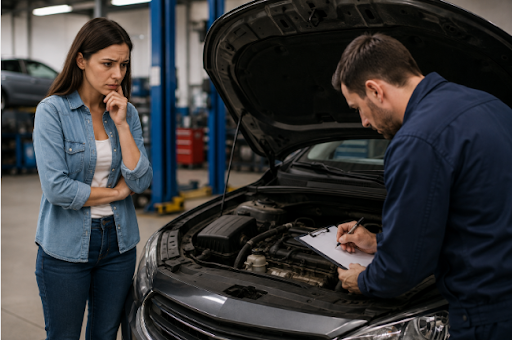
Repeated vehicle defects can create safety concerns and ongoing expenses, but the right legal support can help you pursue a refund, replacement, or other relief.
A vehicle does not become a lemon simply because it needs one repair. The real question behind how do you know if your car is a lemon is whether a warranty-covered defect keeps returning, resists reasonable repair efforts, and meaningfully affects the vehicle’s safety, use, or value. When repeated dealership visits disrupt work, family responsibilities, and transportation, the repair history may tell a larger legal story.
When Repairs Become a Pattern
At first, you may not realize that something is wrong with your car
Your car may stall, lose power, overheat, shake, display recurring warning lights, suffer electrical failures, or develop braking and steering problems. A technician may replace parts, clear diagnostic codes, or report that the issue cannot be duplicated, only for the same symptoms to return days later.
One unsuccessful repair does not automatically establish a claim. What matters is the overall pattern: the nature of the defect, how often it has been presented for warranty service, whether the same concern continues, and how long the vehicle has been unavailable. Safety-related failures deserve immediate attention. You should avoid driving a vehicle that may place you, your passengers, or other road users at risk.
California’s Legal Benchmark
California’s Song-Beverly Consumer Warranty Act may require a manufacturer to repurchase or replace a qualifying vehicle when it cannot conform the vehicle to its warranty after a reasonable number of repair attempts. The defect must substantially impair use, value, or safety and must not result from unauthorized or unreasonable use.
The protection generally covers new vehicles purchased or leased under the manufacturer’s warranty and can also cover certain used vehicles sold with a manufacturer’s new-car warranty. Active-duty service members may receive additional California protection even when a covered vehicle was purchased or registered elsewhere.
California also provides a rebuttable presumption that can help some consumers. It may apply when the problem first arises within 18 months or 18,000 miles and the manufacturer has received the required opportunity to repair it. Common guideposts include four attempts for the same unresolved problem, two attempts for a defect capable of causing death or serious injury, or more than 30 total days out of service. These figures are not universal requirements. A valid claim may exist outside them, depending on the facts.
Build a Record That Speaks Clearly
Repair documentation often determines whether a frustrating experience can be presented as a persuasive claim. Keep every repair order, invoice, appointment confirmation, towing receipt, rental agreement, and message exchanged with the dealership or manufacturer. Check that each repair order accurately describes all the symptoms you reported rather than using vague language such as “customer concern.”
California repair businesses must document warranty work on an invoice, including repairs performed at no charge. You should also track the date delivered, date returned, mileage, days out of service, and what happened after each repair. Photos, videos, and a defect timeline can preserve problems that disappear before a technician sees them.
Look Beyond the Repair Counter
A dealership’s explanation is not the final word. You can check whether the repair facility is registered and file a complaint with the California Bureau of Automotive Repair when repair practices are disputed. San Diego County’s consumer resources also direct residents with motor-vehicle purchase concerns to local DMV investigations offices and provide a consumer referral line. These services do not replace legal advice, but they can help identify the agency and preserve accountability.
Before buying a used vehicle, review its title history, warranty status, recall information, and Smog Check history. California requires manufacturer buybacks to carry a branded title, and sellers must provide specific disclosures concerning known warranty defects. A missing disclosure may create a separate consumer issue rather than erasing the vehicle’s history.
Defective Cars Affect More Than Convenience
A defect can create environmental costs through towing, replacement parts, leaking fluids, wasted materials, and inefficient operation. Emissions-related failures may also increase pollution or prevent a vehicle from passing California’s Smog Check program. The Bureau of Automotive Repair offers eligible consumers repair or vehicle-retirement assistance and access to Smog Check Referees. Fixing serious problems with your car can help prevent further expenses while keeping the roads safer and reducing unnecessary pollution.
Tailored Advocacy Can Restore Control
A lemon law lawyer can look at what has happened with your car, including the repairs, warranty, mileage, expenses, and conversations with the dealer, before deciding how to approach the manufacturer.
Depending on the case, a positive outcome may include repurchase, replacement, loan payoff, or recovery of qualifying expenses. The broader goal extends beyond repair appointments; it is to help you move forward confidently without carrying the burden of a vehicle that never became reliable.
The Barry Law Firm focuses exclusively on California lemon law matters and describes its approach as aggressive consumer advocacy supported by attentive service. A consultation can help clarify whether your facts support a claim, organize the evidence, and determine a practical route toward resolution. The firm states that it handles cases without billing clients and seeks to make manufacturers answer for defective vehicles, giving you a stronger opportunity to replace uncertainty with a safe and workable outcome.
Frequently Asked Questions
How many repair attempts are needed before a car may qualify as a lemon?
There is no single number that applies to every case. California generally looks at whether the manufacturer had a reasonable opportunity to repair a warranty-covered defect. The seriousness of the problem, the number of repair visits, and the total time the vehicle was unavailable may all matter.
Does a car have to break down completely to be considered a lemon?
No. A vehicle may still qualify when a recurring defect substantially affects its use, value, or safety. Problems involving the engine, transmission, brakes, steering, electronics, or repeated warning lights may be relevant even when the car still runs.
Can a used vehicle qualify under California lemon law?
Some used vehicles may qualify, particularly when they are still covered by the manufacturer’s original warranty. Eligibility depends on the warranty, purchase details, repair history, and the circumstances surrounding the sale.
What records should you keep for a possible lemon law claim?
Keep repair orders, invoices, dealership messages, towing receipts, rental-car records, warranty documents, and videos or photos of the defect. You should also note the mileage, repair dates, symptoms reported, and the number of days the vehicle remained at the dealership.
What happens when the dealership says it cannot find the problem?
Continue reporting the issue whenever it returns and make sure each visit is documented. Videos, warning-light photos, written notes, and detailed descriptions can help show that the defect is recurring even when the technician cannot reproduce it during an inspection.
What relief may be available in a successful lemon law case?
Depending on the facts, the manufacturer may be required to repurchase or replace the vehicle. A resolution may also address the remaining loan balance and certain eligible expenses connected to the defective car.

