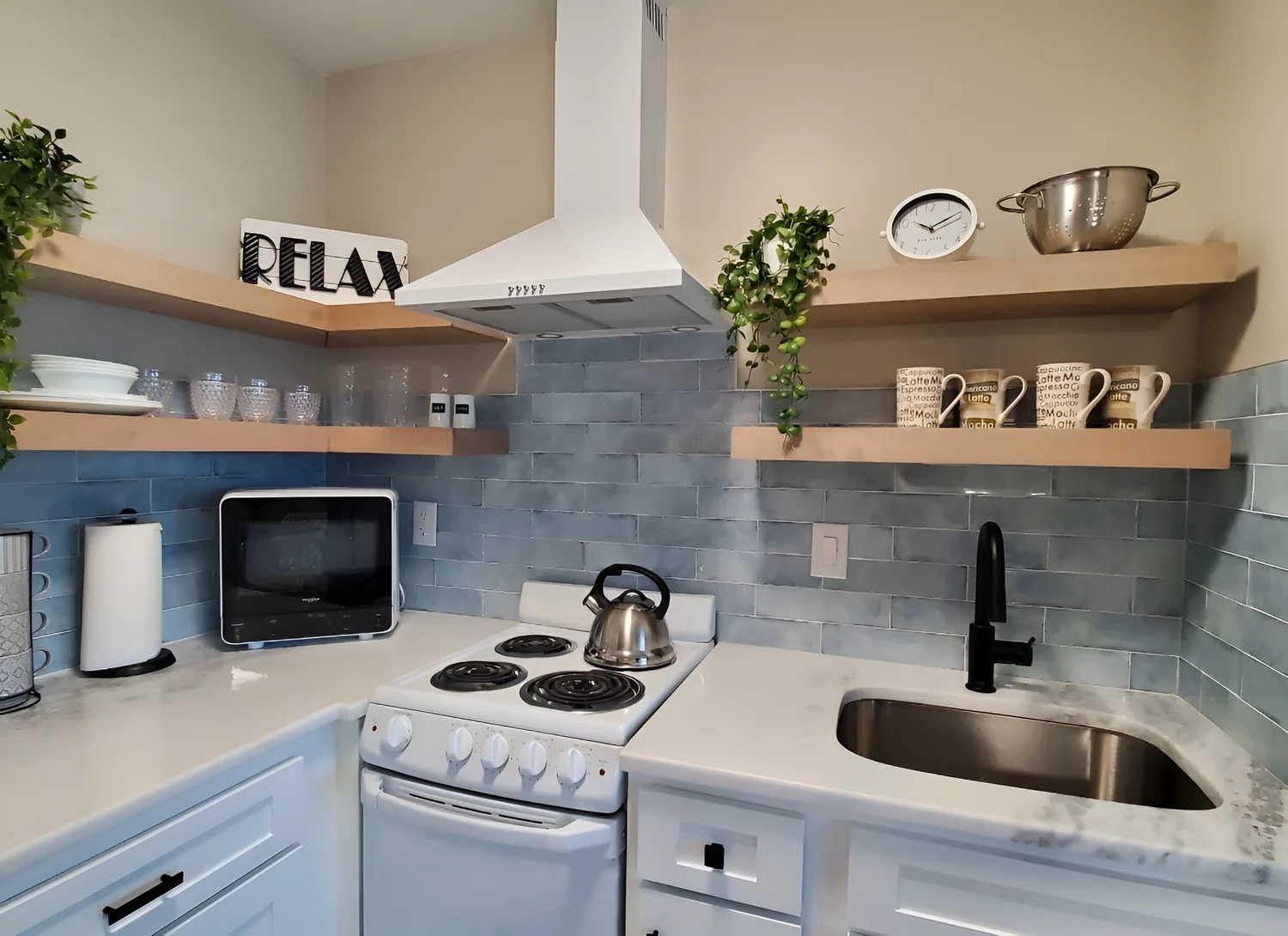
Making the most of every square foot is one of the biggest challenges in any home, especially in apartments, small houses, and compact rooms. Corners often become overlooked spaces where clutter collects or valuable storage potential goes unused. Two of the most popular solutions for these awkward areas are corner floating shelves and corner cabinets. Both are designed to maximize unused corners, but they serve different purposes and offer unique advantages.
So, which one actually saves more space?
The answer depends on how you plan to use the area. Floating shelves create an open, airy feel while providing accessible storage, whereas corner cabinets offer hidden storage with greater capacity. Understanding their strengths and limitations will help you choose the right option for your home.
What Are Corner Floating Shelves?
Corner floating shelves are wall-mounted shelves designed to fit neatly into a room’s corner. Unlike traditional shelving units, they have concealed brackets or supports, giving the appearance that they “float” against the wall.
These shelves can be installed in almost any room, including:
- Living rooms
- Bedrooms
- Kitchens
- Bathrooms
- Home offices
- Hallways
Because they don’t touch the floor, they leave the surrounding area open and visually uncluttered.
What Are Corner Cabinets?
Corner cabinets are enclosed storage units specifically built for corner spaces. They may be floor-standing or wall-mounted and usually include doors, shelves, or drawers to hide stored items.
Corner cabinets are commonly found in:
- Kitchens
- Bathrooms
- Dining rooms
- Laundry rooms
- Living rooms
Unlike floating shelves, cabinets provide concealed storage that keeps everyday items out of sight.
Which Option Saves More Space?
When people ask which saves more space, there are actually two different questions:
- Which occupies less physical space?
- Which provides more usable storage?
The answer changes depending on which question you’re asking.
Physical Space Winner: Corner Floating Shelves
Floating shelves require almost no floor space because they’re mounted directly on the wall.
This creates several advantages:
- Rooms appear larger.
- Floors remain completely open.
- Cleaning underneath is easier.
- Furniture placement becomes more flexible.
- Small rooms feel less crowded.
For homes where visual openness is important, floating shelves are usually the better choice.
Storage Capacity Winner: Corner Cabinets
If your goal is storing as many items as possible, corner cabinets generally outperform floating shelves.
They offer:
- Multiple enclosed shelves
- Greater depth
- Higher weight capacity
- Hidden storage
- Better organization
A single cabinet can often hold several times more than two or three floating shelves.
Pros of Corner Floating Shelves
Open and Modern Appearance
Floating shelves create a clean, minimalist look that works well in modern, Scandinavian, farmhouse, and contemporary interiors.
Excellent for Small Rooms
Because they don’t occupy floor space, they’re ideal for compact apartments and smaller homes.
Easy to Install
Many floating shelf kits include mounting hardware and can be installed with basic tools.
Affordable
Floating shelves are generally less expensive than cabinets.
Decorative Display
They’re perfect for showcasing:
- Plants
- Picture frames
- Books
- Candles
- Collectibles
- Small decorative items
Cons of Corner Floating Shelves
Although attractive, floating shelves have some drawbacks.
Limited Storage
They aren’t suitable for storing large or bulky household items.
Visible Clutter
Everything placed on open shelves remains visible. If they’re overcrowded, the room can quickly look messy.
Lower Weight Capacity
Heavy appliances, large storage boxes, or oversized decorations may exceed the shelf’s weight limit.
Frequent Dusting
Open shelving requires more regular cleaning than enclosed cabinets.
Pros of Corner Cabinets
More Storage
Corner cabinets make better use of vertical space and interior depth.
Hidden Organization
Doors conceal clutter, making rooms appear cleaner and more organized.
Better for Everyday Items
They’re ideal for storing:
- Cleaning supplies
- Pantry goods
- Kitchen appliances
- Towels
- Office supplies
- Children’s toys
Protects Belongings
Cabinets shield stored items from dust, sunlight, and accidental damage.
Cons of Corner Cabinets
Occupy More Visual Space
Even compact cabinets create a heavier appearance than floating shelves.
Usually More Expensive
Cabinets typically cost more due to additional materials, doors, hinges, and hardware.
Installation Can Be More Difficult
Wall-mounted cabinets require secure anchoring, while floor cabinets may need assembly.
Less Flexible
Once installed, cabinets are harder to relocate than floating shelves.
Best Rooms for Corner Floating Shelves
Living Room
Display artwork, books, family photos, and decorative accents without making the room feel crowded.
Bedroom
Store alarm clocks, small plants, candles, or framed pictures in unused corners.
Bathroom
Floating shelves provide convenient storage for toiletries, folded towels, and decorative baskets.
Home Office
Keep books, office supplies, or awards organized while preserving desk space.
Best Rooms for Corner Cabinets
Kitchen
Store cookware, pantry items, dishes, or small appliances that would otherwise occupy valuable counter space.
Bathroom
Hide toiletries, cleaning products, extra toilet paper, and towels behind closed doors.
Laundry Room
Store detergents, cleaning supplies, and household essentials neatly.
Dining Room
Corner cabinets work well for dishes, serving trays, glassware, and seasonal decorations.
Which Is Better for Small Homes?
If your home feels cramped, floating shelves usually create a more spacious appearance.
Their open design allows light to travel throughout the room while leaving the floor visible, making spaces feel larger than they actually are.
However, if storage is your biggest concern, corner cabinets provide significantly more usable space while helping reduce visible clutter.
Many homeowners successfully combine both options throughout the house.
Can You Use Both Together?
Absolutely.
Many interior designers recommend combining floating shelves with cabinets for maximum functionality.
For example:
- Install a corner cabinet on the floor.
- Add floating shelves above it.
- Use the cabinet for hidden storage.
- Display decorative items on the shelves.
This approach balances organization with style.
Factors to Consider Before Choosing
Before making a decision, ask yourself these questions:
- Do I need decorative display or hidden storage?
- How much weight will the shelves or cabinet need to support?
- Is floor space limited?
- Will the items be used daily?
- Do I want an open or minimalist appearance?
- What’s my budget?
Answering these questions often makes the decision much easier.
Maintenance Comparison
Floating Shelves
- Dust regularly.
- Avoid overloading.
- Check mounting brackets periodically.
- Clean decorative items frequently.
Corner Cabinets
- Wipe doors and shelves.
- Tighten hinges when needed.
- Keep tracks clean on sliding models.
- Avoid excessive moisture in bathrooms.
Both options require minimal maintenance when properly installed.
Frequently Asked Questions
Are floating shelves strong enough?
Yes, when mounted correctly into wall studs or using suitable wall anchors. Always follow the manufacturer’s recommended weight limits.
Do corner cabinets waste space?
Modern corner cabinets are designed to maximize awkward areas. Many include rotating shelves or pull-out storage systems that improve accessibility.
Which is cheaper?
Floating shelves are generally more affordable than corner cabinets because they use fewer materials and require simpler installation.
Which increases home value?
Neither option alone significantly increases property value, but well-designed storage solutions can improve a home’s functionality and appeal to potential buyers.
Which is better for renters?
Floating shelves that require drilling may not be suitable for every rental. Freestanding corner cabinets are often easier to move when relocating, while removable shelving solutions may also be an option depending on lease rules.
Final Thoughts
Both corner floating shelves and corner cabinets help transform unused corners into functional storage areas, but they solve different problems. If your goal is to make a room feel larger, preserve floor space, and display decorative items, corner floating shelves are the better choice. Their open design creates a light, modern look that’s especially effective in smaller rooms.
On the other hand, if you need to store more items and keep everyday clutter hidden, corner cabinets offer superior storage capacity and organization. They make better use of vertical space and are ideal for kitchens, bathrooms, laundry rooms, and other areas where practical storage is a priority.
For many homes, the best solution isn’t choosing one over the other. Combining floating shelves for display with a corner cabinet for concealed storage gives you the benefits of both—an organized space that feels open while still providing plenty of room for the items you use every day.

