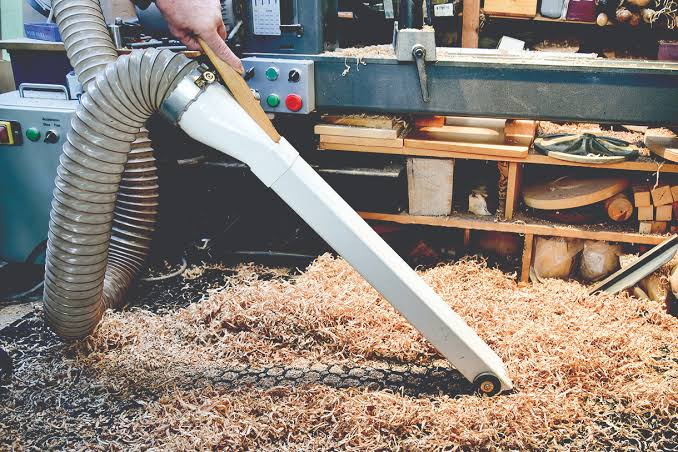
A home workshop should feel satisfying, not leave you coughing, wiping a fine grey film off every shelf, and tracking dust into the house. Yet that is exactly what happens when cutting, sanding, and routing are done without extraction. A table saw throws fine particles into the air in seconds, an orbital sander creates dust so light it stays airborne for hours, and a planer produces chips that quickly overwhelm a small vacuum. Good extraction captures most material at the tool, keeps air safer to breathe, reduces cleanup, and helps tools cut better because blades and abrasives do not clog. You do not need an industrial system to see a major improvement. With a collector or shop vacuum, sensible hose layout, and decent filtration, even a single-car garage can stay noticeably cleaner and healthier.
Why Workshop Dust Is Dangerous
Workshop dust is not just a nuisance. The finest particles, especially those under 10 microns and the smallest under 2.5 microns, can bypass your nose and throat and settle deep in your lungs. Repeated exposure is linked to chronic coughing, worsening asthma, bronchitis, and reduced lung function. Some materials add extra risk. MDF releases fine fibres and resin dust, treated timber can contain chemicals, and species such as western red cedar and iroko are known sensitisers that can trigger allergies.
Dust also creates practical hazards around the shop:
- Reduced visibility and slippery floors from settled fine dust and chips
- Higher fire and, in enclosed spaces, dust build-up on heaters and motors
- Dull blades, clogged sandpaper, and poor finishes from dust resettling on wet paint or varnish
- Dust migrating into the house and HVAC filters
A fitted respirator is essential for sanding, but masks should be your last line of defence. Capturing dust at the source prevents most of it from reaching the air you breathe.
Dust Collector Types and Sizes
A dedicated dust collector uses a large impeller to move a high volume of air at low pressure. That high airflow, measured in CFM, is what big stationary tools need. Chips are pulled through a wide hose, heavy material drops into a bag or drum, and fine dust is caught by a filter bag or cartridge.
Single-Stage Collectors
These are the most common choice for home shops. Everything passes through the impeller into a collection bag. A 1 horsepower unit rated around 650 CFM suits one tool at a time in a small garage. A 1.5 to 2 horsepower model rated 1,100 to 1,550 CFM is the sweet spot for most homeowners, handling a table saw, jointer, or planer when runs are short. Prices range from $250 to $650. They are simple, but bags can be messy and fine filtration varies.
Two-Stage and Cyclone Collectors
A two-stage system adds a cyclone before the impeller. Air spins in a cone, heavy chips fall into a drum, and only fine dust reaches the filter. Suction stays steadier, the impeller is protected, and emptying is cleaner. Short-cone cyclones start around $700, while full 2 to 3 horsepower cyclones cost $1,200 to $2,500. If you use a planer or jointer often, the upgrade is worth it.
Size your system for one tool at a time. As a guide, a table saw needs about 350 CFM at the tool, a 13-inch planer 400 to 550 CFM, a jointer 350 to 450 CFM, and a bandsaw 300 to 400 CFM. Manufacturer ratings are optimistic, so buy one size larger than you think you need.
Shop Vacuums and Separators
A shop vacuum moves less air, often 100 to 180 CFM, but at much higher suction. That makes it ideal for routers, sanders, mitre saws, and cleanup, where the port is small. A good 12 to 16 gallon shop vacuum costs $100 to $200, while a quieter dust extractor with automatic tool activation costs $300 to $600.
The smartest low-cost upgrade is a separator lid or mini cyclone on a bucket, costing $30 to $80 for a lid or $180 to $250 for a premium kit. Place it between tool and vacuum:
- About 90 to 95 percent of chips and dust drop into the bucket before reaching the vacuum
- Vacuum filters and bags last far longer and suction stays consistent
- Emptying a 5-gallon bucket is faster and cheaper than replacing vacuum bags
For many small workshops, a shop vacuum plus separator is the best first system. It handles handheld tools superbly and can later become your dedicated small-tool station when you add a larger collector.
Ducting and Hose Layout
Layout matters as much as the machine. Air loses power with every extra foot of hose, sharp bend, and leak. Keep runs short, straight, and smooth, and place the collector near your biggest dust producers, usually the table saw and planer.
Flexible hose is convenient but its ribbed interior creates far more resistance than smooth pipe. Use rigid duct for main runs and flexible hose only for the final 3 to 6 feet. For a single-stage collector, 5-inch or 6-inch main duct with 4-inch drops works well. Metal duct is most durable and avoids static concerns, though PVC and plastic systems cost less.
- Use two gentle 45-degree elbows instead of one sharp 90-degree bend
- Fit a blast gate at each tool and close gates on machines not in use
- Seal joints with foil tape, not screws that snag chips
- Support long runs so hoses do not sag
A short central trunk with branches at shallow angles will always outperform a tangled, oversized network.
Capturing Dust at the Tool
Even a powerful collector fails if dust never enters the port. Capture at the tool is where the biggest gains are made, and small adjustments often beat a bigger motor.
Stationary Tools
On a table saw, use both the blade guard extraction if fitted and the cabinet port underneath. An open contractor saw benefits from a plywood box enclosing the underside. For a mitre saw, build a shallow hood behind the blade connected to a 4-inch port; this captures dust that normally sprays across the bench. Bandsaws work best with a port just below the table.
Handheld and Bench Tools
Connect sanders to a vacuum with the correct adapter and use abrasives with holes matching the pad so air flows through. A router table needs extraction at the fence and ideally below the table. For handheld routers and track saws, a close-fitting shroud and a vacuum on its highest setting make a dramatic difference.
Filtration and Air Quality
Collecting chips is easy; catching fine dust is the real test. Standard cloth bags on budget collectors may only filter to 30 microns, blowing the most harmful dust back into the room. Look for cartridge filters rated to 1 or 2 microns, or bags rated to at least 5 microns, and expect to pay $100 to $250 for a good upgrade. Clean the filter regularly, and never blow it clean inside the shop.
Add a ceiling-mounted ambient air cleaner as a second layer. These units, priced $180 to $400, circulate room air through filters and clear the haze left after sanding. A 300 square foot shop benefits from a unit rated 300 to 500 CFM. Run it during work and for 30 to 60 minutes afterwards.
- Wear a fitted P2, N95, or respirator with replaceable filters for sanding and MDF work
- Open a door or window slightly when possible to encourage fresh air exchange
- Vacuum floors instead of sweeping, which re-launches dust
- Change or clean filters on schedule; a clogged filter cuts airflow across the whole system
If family members have allergies, keep the workshop door closed and add a door sweep.
A Practical Setup Plan by Budget
Starter Setup: Under $250
Start with a 12 to 14 gallon shop vacuum ($120), a separator lid and bucket ($50), a hose and adapter set ($40), and fine-filter bags ($20). Connect it to your sander, router, and mitre saw, and pair it with a respirator. This captures most dust from small tools and transforms cleanup.
Mid-Range Setup: $600 to $1,100
Add a 1.5 horsepower collector with a 1-micron canister ($550 to $750), short 5-inch duct with two or three blast gates ($120), and keep your vacuum for handheld tools. Add an entry-level ambient air cleaner if budget allows. This popular level covers almost every home workshop task well.
Advanced Setup: $1,500 to $2,800
Choose a 2 to 3 horsepower cyclone ($1,400 to $2,200), rigid metal ducting to each stationary tool ($300 to $450), a dedicated extractor for sanders ($350), and a ceiling air cleaner ($250). Suction stays strong and air quality is consistently good, even during planing and long sanding sessions.
Final Thoughts
Dust extraction is not just about keeping the workshop tidy. It is about protecting your lungs, getting cleaner cuts and finishes, and making the shop pleasanter to use. Start where dust is worst, usually sanding and sawing, capture as close to the blade or abrasive as you can, and keep hoses short and sealed. A shop vacuum with a separator will impress you for very little money, and a properly filtered collector takes stationary tools to another level. Build in stages, test with your dirtiest job, and improve the weakest link first. Cleaner air is an upgrade you will notice on every project.
Frequently Asked Questions
Do I need a dust collector if I already have a shop vacuum?
For handheld tools, a shop vacuum is often better because of its high suction through small ports. For a table saw, planer, or jointer, a collector’s higher airflow captures far more. Most well-equipped shops use both.
What size dust collector is best for a one-car garage workshop?
A 1.5 horsepower collector or compact cyclone rated around 1,100 CFM is ideal for most garages. It handles one stationary tool at a time, fits in a corner, and usually runs on a standard circuit. Check your supply before choosing a 3 horsepower model.
How often should I empty bags and clean filters?
Empty bags or drums when two-thirds full, because suction drops sharply as they fill. Clean canister filters weekly during heavy use, and replace vacuum bags and fine filters when airflow falls or as the manufacturer advises.
Can I use PVC pipe for workshop ducting?
Many homeowners do; it is cheap and smooth inside. The concern is static causing shocks. Running a grounded copper wire inside or outside reduces this. Metal duct avoids the issue and is preferred for permanent systems.
Is an ambient air cleaner worth buying if I have good extraction?
Yes. No port captures 100 percent of fine dust, especially from sanding and mitre saws. An ambient cleaner removes what escapes during and after work, complements source capture, and noticeably reduces settled dust.

