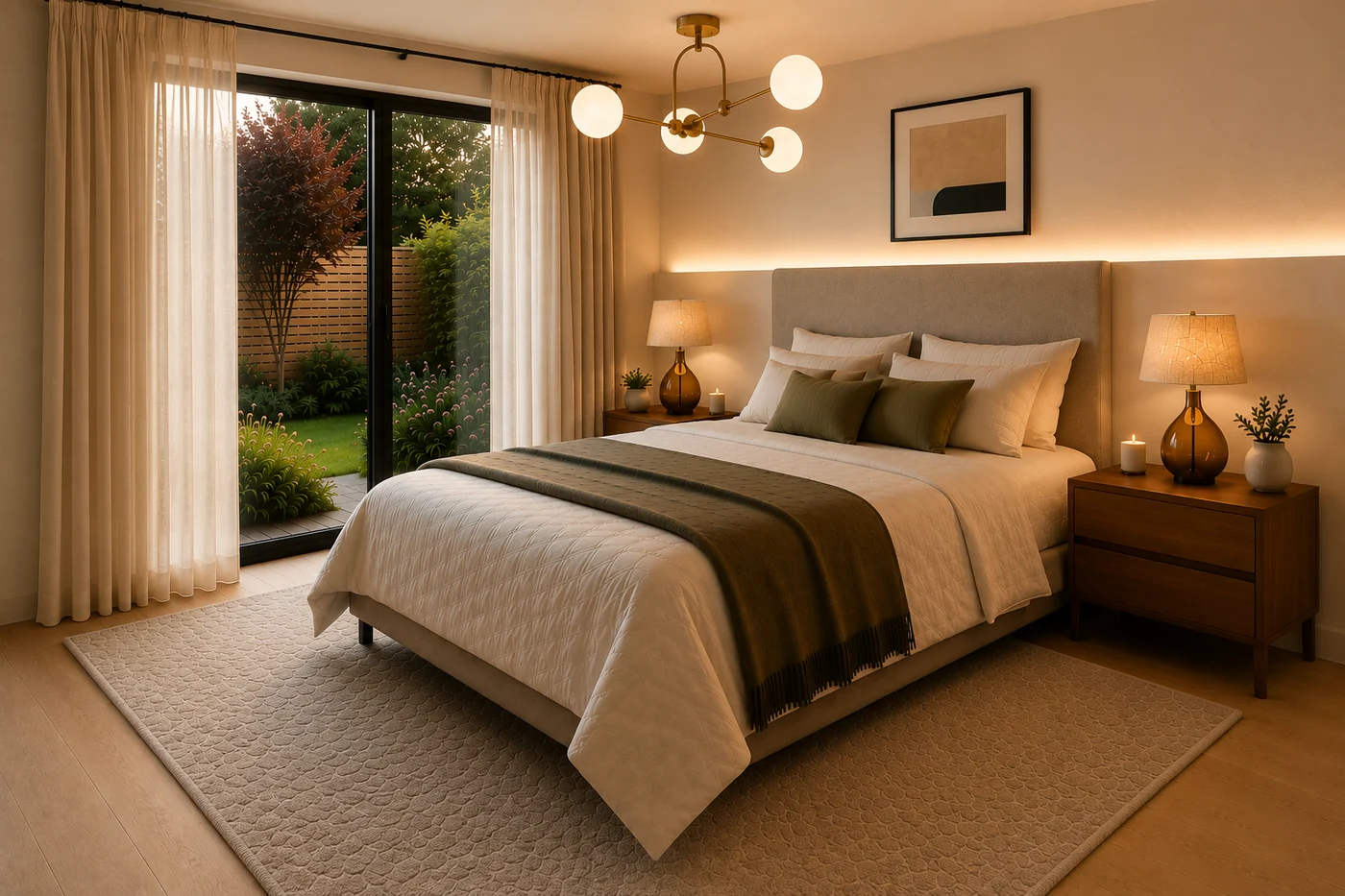
A bedroom can have a beautiful bed, soft bedding, and a calm paint color, yet still feel harsh and restless at night. In most cases, the problem is lighting. One bright ceiling light makes the room feel like an office, while a single dim lamp leaves corners gloomy and makes reading or getting dressed frustrating. Warm, comfortable bedrooms are lit in layers, with gentle background light, focused light where you need it, and a few soft accents that make the room feel finished. The good news is that you do not need a full renovation to get there. With the right bulbs, a dimmer or two, and better placement, most bedrooms can be transformed in a weekend for $150 to $600.
Layered Lighting Basics
Designers divide bedroom lighting into three layers, and comfortable rooms use all three. Ambient lighting is the general background glow that lets you move around safely. Task lighting is focused light for reading, dressing, or working at a vanity. Accent lighting is the soft, decorative layer that adds warmth and depth. When only one layer does all the work, the room feels either flat or glaring.
A simple test helps: stand in your doorway at night and squint slightly. If one source dominates your view, or you can see a bare bulb, the layers are out of balance. Aim for several low-intensity sources spread around the room instead of one powerful one. Small bedrooms often need only three sources; larger rooms may need five or six.
- Ambient: ceiling fixture, cove lighting, or soft uplight
- Task: bedside lamps, reading lights, vanity lighting
- Accent: picture lights, LED strips, a small lamp in a dark corner
Ambient and Ceiling Lighting
The ceiling fixture sets the overall mood, so it should spread soft, even light rather than beam it straight down. Flush-mount and semi-flush fixtures with fabric, frosted glass, or alabaster shades work well because the shade diffuses the light and hides the bulb. A 12 to 16 inch fixture suits most bedrooms; larger rooms can take a small chandelier or pendant, ideally hung so its bottom is at least seven feet above the floor.
Avoid bare-bulb fixtures and harsh recessed spotlights directly over the bed, since lying down means staring straight into them. If you already have recessed cans, fit them with frosted retrofit trims and warm bulbs, and keep them on a dimmer. Expect to pay $80 to $300 for a good quality flush-mount fixture, plus $100 to $200 if an electrician fits it. Renters can improve a basic fixture simply by swapping in a larger drum shade and lower-wattage bulbs.
Bedside and Task Lighting
Bedside lighting does the hardest work in the room, and it is where most bedrooms go wrong. For reading in bed, the light should fall on the page without shining into your eyes or your partner’s. With a table lamp, the bottom of the shade should sit roughly at chin height when you are propped up in bed, usually meaning a nightstand around 24 to 28 inches high and a lamp 24 to 30 inches tall overall.
Wall-mounted swing-arm sconces are an excellent alternative, especially in small rooms, because they free up the nightstand for books, water, and a phone. Mount them about 50 to 60 inches from the floor and slightly behind the headboard line. Plug-in sconces cost $40 to $120 each and need no wiring, while hardwired versions add electrician costs. Whichever style you choose, give each side of the bed its own switch within arm’s reach, so nobody has to get up to turn off the last light.
- Reading lights: 450 to 800 lumens, warm white, directed at the book
- Dressing and vanity areas: brighter, even light at face level to avoid shadows
- Closet or wardrobe: a battery LED strip or motion light, $15 to $40
- Work-from-bed setups: a directional lamp behind the screen line to cut glare
Accent and Decorative Lighting
Accent lighting is what makes a bedroom feel warm rather than merely lit. A low lamp on a dresser, a picture light over artwork, or an LED strip hidden behind the headboard creates gentle pools of light that relax the eye. The strip behind the headboard is especially effective: it outlines the bed, gives enough glow to move around at night, and costs only $15 to $35 for a warm white kit with a remote.
Candles add real warmth but are a fire risk in a room where people fall asleep, so battery candles with a realistic flicker are the safer everyday choice. Keep every accent source at or below eye level when standing, so the light feels like a glow, not a glare.
Color Temperature and Dimmers
Color temperature, measured in kelvins, decides whether a bedroom feels cozy or clinical. For bedrooms, stay between 2200K and 3000K. Bulbs at 2700K give the familiar warm glow of old incandescent lamps and suit most rooms. Reserve 3000K for dressing areas where you want slightly truer colors, and avoid 4000K daylight bulbs entirely; they suppress the sleepy, evening feeling you are trying to create and can make skin and bedding look grey.
Consistency matters as much as the number. Mixing a 2700K lamp with a 4000K ceiling bulb makes both look wrong, so replace bulbs in a room at the same time and buy spares from the same batch. Also check the CRI rating: bulbs with a CRI of 90 or higher show wood, fabrics, and skin tones more accurately and are worth the small premium, usually $4 to $8 per bulb.
Why Dimmers Matter So Much
A dimmer does more for comfort than any single fixture. The same ceiling light that is useful for cleaning at full power becomes soft and restful at 30 percent. LED-compatible dimmers cost $20 to $40 and take about 20 minutes to fit with the power off, though renters can use plug-in lamp dimmers or dimmable smart bulbs instead. Look for bulbs labeled dimmable and, ideally, warm-dim, which shift warmer as they dim, like real sunset light.
Natural Light and Window Treatments
Great bedroom lighting also means controlling daylight. Morning sun is welcome for waking, but early summer sunrise at 5 a.m. and streetlights at midnight both damage sleep. The most effective setup is two layers: a sheer or light-filtering layer for daytime privacy and soft light, plus a blackout layer for the night. Blackout curtains or a blackout roller blind behind your main curtains block 95 percent or more of outside light and typically cost $30 to $100 per window.
Hang curtains high and wide so the fabric clears the glass when open, letting in maximum daylight. If a streetlight shines directly in, a blackout blind fitted inside the frame seals the edges better than curtains alone. For children and shift workers, blackout is the single biggest lighting improvement for sleep quality.
Smart Lighting and Controls
Smart bulbs and plugs make layered lighting easy to use, which means you will actually use it. A simple evening scene can dim the ceiling light to 30 percent, switch on both bedside lamps, and turn off everything else, all from one tap or voice command. A wake-up routine that brightens the lights slowly over 20 to 30 minutes is gentler than a sudden alarm glare and especially helpful on dark winter mornings.
Start small: two smart bulbs for the bedside lamps cost $20 to $40 and need no hub in most modern systems. Motion-activated low lights under the bed give safe, dim light for bathroom trips without bright overhead glare. Keep at least one ordinary switch or remote that works without Wi-Fi, so guests are never stuck when the network is down, and set lights to fade rather than snap off.
Common Bedroom Lighting Mistakes
Most uncomfortable bedrooms repeat the same handful of mistakes, and nearly all of them are cheap to fix. Work through this list before buying anything new:
- Relying on one bright overhead light for everything
- Using daylight 4000K to 5000K bulbs that make the room feel clinical
- Bedside lamps that are too short, too tall, or too dim for reading
- Visible bare bulbs in ceiling fixtures or sconces at eye level
- No dimmer or separate controls, so every light is fully on or fully off
- Ignoring light leaks from windows, hallway gaps under doors, and glowing chargers
- Matching nothing, with mixed bulb temperatures and clashing fixture finishes
One more mistake is forgetting the night path. Add a warm, low-level night light on the route to the bathroom; it protects sleep and prevents stubbed toes.
Final Thoughts
Warm, comfortable bedroom lighting is not about spending more; it is about spreading light out and softening it. Build three layers, keep every bulb between 2200K and 3000K, put the main sources on dimmers, and block unwanted light at the window. Start with the bedside lamps and the bulb swap, which together cost under $100 and change the room the same evening. Then add one accent source and proper blackout at the window. Done in that order, each small step makes the room noticeably calmer, and better sleep usually follows within days.
Frequently Asked Questions
What is the best color temperature for bedroom lighting?
Choose 2700K for most bedroom lights, since it gives a warm, relaxing glow similar to traditional bulbs. Anything from 2200K to 3000K works; avoid 4000K and above, which feels harsh and clinical at night.
How many lamps does a bedroom need?
Most bedrooms work well with a ceiling light plus two bedside lamps and one accent source, such as a dresser lamp or headboard strip. Larger rooms with a seating or dressing area may need one or two additional task lights.
Are smart bulbs worth it in a bedroom?
Yes, mainly for dimming scenes and wake-up routines. Two bedside smart bulbs cost about $20 to $40, let you control both lamps from bed, and remove the need to rewire switches for dimmers.
How bright should bedside reading light be?
Aim for 450 to 800 lumens from a shaded or directional lamp positioned so the light falls on the page, not in your eyes. A dimmer or three-way bulb helps you lower it once you stop reading.
Do blackout curtains really improve sleep?
For most people, yes. Blocking streetlights and early sunrise keeps the room dark enough for deeper sleep, especially for light sleepers, children, and shift workers. Pair blackout curtains with a fitted blind if light leaks around the edges.

