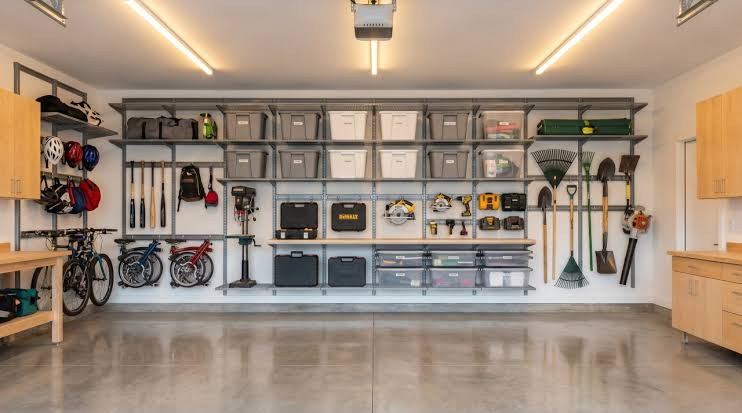
For many homeowners, the garage becomes where everything without a home ends up. Bikes lean against boxes, tools vanish under paint cans, and the car ends up on the driveway. The problem is rarely lack of space. Most garages have plenty of capacity — trapped on the floor, in dead corners, and in piles that make everything hard to reach.
Modern storage systems fix this by thinking vertically and by zone, not by buying more bins. Used properly, walls, ceiling, and perimeter let a two-car garage hold vehicles, tools, sports gear, and seasonal items without feeling cramped. This guide shows a practical system you can build in stages.
Start With a Clear-Out: Assess Your Garage and Sort Everything
Do not buy storage before you know what you need to store. On a dry morning, pull everything onto the driveway, sweep the empty space, and look for oil stains, cracks, and damp. Measure length, width, and ceiling height, and note door swings, the water heater, electrical panel, and steps that must stay clear.
Sort honestly before anything goes back inside. Many garages hold broken items, duplicates, and boxes unopened for years. Use four groups:
- Keep in the garage: items you use monthly, plus car, tool, yard, and hobby essentials.
- Move elsewhere: paint, chemicals, and paperwork better kept in a cool, dry utility area.
- Donate or sell: working bikes, tools, and equipment you no longer use.
- Discard or recycle: rusted tools, dried paint, cracked bins, and anything unsafe to repair.
Take old paint and chemicals to a hazardous waste collection, not regular trash. Then count what remains by category — six bins, four bikes, a ladder, power tools. That inventory tells you how much wall, shelf, and overhead space you need. Budget $0 to $50 for bags, labels, and cleaning supplies.
Plan Zones by How You Actually Use the Space
A garage stays organized when every category has a zone based on how often you use it. Think in layers: center for parking, walls for daily and weekly items, ceiling and far corners for things touched a few times a year. Sketch a floor plan and assign each wall a job before drilling.
- Parking and entry zone: keep car bays and the path to the house door clear, with only slim storage at the edges.
- Everyday zone near the door: shoes, recycling, pet food, and cleaning supplies you grab daily.
- Workshop zone: one wall or corner for tools and a workbench, close to outlets and good light.
- Garden and yard zone: mower, trimmer, hoses, and soil near the garage door so dirt does not cross the space.
- Seasonal and sports zone: the least accessible wall or overhead area for decorations and off-season gear.
Leave 2 to 3 feet beside a parked car so doors open fully, and keep a walkway of about 3 feet from garage door to house entry. Mark zones with painter’s tape for a week first. If the layout feels awkward in that trial, adjust it before installing anything permanent.
Wall Storage Systems That Free Up the Floor
Walls are the biggest unused asset in most garages. A good wall system can free 30 to 50 square feet of floor space in a weekend. The main options are slatwall, rail-and-track systems, and pegboard, and many garages mix all three.
Slatwall panels accept hooks, baskets, and shelves in horizontal grooves. Expect $120 to $300 for an 8-by-4-foot area with accessories. Rail systems use steel tracks fixed into studs, with movable hooks — starter kits cost about $80 to $180. Pegboard is cheapest at $30 to $70 for a large panel and is excellent for hand tools with locking hooks.
Fix rails and panels into studs, not just drywall, using correct fixings for brick or block. Hang heaviest items — ladders, bikes, tool chests — lowest and nearest studs. Keep daily tools at waist to eye level, and reserve high space for lighter items like cords and helmets.
Overhead and Ceiling Storage for Bulky, Lightweight Items
The ceiling suits items that are bulky but light and used occasionally: holiday decorations, tents, sleeping bags, plastic bins, and seasonal sports gear. A fixed steel overhead rack, typically 4 by 8 feet, costs $180 to $350 and can hold 400 to 600 pounds when fixed correctly into ceiling joists. A bike or kayak pulley hoist costs $25 to $60 and is ideal if lifting a bike onto a wall hook is difficult.
Safety matters most here. Fix racks into joists, never drywall alone, and respect the manufacturer’s total weight limit. Place heaviest bins in the center, keep chemicals at floor level, and confirm the door still opens fully. Leave 18 to 24 inches between vehicle roof and stored items. If your ceiling is under 8 feet, use high wall shelves instead.
Cabinets and Workbenches That Create a Real Workspace
Open shelves are cheap, but closed cabinets hide clutter and protect contents from dust. A tall cabinet, about 72 inches high and 36 inches wide, costs $180 to $400 in metal or heavy-duty resin and suits paint, fluids, and chemicals — ideally lockable if children use the garage. Base cabinets with drawers cost $150 to $350 each.
Choose a workbench that fits your zone, not the largest available. A 6-foot bench with a solid wood or steel top costs $200 to $450 and leaves room to park. Make it genuinely useful with:
- Task lighting: a bright LED strip above the bench so you are not working in shadow.
- Power access: a surge-protected strip fixed to the bench edge for chargers and tools.
- Pegboard behind the bench: daily hand tools within arm’s reach, not buried in drawers.
- Comfort basics: a wheeled stool and anti-fatigue mat so tidying after projects is easier.
If space is tight, a wall-mounted fold-down bench ($120 to $250) folds flat for parking and handles bike repairs, potting, and light woodworking well.
Smarter Storage for Sports and Seasonal Gear
Sports and seasonal items cause outsized mess because they are bulky, oddly shaped, and used in bursts. Give each sport its own rack or container so gear does not migrate. Vertical bike racks that hold the front wheel cost $30 to $70 per bike and use far less wall width than bikes leaned on the floor. For families, a wall rail with sliding hooks lines bikes up neatly by size.
Use clear, lidded bins for seasonal categories — holiday lights, winter gear, summer beach gear — and label front and lid. At $8 to $15 each, seeing contents prevents duplicates. Store balls in a mesh holder or rolling cart ($40 to $90) children can use unaided. Keep skis, rods, and umbrellas vertical in a corner rack or on high brackets, out of walkways.
Small-Item and Tool Organization That Saves Time
Garages feel chaotic when small items have no home. Screws roll into corners, chargers tangle, and you buy a third tape measure because two are buried. Small, visible systems work better than one giant toolbox where everything mixes.
- Parts organizers: sort screws, nails, plugs, and batteries in a $20 to $45 unit with labelled drawers.
- Magnetic strips and shadow boards: mount wrenches and screwdrivers where a missing outline is obvious.
- Clear bins for consumables: group sandpaper, zip ties, tape, and glue near the workbench.
- Charging station: keep all tool chargers on one shelf with cables tied and ready.
- Labels everywhere: a few dollars of printed labels saves minutes on every project.
Keep weekly power tools on open hooks or shelves, and store occasional tools in cases higher up. Coil cords and hoses on wall hooks to prevent kinks and trips. A rolling tool chest ($150 to $350) is worthwhile only if you will move it regularly; otherwise fixed drawers give more storage for the money.
Keeping the Garage Organized for the Long Term
Even the best system drifts without light maintenance, but upkeep takes minutes if it fits existing routines. Return everything to its zone at the end of a project, not the end of the month, and keep a trash can and broom handy so quick cleanups have no friction.
- One in, one out: when a new tool, bike, or bin arrives, something similar leaves or moves to its zone.
- Seasonal reset: twice a year, swap seasonal bins between overhead and accessible zones and check chemicals.
- Label and photograph: photograph each finished wall as the reference the whole household can follow.
Check safety twice a year too: tighten overhead fixings, replace cracked bins, and keep flammables away from water heaters and furnaces per local guidance. A tidy garage is not about perfection — it is about finding what you need, parking comfortably, and closing the door without shoving things aside.
Final Thoughts
A modern garage system does not require a full renovation or a large budget at once. Start with the clear-out, define zones, and add one wall system at a time — most homeowners feel the biggest change from the first wall and first overhead rack alone. Prioritize vertical space, keep daily items within reach, and give seasonal gear a home beyond the parking bays. Done in stages over two or three weekends, at a phased cost of about $400 to $1,200 for a typical two-car garage, the result supports your car, projects, and hobbies instead of competing with them.
Frequently Asked Questions
How much does it cost to organize a garage with modern storage systems?
A basic setup with pegboard, bins, and wall hooks costs about $200 to $400. A fuller system with slatwall, cabinets, and an overhead rack typically costs $800 to $2,000. Spread the cost by starting with sorting and walls first.
What should I install first if my garage is completely cluttered?
Start with sorting and one wall system, not cabinets or ceiling racks. Clearing the floor and adding hooks and shelves on one wall creates parking space immediately and gives sorted items a home as you continue.
Is overhead garage storage safe for heavy items?
Only within the rack’s rated limit and when fixed into ceiling joists. Keep heavy tools and dense materials at floor or wall level, and use overhead racks for lighter, bulky items like decorations and camping gear.
How can I maximize storage in a small one-car garage?
Use full wall height, slim cabinets, and a fold-down workbench. Overhead storage and vertical bike racks help most in small garages. Avoid deep freestanding shelves that block parking and door opening.
How do I keep the garage organized if my family keeps adding things?
Agree zones and labels together, keep a donation bin by the door, and do a 15-minute reset monthly. When everyone knows where gear belongs, new items land in the right place instead of on the floor.

