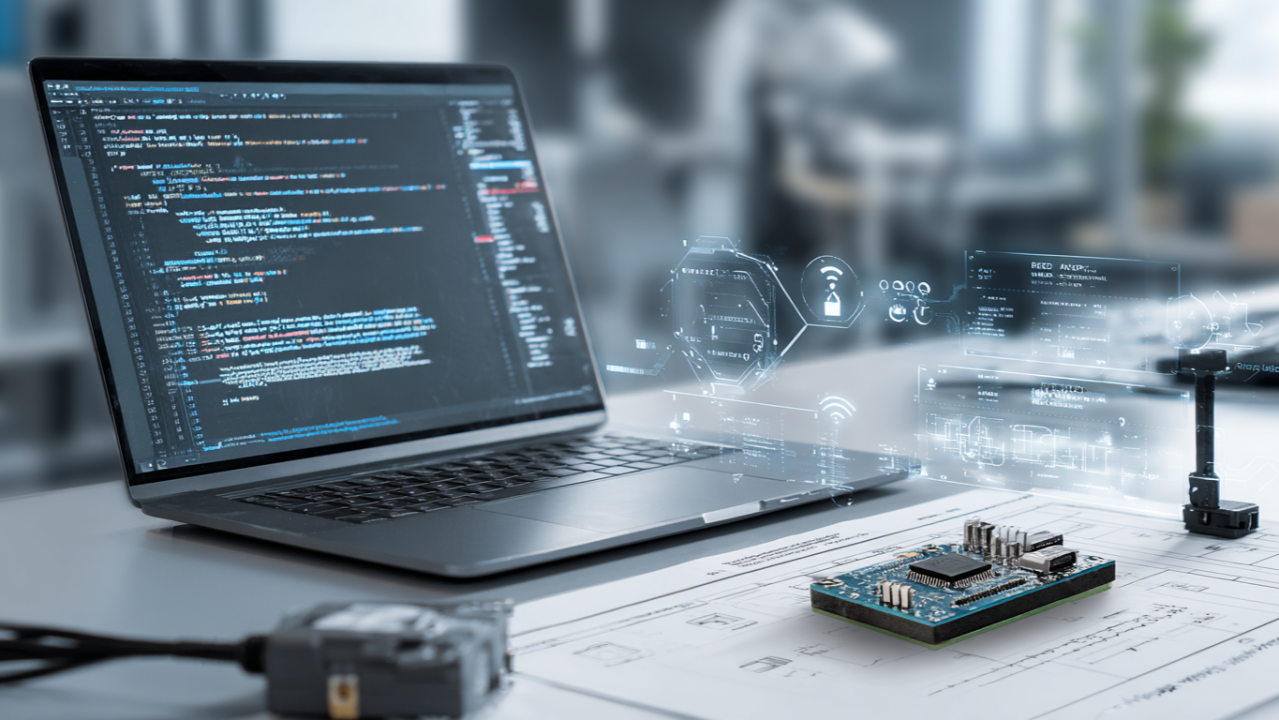
In today’s rapidly evolving industrial landscape, sensors play a pivotal role in monitoring, automation, and data acquisition. From manufacturing lines to energy plants and smart factories, sensors collect critical information that drives efficiency, safety, and productivity. However, the hardware alone is not enough—firmware acts as the intelligence that allows these sensors to function effectively. Understanding industrial sensor firmware development is essential for engineers, developers, and companies aiming to optimize industrial processes.
This article explores the importance of firmware in industrial sensors, development processes, challenges, and best practices.
What Is Industrial Sensor Firmware?
Firmware is a specialized type of software embedded directly into the sensor’s microcontroller. Unlike general-purpose software, firmware provides low-level control over the hardware, enabling the sensor to perform its designated tasks reliably.
For industrial sensors, firmware governs:
- Data acquisition and processing
- Communication with controllers and networks
- Power management and energy efficiency
- Calibration and self-diagnostics
- Security and error handling
In essence, firmware acts as the brain of the sensor. Without it, even the most advanced sensor hardware would not function accurately or efficiently in an industrial environment.
Importance of Firmware in Industrial Sensors
Real-Time Data Processing
Industrial processes often require real-time monitoring to ensure safety and efficiency. Firmware handles the rapid acquisition and processing of signals, filtering noise, and transmitting data without delay. For example, vibration sensors in machinery detect anomalies in real time, preventing potential failures.
Hardware Integration
Industrial sensors include various hardware components such as microcontrollers, ADCs (Analog-to-Digital Converters), and communication modules. Firmware ensures these components work harmoniously, optimizing performance and preventing conflicts.
Power Efficiency
Many industrial sensors operate in remote or energy-sensitive environments. Firmware manages power modes, putting the sensor in low-power sleep states when not actively measuring, which extends operational life.
Communication Protocol Management
Industrial sensors often communicate over networks using protocols such as Modbus, CAN, I2C, SPI, or MQTT. Firmware ensures accurate and secure data transfer between the sensor and central systems, which is critical in industrial automation.
Steps in Industrial Sensor Firmware Development
Developing firmware for industrial sensors requires a structured approach. The typical process includes the following steps:
Requirement Analysis
Before writing any code, developers need to understand:
- Sensor specifications (range, resolution, accuracy)
- Communication protocols
- Environmental factors (temperature, vibration, humidity)
- Regulatory compliance
This stage ensures the firmware design meets both functional and performance requirements.
Hardware Selection and Prototyping
Firmware must be tailored to the hardware it will control. Selecting the right microcontroller, ADC, memory, and connectivity modules is critical. During prototyping, initial firmware versions are tested with hardware to validate functionality.
Firmware Architecture Design
A well-planned firmware architecture ensures modularity and scalability. Common components of firmware architecture include:
- Sensor data acquisition modules
- Communication interfaces
- Error detection and handling routines
- Power management modules
- Calibration and configuration management
Good architecture simplifies maintenance, updates, and integration with industrial systems.
Coding and Implementation
Developers write firmware using languages such as C or C++ for performance and memory efficiency. Key considerations include:
- Interrupt handling for real-time operations
- Efficient memory usage
- Low-level hardware control
- Thread-safe code for multitasking
Testing during this stage ensures that the firmware interacts correctly with sensor hardware and external systems.
Testing and Validation
Firmware validation is critical in industrial applications. Tests typically include:
- Functional testing to ensure the sensor measures accurately
- Environmental testing under temperature, vibration, and humidity conditions
- Communication testing to verify protocol compliance
- Power consumption evaluation
Automated testing tools and emulators help detect issues early, reducing time-to-market.
Deployment and Updates
After validation, the firmware is deployed to production sensors. Over-the-air (OTA) updates are increasingly common in industrial environments, allowing firmware improvements without physically accessing each device. Secure update mechanisms are essential to prevent tampering or data corruption.
Challenges in Industrial Sensor Firmware Development
While firmware is essential for sensor functionality, developers face several challenges:
Hardware Constraints
Limited memory, processing power, and energy supply require efficient coding practices. Firmware must balance performance with these hardware limitations.
Environmental Factors
Sensors often operate in harsh environments—high temperatures, electromagnetic interference, or vibrations can affect performance. Firmware must implement robust error handling and filtering mechanisms.
Security
Industrial sensors are increasingly connected to networks. Firmware vulnerabilities can expose critical industrial systems to cyberattacks. Implementing encryption, authentication, and secure boot processes is necessary to protect industrial assets.
Real-Time Requirements
Many industrial applications demand real-time response. Delays in data acquisition or processing can lead to inaccurate measurements or process failures. Firmware must optimize timing and prioritize critical tasks.
Compatibility and Standardization
Industrial environments often have heterogeneous systems from different vendors. Firmware must support standard protocols and ensure interoperability across platforms.
Best Practices for Firmware Development
Successful firmware development requires following established best practices:
- Modular Design: Separate functional blocks for easier updates and maintenance.
- Version Control: Track firmware versions for reliability and traceability.
- Documentation: Maintain detailed documentation for future developers and technicians.
- Automated Testing: Use emulators and testing tools to validate functionality early.
- Security by Design: Integrate encryption, authentication, and safe update mechanisms.
- Continuous Monitoring: Use logs and diagnostics to monitor performance in real time.
Following these practices ensures firmware reliability, maintainability, and security in industrial applications.
The Future of Industrial Sensor Firmware
The future of industrial sensor firmware is closely tied to Industry 4.0 trends:
- Edge Computing: Firmware will increasingly process data locally, reducing latency and bandwidth usage.
- IoT Integration: Sensors will connect seamlessly to the Industrial Internet of Things (IIoT), requiring intelligent firmware that supports remote management and analytics.
- Machine Learning: Firmware may incorporate AI algorithms to detect anomalies, predict maintenance needs, and optimize sensor performance.
- Enhanced Security: As industrial networks grow, cybersecurity within firmware will remain a top priority.
These trends make firmware development a critical area for innovation in industrial automation.
Conclusion
Industrial sensor firmware development is the backbone of modern industrial monitoring and automation. It enables accurate data acquisition, efficient communication, robust performance in harsh environments, and enhanced security. By following structured development processes, adopting best practices, and staying ahead of technological trends, engineers can create firmware that meets the demanding requirements of today’s industries.
Stay in touch to get more updates & news on Magazine!

