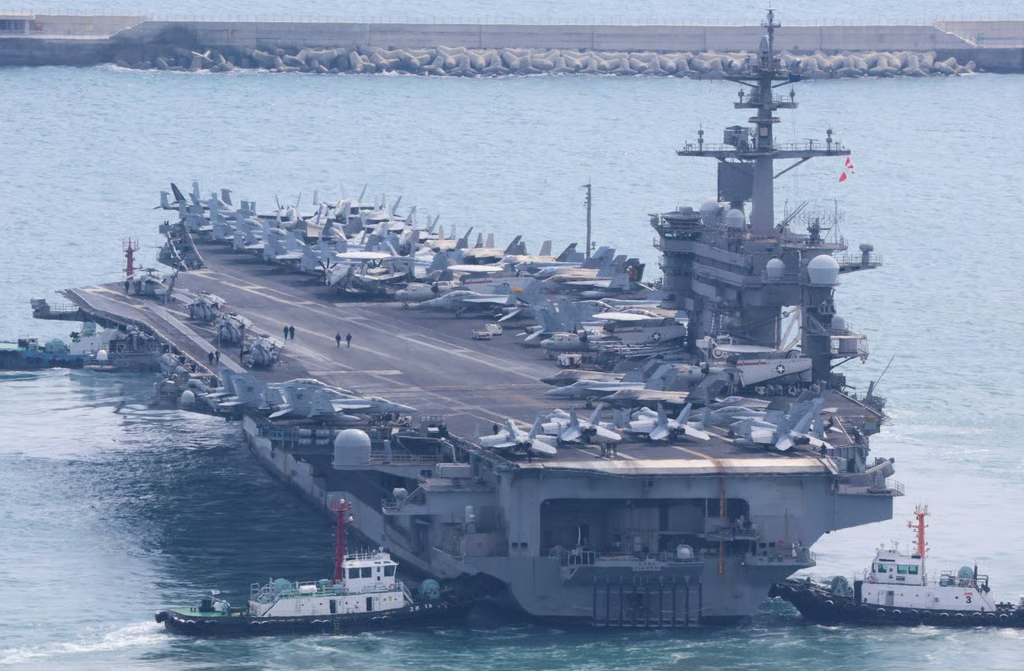
WASHINGTON, Jan. 27, 2026 The United States and Iran edged closer to a perilous confrontation on Tuesday as the U.S. Navy’s USS Abraham Lincoln carrier strike group entered the Middle East amid renewed threats and heightened military posturing from both capitals. The deployment, ordered by President Donald Trump, underscores mounting tensions following months of unrest in Iran and escalating rhetoric between Tehran and Washington.
The Lincoln strike group — a floating airbase carrying F‑35 and F/A‑18 fighter jets, helicopters, destroyers and support ships — crossed into the U.S. Fifth Fleet area of operations in the Indian Ocean on Monday, U.S. officials said. The movement amplifies U.S. military presence in a region already roiled by geopolitical rivalries, raising alarms in global capitals and among Pentagon analysts that miscalculations could spark a wider conflict.
“Iran’s rhetoric has been provocative, but our mission remains clear: deter aggression against American forces and interests,” said a senior U.S. defense official, speaking on condition of anonymity. “Our forces are ready to defend themselves and our partners.”
Tehran Answers with Warnings
Iranian leaders responded swiftly, warning that any military action by the United States “would trigger consequences far beyond the region.” A senior Iranian official declared that Tehran would view any U.S. strike as “an all‑out war against us,” indicating the nation’s determination to resist foreign intervention. Iranian state media amplified the message, portraying the U.S. fleet’s arrival as unwelcome interference in regional affairs.
The tensions stem from internal unrest in Iran, where nationwide protests erupted late last year amid economic malaise and political repression. Human rights groups estimate thousands have been killed or detained in the crackdown — figures far higher than official counts — and the crisis has drawn international condemnation. The Trump administration has warned Iran against continuing its violent suppression, vowing consequences for perceived abuses.
Strategic Significance of the Deployment
U.S. officials emphasize that sending a carrier group is a defensive signal and not a prelude to war. “Our presence is meant to provide stability, reassure allies, and demonstrate that aggression against Americans will not go unanswered,” the Pentagon official said.
Still, Iran’s Revolutionary Guard Corps has placed forces on high alert and staged military exercises near strategic chokepoints, including the Strait of Hormuz, through which roughly a fifth of the world’s oil supply transits. Analysts warn that even isolated skirmishes in these congested waters could rapidly escalate.
Diplomats in the region, speaking on background, described a “hair‑trigger environment,” where miscommunication between military forces increases the risk of unintended clashes. Countries in the Gulf Cooperation Council have urged restraint, while global markets have reacted nervously, with oil prices briefly spiking on fears of supply disruptions.
Domestic Political Backdrop
Back in Washington, the deployment has become a point of national political debate. Supporters of the Trump administration argue the move is necessary to counter Tehran’s destabilizing role in Iraq, Syria and Yemen. Critics in Congress question whether the buildup risks dragging the United States into another Middle Eastern conflict without clear strategic objectives or international backing.
Some lawmakers have pressed for an emergency session to review the administration’s authority for the deployment under the War Powers Resolution. Others have called for increased diplomatic pressure alongside targeted sanctions.
Diplomacy and Next Steps
Despite the heightened military posture, the White House has signaled openness to talks under certain conditions. A U.S. official reiterated Tuesday that Washington is “open for business” if Tehran chooses diplomatic engagement, though no formal dialogue is underway.
Global powers — including European allies — have urged de‑escalation. They emphasize renewed diplomacy and upholding the 2015 nuclear accord framework as a pathway to ease tensions, though Iran’s current leadership has rejected direct negotiations without substantive concessions.
As the carrier strike group establishes its presence in the Middle East, military planners say routine patrols and exercises will continue. Whether the deployment successfully deters hostile actions or fuels further confrontation remains a central question in the coming weeks.

