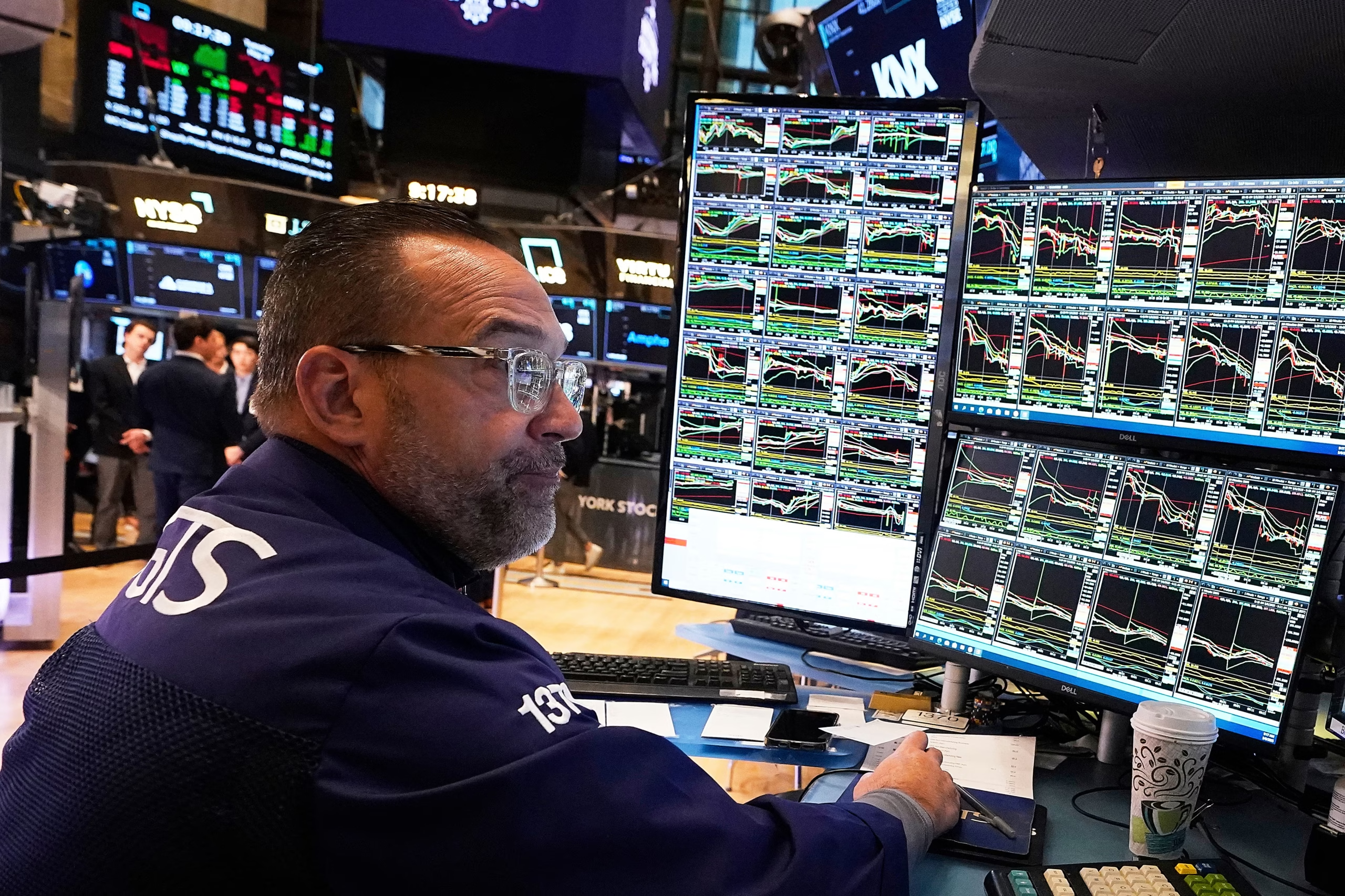
NEW YORK — U.S. stock markets ended the final trading day of January on a downbeat note Friday, extending recent volatility as investors digested a high‑profile Federal Reserve nomination, inflation data, and uncertainty around fiscal policy — including the partial government shutdown that began Saturday. Across Wall Street, major indexes retreated, precious metals were hammered, and traders reevaluated risk across asset classes.
The S&P 500 slipped modestly, closing lower Friday as investors weighed expectations for future monetary policy following President Donald Trump’s nomination of Kevin Warsh — a former Fed governor with a reputation for hawkish monetary views — to replace Jerome Powell as Federal Reserve chair. The Dow Jones Industrial Average and the Nasdaq Composite also experienced downturns, reflecting broader risk aversion amid mixed corporate earnings and inflation data.
Analysts said the market’s reaction was driven by two fundamental forces: shifting expectations around interest rate policy and renewed questions about federal fiscal stability. “Warsh’s nomination introduces a degree of uncertainty about future interest rate paths and quantitative policy,” said Margaret Liu, a portfolio strategist at Highland Capital Advisors. “That, combined with lingering fears over government funding, has traders seeking refuge in less risky assets — but ironically, gold and silver sold off sharply too.”
Gold prices plunged by double‑digit percentages, erasing recent rallies that had been fueled by geopolitical tensions and economic anxieties. Silver fared even worse, sinking more than 30% in a dramatic reversal of earlier optimism. Commodities analysts attributed the drop to a stronger U.S. dollar and repositioning by institutional traders ahead of key earnings and economic reports due this week.
Mixed enterprise earnings also contributed to the cautious mood. While some corporate heavyweights reported stronger‑than‑expected results — notably tech firms like Apple and telecom companies — broader sector performance was uneven. Tech and growth stocks, which had been market leaders earlier in the year, showed signs of fatigue amid valuation concerns.
Inflation data released this month added another layer of complexity, with the Producer Price Index (PPI) rising more than forecast, signaling persistent pricing pressures that could complicate the Federal Reserve’s policy calculations later this year.
Despite Friday’s losses, January overall was positive for markets: the S&P 500 recorded modest gains and closed above key technical levels that had been closely watched by traders. Still, the week’s sell‑off underscored fragilities in investor confidence, especially as fiscal policy uncertainty deepens with the U.S. government shutdown.
In bond markets, Treasury yields held steady as traders balanced inflation concerns and expectations for future Federal Reserve actions. The dollar strengthened against major currencies, a typical pattern when risk appetite wanes.
Traders also monitored developments overseas, particularly tensions in the Middle East and potential economic impacts from escalating sanctions and diplomatic standoffs. Global commodity markets — especially crude oil — remained sensitive to geopolitical signals and could influence U.S. inflation trends and energy sector performance.
Financial strategists cautioned that the convergence of monetary, fiscal, and geopolitical uncertainties could keep volatility elevated in the coming weeks. “We’re in a season where markets are testing every narrative: policy uncertainty, earnings, Fed leadership transitions, and macroeconomic data,” said Andrew Fields, chief market economist at Meridian Global Advisors. “Investors are balancing potential growth with risk hedges, and that’s reflected in the choppy trading.”

