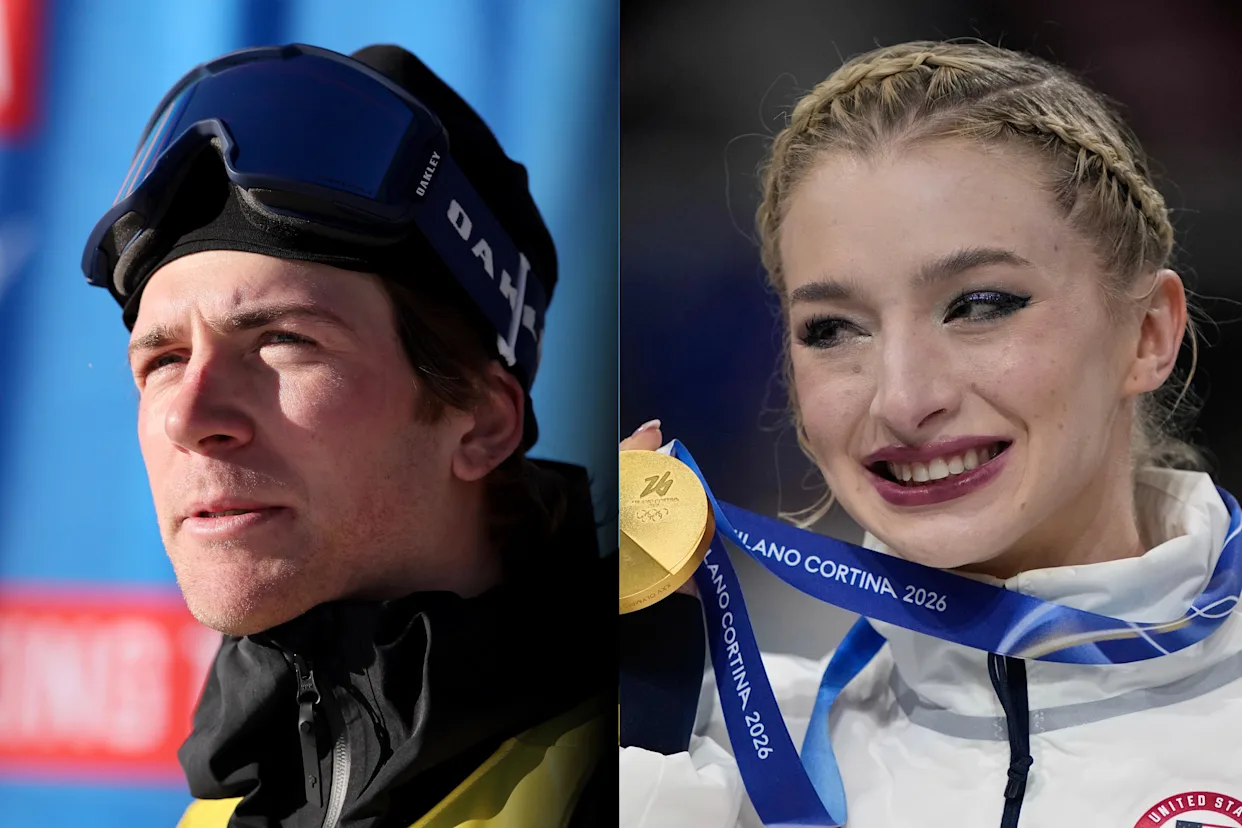
February 10, 2026 – Tuesday – Milan‑Cortina, Italy — In the midst of the 2026 Winter Olympics, a cultural and political storm has erupted around members of the U.S. Olympic team, drawing attention far beyond the arenas of competition. At the center of the controversy is a debate over athlete expression and national politics — an intersection that has ignited passionate reactions from across the globe.
The flashpoint came after U.S. freestyle skier Hunter Hess publicly shared complex feelings about representing his country against the backdrop of domestic political tensions. His remarks — which he described as rooted in personal reflection rather than disloyalty — prompted sharp criticism from U.S. President Donald Trump, who labeled Hess a “real loser” in a post on his social media platform.
The incident quickly snowballed, leading to fierce debate inside the Olympic Village and on social media worldwide. Several U.S. teammates — including celebrated snowboarder Chloe Kim and moguls competitor Maddie Mastro — rallied behind Hess, citing athletes’ right to personal expression while reaffirming their commitment to Team USA.
“We are here to compete at the highest level,” Kim said in a press briefing. “But we are also individuals with our own perspectives, passions, and values. Our voices matter just as much as our medals.”
The controversy touches on broader issues about patriotism, identity, and the role of sport in a politically charged era. For many athletes, representing the United States on the international stage is a source of immense pride. Yet, others argue that global competitions like the Olympics are platforms where athletes should feel free to express nuanced views without fear of retaliation or disparagement.
The U.S. Olympic & Paralympic Committee issued a statement affirming its support for athlete well‑being and freedom of speech, emphasizing that team members have access to mental health resources and support services amid what has become an emotionally fraught Games for many.
The reaction from the American public has mirrored the polarized discourse back home. Some commentators praised the athletes for courageously speaking their truths, while others decried their comments as inappropriate distractions from competition.
Internationally, the situation has heightened interest in how sports and politics intersect, particularly at a time when global tensions and questions about human rights continue to dominate headlines. Several European commentators remarked that athletes’ statements during major sporting events increasingly reflect societal debates that extend far beyond national borders.
The debate has also sparked discussions within the Olympic Stadiums, where competitors from other nations — including Canada, Germany, and Japan — expressed solidarity with the idea that athletes should be free to communicate their personal experiences without penalty.
Despite the turmoil, American competitors have continued to perform admirably in their respective events. Yet the atmosphere within the U.S. delegation has undeniably shifted, with some athletes reporting a heavier emotional burden as media scrutiny intensifies.
With several key events still ahead, all eyes remain on the U.S. team as they navigate the delicate balance between athletic excellence and personal expression. What started as measured commentary by an individual athlete has evolved into a significant cultural conversation, one that reflects broader themes of identity, freedom, and belonging in a globalized world.

