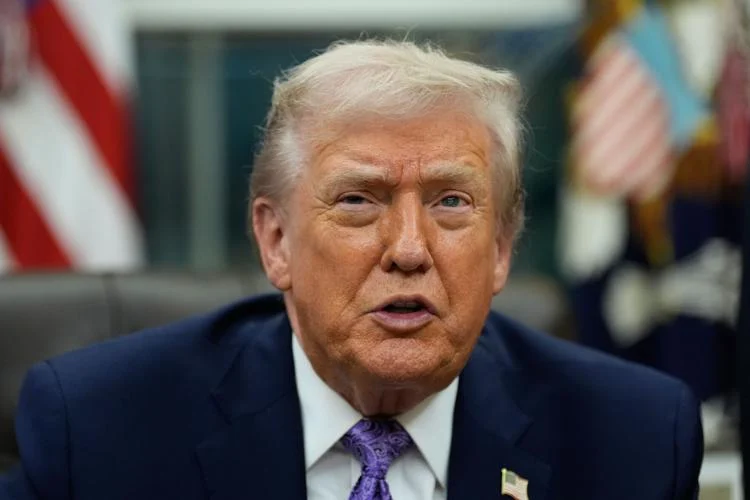
WASHINGTON, Jan. 25, 2026 — President Donald Trump’s renewed focus on Greenland has stirred concern among senior Republican officials, who warn that the administration’s foreign policy brinkmanship could destabilize U.S. relations with allies in Europe and the Arctic region.
Trump, in a series of statements and interviews over the past week, suggested that Greenland, a Danish territory rich in rare earth minerals and strategic Arctic positioning, could be a target for a potential U.S. acquisition or enhanced military presence. The remarks echo past proposals from the Trump administration in 2019 but have provoked renewed alarm among lawmakers and foreign policy experts.
Republican leaders in Congress have privately expressed concern that the president’s public commentary could undermine long-standing diplomatic relations with Denmark and other NATO allies. One senior GOP senator, speaking on condition of anonymity, described the statements as “unnecessary provocation” that “risks both credibility and security cooperation.”
Analysts note that Greenland’s geopolitical significance has grown in recent years due to increasing Arctic shipping activity, strategic military installations, and its abundance of rare earth minerals critical for technology manufacturing. The U.S. already maintains a missile early-warning station at Thule Air Base, which is integral to national defense and intelligence operations.
“The Arctic is not just a playground for geopolitical posturing,” said Dr. Hannah Klosterman, a senior fellow at the Center for Strategic and International Studies. “Every word and action matters because of the fragile balance of military and economic interests in the region.”
Trump, in a press conference on Saturday at the White House, downplayed concerns, insisting that the U.S. “has every right to explore opportunities in Greenland” and that critics are “overreacting to a sensible idea.” He reiterated the potential for enhanced economic and security arrangements without clarifying whether this would involve negotiations with Denmark or unilateral measures.
Democratic lawmakers and international observers have warned that aggressive rhetoric toward Greenland could create diplomatic tensions with both Denmark and NATO, which values Greenland as a strategically positioned territory in the Arctic circle. Some European analysts describe the proposal as “a throwback to Cold War-era territorial ambitions” and question the long-term feasibility of such a move in the modern geopolitical climate.
In addition to concerns abroad, the Greenland remarks have prompted debate within the U.S. Republican Party, highlighting divisions between traditional foreign policy conservatives and Trump-aligned populists. Some party officials worry that continued focus on controversial foreign acquisitions could distract from domestic priorities, including the economy and upcoming midterm elections.
Meanwhile, Greenland’s local government has maintained a cautious response, emphasizing that any changes in governance or territorial control would require consent from both the people of Greenland and the Danish government. Officials stress that international law and local autonomy must guide any discussions related to land or mineral rights.
Observers suggest that the Greenland controversy underscores the ongoing challenge for U.S. leadership: balancing domestic political posturing with practical foreign policy strategy in a globally interconnected world.
As political analysts continue to debate the implications, the Trump administration has signaled its intention to continue discussions and evaluations regarding Arctic strategy, leaving both allies and critics wary of what steps may follow.

