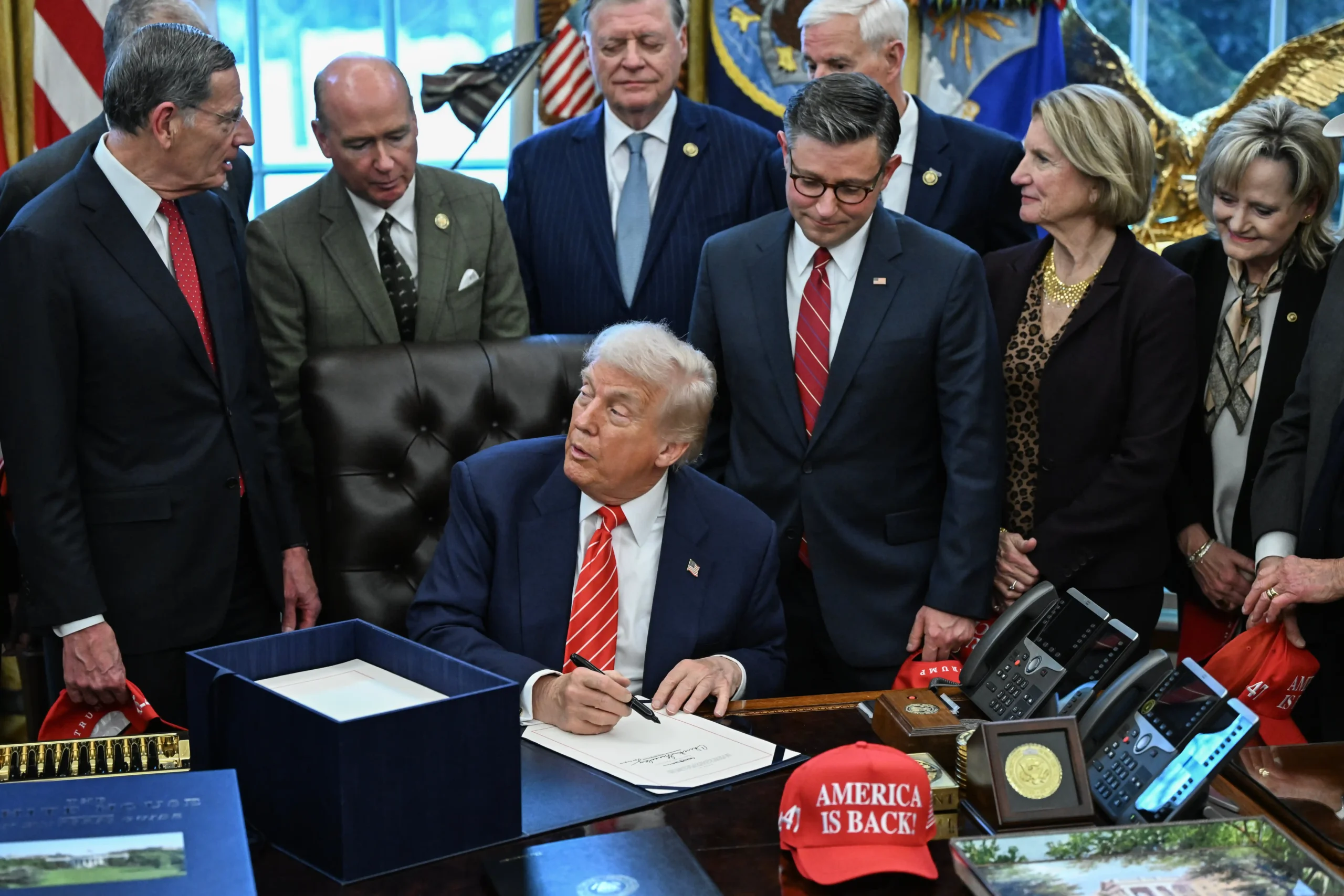
FEBRUARY 4, 2026 — WASHINGTON — President Donald Trump on Tuesday signed a sweeping federal funding bill that brought a four-day partial government shutdown to an end, restoring operations across multiple key agencies and temporarily easing tensions on Capitol Hill.
The legislation cleared the House late Monday evening in a narrow 217–214 vote after passing the Senate earlier in the day. The bill funds most federal departments through the remainder of the fiscal year, though negotiations over long-term homeland security spending remain unresolved.
The shutdown, which began at midnight last Friday, affected portions of the Departments of Education, Labor, Health and Human Services, and several smaller agencies. While essential workers remained on duty, thousands of federal employees were either furloughed or working without pay during the brief lapse in appropriations.
Speaking at the White House shortly after signing the measure, Trump described the agreement as “a responsible step forward” and credited bipartisan negotiators for avoiding what he called “longer and more painful disruptions.”
“We’ve secured strong commitments, and we’ve kept our government running,” the president said, while also signaling that debates over border security funding would resume in the coming weeks.
Lawmakers on both sides of the aisle expressed relief that a broader economic fallout had been avoided. Federal contractors, small businesses dependent on government payments, and airport workers had begun warning of potential ripple effects had the shutdown extended deeper into February.
House Speaker allies described the vote as difficult but necessary. Several fiscal conservatives opposed the package, arguing it did not sufficiently reduce discretionary spending. Progressive Democrats, meanwhile, criticized temporary stopgap measures tied to immigration enforcement funding.
Despite those disagreements, congressional leaders framed the compromise as a sign that divided government can still function under pressure.
Markets responded modestly on Tuesday morning, with Wall Street opening steady after days of uncertainty. Analysts noted that while a short shutdown rarely causes long-term economic damage, prolonged funding gaps can weigh on consumer confidence and federal operations.
Federal employees are expected to receive back pay under provisions included in the bill, consistent with prior shutdown resolutions. Agencies have begun notifying workers to resume normal schedules immediately.
Policy analysts say the more significant test lies ahead. Homeland Security funding was extended only temporarily, setting up another deadline later this spring. Immigration policy remains one of the most contentious issues in Washington, and lawmakers are already preparing for renewed negotiations.
Outside the Capitol, reactions were mixed. Advocacy groups representing federal workers welcomed the resolution but called for structural reforms to prevent recurring shutdown threats. Business associations urged lawmakers to adopt multi-year budgeting frameworks to reduce political brinkmanship.
Political strategists say the brief shutdown may also carry electoral implications as lawmakers look ahead to midterm campaigns. Both parties are expected to shape narratives around fiscal responsibility and border security in the months to come.
For now, government offices have reopened fully, national parks are operating without interruption, and agencies are resuming delayed administrative processes.
Whether the spirit of compromise holds remains uncertain. But Tuesday’s vote underscored a familiar Washington reality: deadlines still drive action, even in deeply polarized times.

