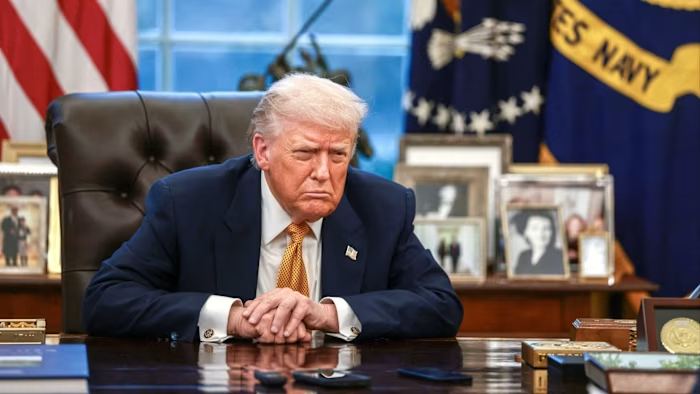
WASHINGTON, Jan. 29, 2026 – President Donald Trump issued a stern warning to Iran on Wednesday, asserting that any future attack against the United States would be met with a response “far worse than anything previously imagined.” The statement marks a significant escalation in tensions between Washington and Tehran, raising concerns among U.S. allies and international observers.
Speaking from the White House briefing room, Trump emphasized that the United States would not tolerate any aggressive actions against its personnel or interests abroad. “We have the strongest military in the world, and we will use it to protect our people,” the president said. “If Iran thinks they can challenge us, they are mistaken. The next attack will be far worse.”
The warning comes amid growing unease over Iran’s nuclear program and recent movements of military assets in the Gulf region. U.S. intelligence reports indicate that Tehran has accelerated certain nuclear activities, prompting Washington to increase surveillance and strengthen its naval presence in the Persian Gulf.
National Security Advisor Anthony Reynolds highlighted the administration’s approach, stressing a combination of deterrence and diplomacy. “Our goal is not war but ensuring Iran understands the consequences of any hostile actions,” Reynolds said. “We remain open to dialogue, but we will not compromise on our security.”
International reactions have been mixed. European allies urged restraint, warning that harsh rhetoric could exacerbate regional instability. The United Nations also called for calm, urging both sides to engage in constructive dialogue to avoid further escalation.
Experts note that Trump’s hardline stance is likely to energize his political base while creating divisions among policymakers who favor more measured responses. “This approach signals strength to supporters, but it carries risks,” said Dr. Karen Mitchell, a foreign policy analyst at Georgetown University. “Missteps could trigger unintended consequences in an already volatile region.”
In addition to military posturing, the administration is reportedly coordinating with Gulf states and NATO partners to monitor Iran’s movements and potential threats. This includes increased aerial reconnaissance and the deployment of additional naval assets to protect commercial shipping routes.
Domestically, the president’s remarks have sparked debate among lawmakers. Congressional leaders are weighing resolutions that would affirm U.S. defense commitments while emphasizing the importance of diplomacy. “We support our troops and national security, but we must also pursue avenues for de-escalation,” said Senate Majority Leader Carol Henderson.
The White House has indicated that it plans to hold further briefings to update the public on developments, as tensions remain high. Meanwhile, markets reacted cautiously, with energy and defense stocks experiencing minor fluctuations due to the uncertainty surrounding the geopolitical landscape.
While analysts acknowledge the seriousness of the situation, they also point out that diplomacy remains a critical tool. “History has shown that sustained engagement, even with adversaries, can prevent conflict,” said Dr. Mitchell. “The challenge is balancing deterrence with the need for dialogue.”
As the situation unfolds, the world watches closely, with analysts warning that any miscalculation could have wide-reaching implications for regional stability and global security.

