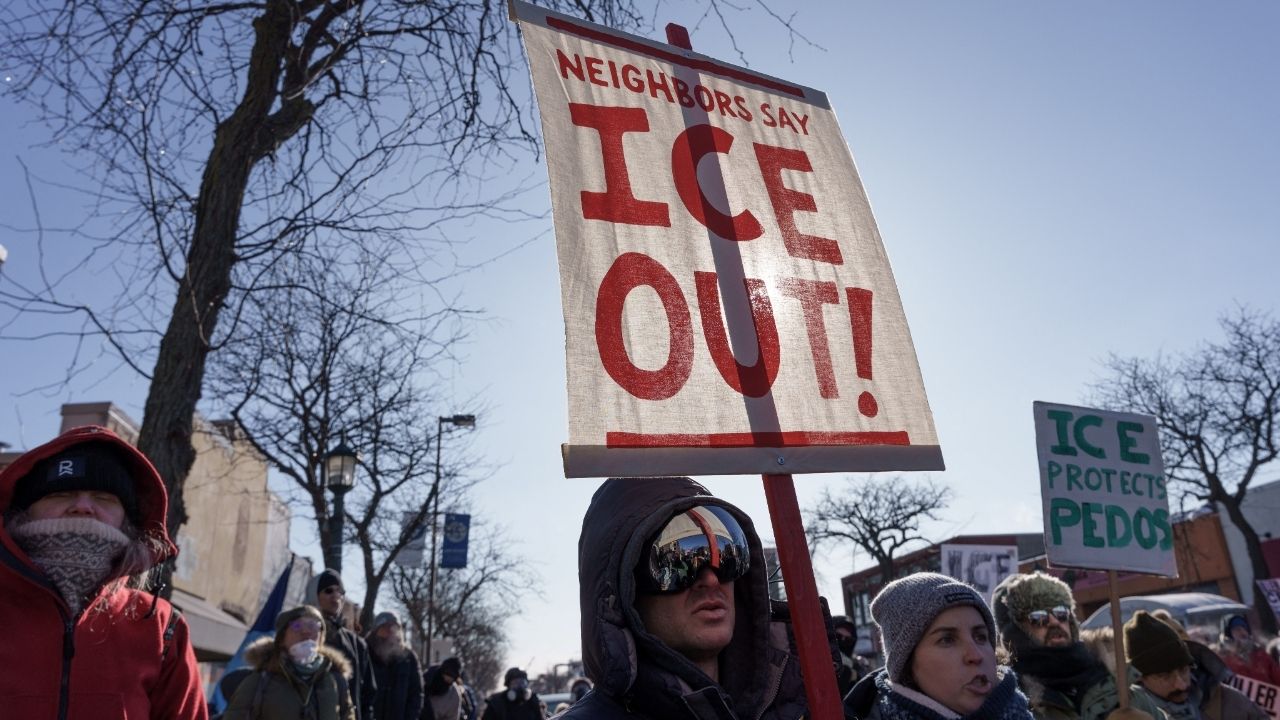
WASHINGTON/NEW YORK, January 30, 2026 — Cities and towns across the United States today saw massive demonstrations, walkouts and business closures as activists, students and community groups launched a coordinated “National Shutdown” — a general strike aimed at protesting the federal government’s immigration enforcement policies and fatal shootings by Immigration and Customs Enforcement (ICE) officers.
Organizers urged Americans to join the protest movement by abstaining from work, school and shopping — a call that was answered by participants in at least 46 states. In major metropolitan areas such as Minneapolis, New York, Los Angeles and Chicago, downtown districts were marked by protest marches, sit‑ins and rallies after workers walked off jobs and students left classrooms. “No work. No school. No shopping. Stop funding ICE,” read one of the movement’s central slogans, posted widely on social media and banners lining demonstration routes.
The strike — dubbed the “National Shutdown” or “ICE Out” by its organizers — was sparked by widespread outrage over recent encounters between federal immigration agents and U.S. citizens. Among the most high‑profile cases were the killings earlier this month of Renée Good and Alex Pretti in Minneapolis, incidents captured on video and shared widely online, fueling grass‑roots mobilization. Protesters also pointed to other deaths involving federal agents in Los Angeles and the Chicago area — part of what activists describe as an escalation in aggressive enforcement tactics under the current administration.
Student groups, immigrant rights organizations, labor unions and progressive advocacy networks spearheaded the national effort. In Minneapolis, where tensions have been at their highest following the fatal shootings, thousands of marchers converged at city hall before heading toward federal buildings. In New York, healthcare workers and local business owners closed doors to join the strike, while in Phoenix, schools reported significant absences as students took to the streets in solidarity.
“We are here because we are outraged at the loss of human life and the fear that federal agencies have become unaccountable,” said Brianna Jackson, a leader of the University of Minnesota’s Black Student Union, at a rally outside the Minneapolis Federal Courthouse. “This is a moment for our nation to confront what has gone wrong and demand change.”
Support for the movement was not limited to grassroots organizers. A number of public figures and entertainers publicly endorsed the demonstrations, sharing messages of solidarity and urging peaceful participation. While protest leaders emphasized that the actions were intended to be nonviolent, police departments in several cities reported making arrests related to civil disobedience and unlawful assembly.
Despite its scale, not all Americans participated in the strike. Many employers reported that essential services continued to operate, though retail outlets, offices, and educational institutions in major urban centers saw significant closures. Transit systems reported some disruptions as planned protest marches intersected with peak commuting hours.
The movement’s organizers also called for specific political outcomes, including the defunding or abolition of ICE and more comprehensive immigration policy reforms. They argue that the current enforcement apparatus has overstepped its authority and failed to protect civil liberties, particularly following what demonstrators call “unjustified violence” against civilians. These demands have intensified a national debate over the role of federal immigration agencies, public safety and the rights of non‑citizens.
Political leaders reacted with a mix of caution and criticism. Members of Congress acknowledged the right to peaceful protest while expressing concern about economic disruption and potential safety risks. Some lawmakers urged negotiators to use the energy of the demonstrations as leverage in ongoing debates over immigration policy and Department of Homeland Security funding.
“This moment reflects deep frustration among many Americans,” said Senator Maria Vega, a Democrat from California. “But it also underscores the urgent need for a rational, humane approach to immigration that respects the rule of law and human dignity.”
As the National Shutdown drew to a close late Friday evening, many organizers vowed that the movement was only the beginning of sustained efforts to transform federal immigration policy. Plans for more demonstrations and community actions in the coming weeks were already circulating on social media platforms, signaling that the protest’s momentum may extend well beyond January 30.

