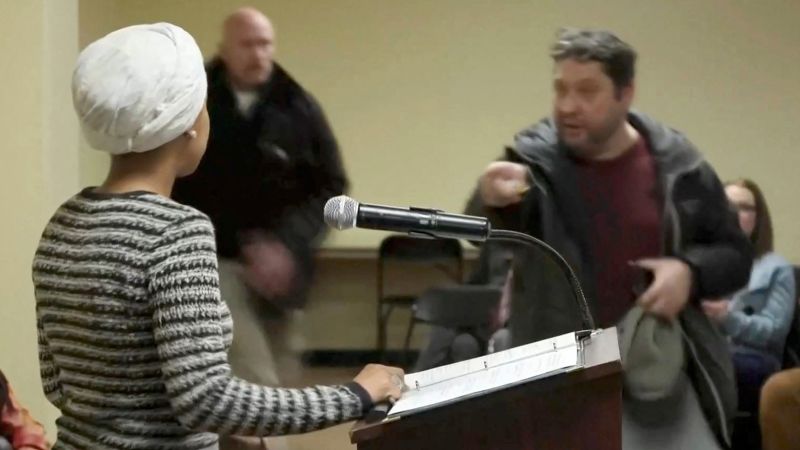
MINNEAPOLIS, Jan. 28, 2026 — Representative Ilhan Omar was briefly rushed offstage Tuesday evening after an individual sprayed an unknown substance during a packed town hall meeting in downtown Minneapolis, an incident that has renewed national concerns about the safety of elected officials amid rising political hostility.
Omar was not seriously injured, according to her office, and returned to public view later in the evening. Authorities confirmed that one suspect was detained at the scene and that the substance did not appear to pose a biological threat. The investigation remains ongoing.
The disruption occurred as Omar was responding to a question about immigration enforcement when a disturbance erupted near the front of the venue. Security personnel quickly intervened as attendees scrambled for exits, prompting a temporary evacuation.
“This was a frightening moment, but we will not be intimidated,” Omar said in a statement. “Democracy requires dialogue, even when passions run high.”
The incident comes at a time of heightened political tensions nationwide, with lawmakers increasingly reporting threats and harassment. According to Capitol Police data, threats against members of Congress have risen sharply over the past decade, a trend experts attribute to polarization and the amplification of rhetoric online.
Local leaders from both parties condemned the incident. Minnesota Governor Tim Walz called it “an unacceptable attack on democratic engagement,” while Republican officials urged calm and restraint as the investigation proceeds.
While law enforcement has not disclosed a motive, the event has reignited debate over public safety at political gatherings. Many lawmakers pride themselves on accessible town halls, but incidents like Tuesday’s raise questions about how to balance openness with security.
Political analysts note that Minneapolis has been a flashpoint for national debates over policing, immigration, and civil rights. Omar, a frequent target of online harassment, has previously spoken about the personal toll of public service in an era of extreme partisanship.
Security experts warn that symbolic attacks, even when non-lethal, can have a chilling effect on civic participation. “The goal is disruption and fear,” said one former federal security official. “It doesn’t take violence to achieve that.”
Despite the incident, Omar’s office confirmed that future public events will continue as planned, though with enhanced security measures. Advocacy groups have urged Congress to revisit funding for lawmaker protection without restricting public access.
As investigations continue, the Minneapolis episode stands as another reminder of the fragile state of political discourse in the United States — and the growing challenge of protecting democratic spaces without closing them off entirely.

