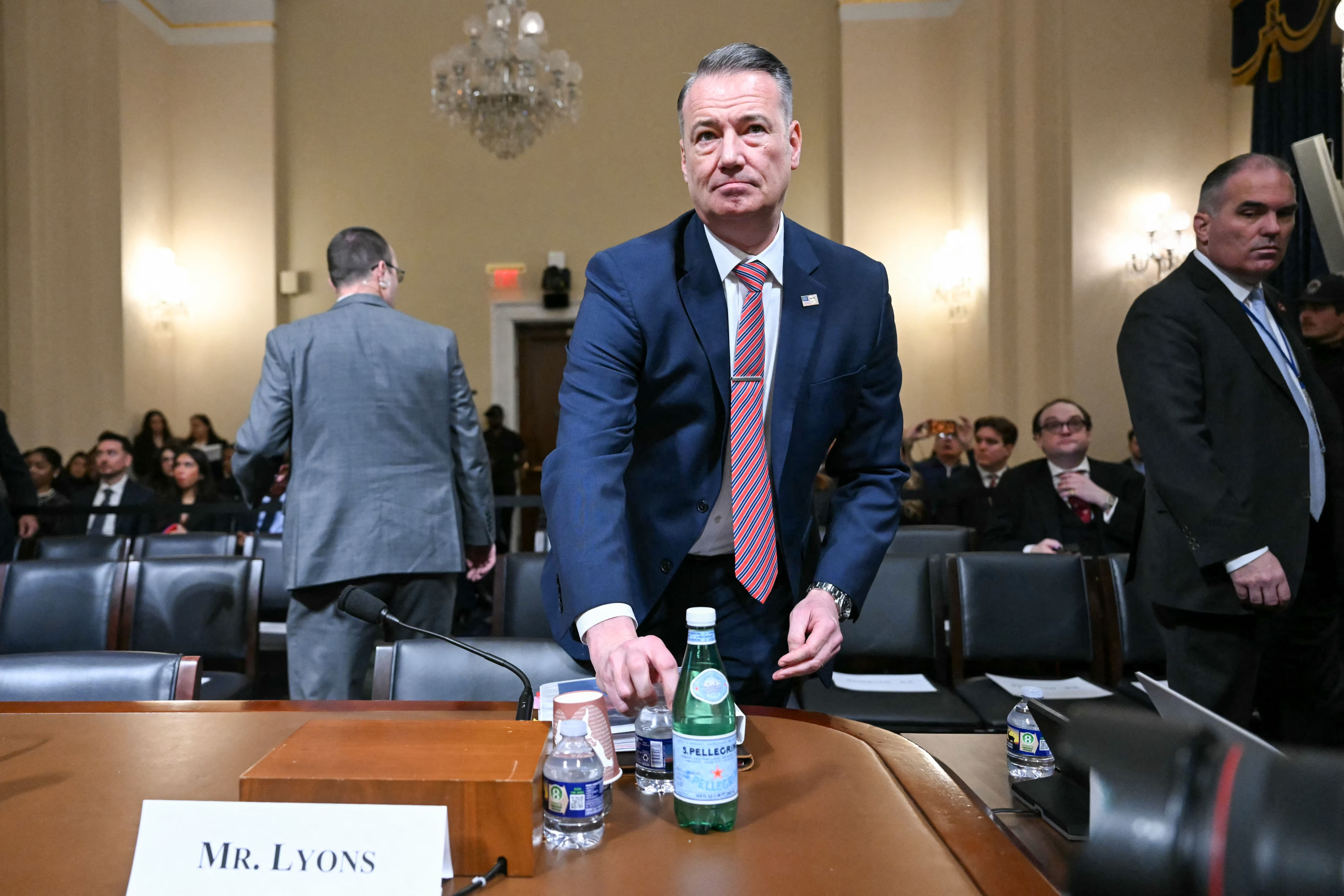
February 11, 2026 (Wednesday) WASHINGTON — In a high‑stakes hearing on Tuesday that underscored widening political fractures over U.S. immigration enforcement, Acting Director of U.S. Immigration and Customs Enforcement (ICE) Todd Lyons stood before the House Homeland Security Committee to defend the agency’s intensified enforcement tactics under President Donald Trump’s administration.
The three‑hour session, held on Capitol Hill, brought together the heads of the major immigration enforcement agencies — Lyons of ICE, Rodney Scott of U.S. Customs and Border Protection (CBP), and Joseph Edlow of U.S. Citizenship and Immigration Services (USCIS) — who collectively branded recent criticisms as uninformed and politically motivated.
“We’re facing unprecedented threats to national security, and we’re only getting started,” Lyons said, echoing the administration’s tougher stance on deportations during his testimony. “Our officers will not be intimidated by this rhetoric or protests that misrepresent the rule of law.”
Lyons’ testimony came amid heightened public scrutiny following two fatal incidents in Minneapolis in recent weeks in which federal officers shot and killed U.S. citizens Renee Good and Alex Pretti during immigration enforcement operations. Those deaths sparked national outrage and intensified calls for reforms to ICE’s operational protocols.
Democratic lawmakers pulled no punches, drawing sharp rebukes of the agency’s tactics. “This committee must ask tough questions about how an agency charged with enforcing immigration laws has operated with extraordinary force — sometimes at the expense of civil liberties and the lives of U.S. citizens,” said Rep. Sheila Jackson Lee (D‑TX), one of the most vocal critics. Democrats pushed for measures including mandatory body cameras, restrictions on mask‑wearing by enforcement agents, and greater transparency in operations.
Lyons and his colleagues largely rebuffed these calls, asserting that operational secrecy and tactical flexibility are essential to ensuring agent safety and mission success. They pointed to an 8,000 percent surge in threats against immigration officers in recent months, including online harassment and targeted doxxing. “If we remove tactical tools that help protect our personnel, we risk endangering not only our officers but the public they are sworn to protect,” Lyons argued.
Republican lawmakers on the committee largely backed the administration’s approach, emphasizing that enforcing U.S. immigration laws is a core responsibility of the federal government. “President Trump tasked these agencies with robust enforcement, and that’s exactly what they’re doing,” said Rep. Mark Green (R‑TN). “Democrats’ proposals would weaken border security and encourage lawlessness.”
The hearing also touched on the controversial deployment of ICE personnel ahead of the 2026 FIFA World Cup, set to be co‑hosted across the United States, Canada, and Mexico this summer. Rep. Nellie Pou (D‑NJ) asked whether ICE would scale back or pause operations during the event to avoid deterring international visitors. Lyons insisted that the agency would continue enforcement while also ensuring public safety, stopping short of committing to any operational changes.
The session occurred as public opinion on mass deportations appears to be shifting. Recent polling indicates increasing discomfort among a significant portion of Americans with the pace and methods of enforcement, even among some Republican‑leaning groups. Civil rights activists argue that the current approach undermines trust in law enforcement and erodes fundamental liberties.
The Trump administration, buoyed by a 2025 budget bill that bolstered funding for ICE and related agencies, continues to advance its deportation agenda as a key policy objective in its second term. Critics, however, warn that without systemic reforms, enforcement actions will continue to produce tragic outcomes that deepen societal divisions.
By the end of the hearing, little consensus had emerged. Lawmakers remain deeply divided on a path forward, with Republicans calling for continued support and Democrats signaling plans to pursue legislative changes. Homeland Security funding — with a critical deadline looming — is expected to be a central battleground in the weeks ahead.

