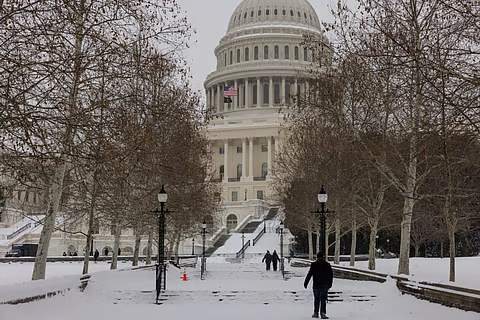
WASHINGTON, Jan. 27, 2026 — A sweeping and historically severe winter storm battered the United States this week, leaving millions without power, disrupting travel across the nation and contributing to at least 18 confirmed deaths, officials said Tuesday. Meteorologists described the system as one of the broadest and most impactful in decades, affecting areas from New Mexico to New England.
The storm, part of the January 2026 North American winter system, dropped more than a foot of snow in many regions and brought sleet and ice to parts of the South and Midwest. The combination of heavy precipitation and arctic cold overwhelmed infrastructure, prompting widespread emergency declarations and stretching emergency response systems to the limit.
Power Grid Under Strain
Utility companies reported more than one million customers without electricity at the peak of the storm, with the hardest‑hit areas including Tennessee, Mississippi and Texas. In some rural communities, downed power lines and frozen equipment left residents without heat on the coldest nights, raising concerns among local officials about health risks for vulnerable populations.
“We are dealing with unprecedented demand on the grid, combined with equipment failures and extreme temperatures,” said an official with a major Mid‑Atlantic utility. “Restoring power is our top priority, but conditions remain hazardous for crews in many areas.”
In eastern states, rolling blackouts were instituted in some areas as grid operators worked to balance demand and prevent catastrophic failures. In the Mid‑Atlantic region alone, tens of thousands remained without electricity late Tuesday, even as crews worked round‑the‑clock.
Travel Chaos and Flight Cancellations
Air travel was similarly disrupted, with more than 10,000 flights canceled nationwide since Sunday, according to aviation tracking services — marking one of the largest travel impacts from winter weather in U.S. history. Major hubs in Dallas‑Fort Worth, New York’s LaGuardia and Boston Logan International Airports were among those reporting the highest cancellation rates.
Travelers stranded at airports voiced frustration, with many flights grounded amid ice‑covered runways and visibility challenges. Amtrak and regional rail services also reported delays and cancellations, leaving commuters and long‑distance travelers scrambling for alternatives.
Public Safety and Fatalities
State and local authorities confirmed at least 18 fatalities linked to the storm, many occurring in traffic accidents on slick, ice‑coated roads. In some southern states unaccustomed to such conditions, emergency responders reported multi‑vehicle pileups and hypothermia cases.
Governors in at least 25 states declared states of emergency, freeing up funds and personnel to assist with snow removal, sheltering and medical support. Shelters saw surges in demand, particularly for those without heating due to power outages.
“The scale and severity of this storm have exceeded even our most challenging projections,” said the governor of one affected state. “We are focused on saving lives, clearing critical roadways and restoring essential services.”
Impact on Communities and Schools
Across the country, schools and businesses remained closed Tuesday as communities continued cleanup efforts. In some regions, residents used snow blowers, shovels and community plows to clear driveways and neighborhood streets in freezing conditions.
Emergency management officials warned of continued hazards from falling tree limbs, ice‑covered sidewalks and frigid overnight temperatures that could plunge well below zero.
Economic Disruption and Response
Analysts estimate the storm’s economic toll could exceed tens of billions of dollars once factoring in lost productivity, property damage and emergency response costs. Retailers reported spikes in sales for generators, food supplies and cold‑weather gear ahead of the storm’s peak, though supply chain disruptions tempered availability in some regions.
Federal agencies, including the Federal Emergency Management Agency (FEMA), mobilized resources to support affected states, coordinating with local partners to deliver food, water and medical supplies to hard‑hit communities.
Climate Experts Weigh In
Climate scientists say such powerful winter storms are consistent with broader trends of climate volatility, where increased atmospheric moisture and shifting temperature gradients can fuel intense systems. While no single event can be directly attributed to climate change alone, researchers note that warming trends can amplify extreme weather patterns, leading to heavier precipitation events even in winter months.
As northern states begin a slow thaw and cleanup efforts continue, officials caution that icy conditions may linger into next week, threatening travel and infrastructure.

