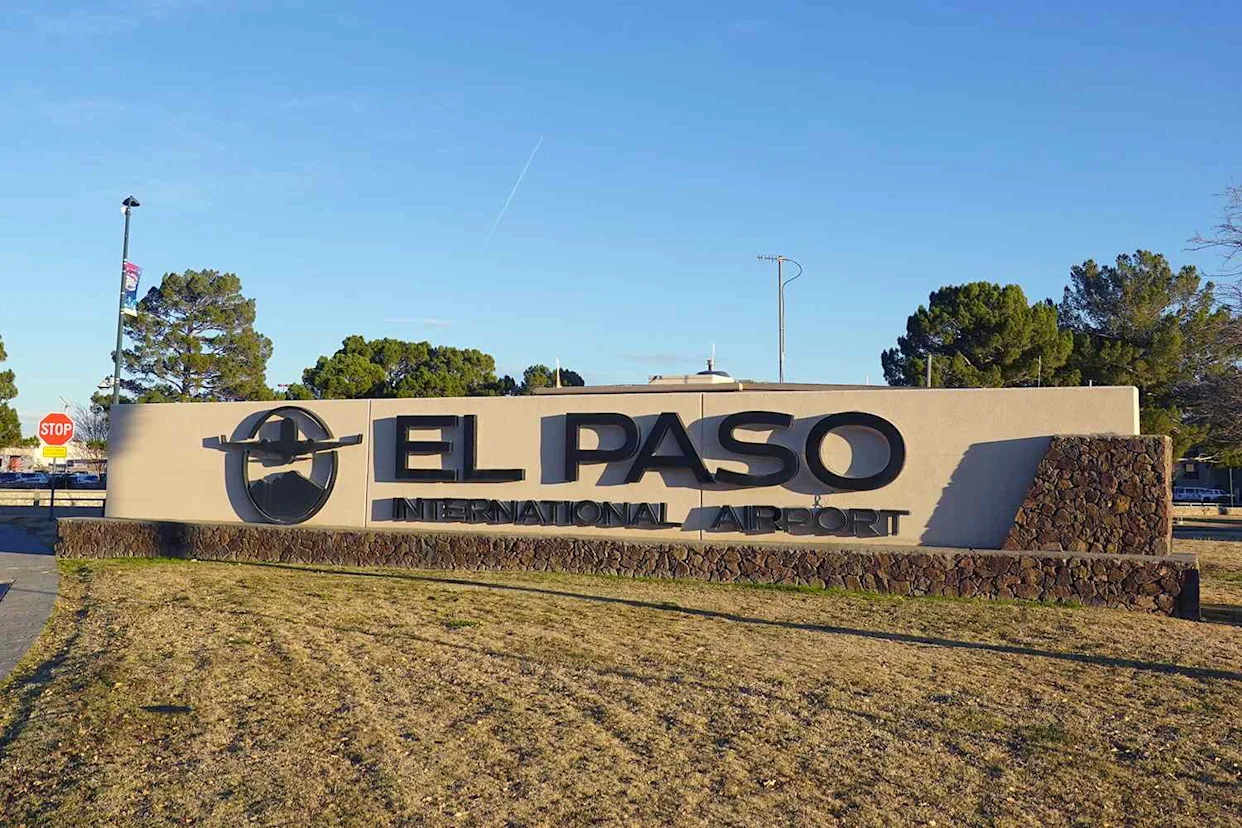
February 11, 2026 (Wednesday) EL PASO, TEXAS — The Federal Aviation Administration (FAA) issued an unprecedented flight restriction late Tuesday night that has grounded all air traffic at El Paso International Airport and surrounding airspace for the next 10 days, a directive that has left the region’s bustling air travel hub effectively shuttered through Feb. 20.
The FAA designation classifies the area — reaching up to 18,000 feet in altitude — as national defense airspace, meaning all commercial, cargo, and general aviation flights are prohibited from entering or departing the airport and its adjacent airspace over the next week and a half. The directive, which began at roughly 11:30 p.m. local time Tuesday, also affects airspace near Santa Teresa, New Mexico.
In a brief advisory posted on social media early Wednesday, airport officials confirmed the grounding order but said federal authorities had not provided detailed explanations for the security concern. “We understand the impacts this temporary closure may have on travelers, airlines, and airport businesses,” an airport spokesperson said, urging passengers to contact their carriers directly for updated flight information.
The move has disrupted travel plans for thousands of passengers and complicated logistics for freight companies relying on El Paso as a regional link to major hubs including Houston, Los Angeles, and Atlanta. Southwest, American, United, Frontier, and Delta — among the carriers that operate regularly through the airport — have temporarily canceled flights and are working to rebook passengers via alternate airports.
Local leaders in this border city of roughly 680,000 residents expressed concern and frustration, emphasizing the economic and social impact of the closure. “El Paso’s airport is a vital artery for commerce and travel,” said Texas State Representative Vince Perez. “To see operations halted without clear information is deeply troubling for our community and our business sectors.”
The FAA’s notice warned that non‑compliance with the flight suspension could prompt interception by military or law enforcement aircraft, and that potentially “deadly force” could be authorized against aircraft deemed a threat — language that underscored the seriousness of the security classification.
Officials have offered limited public detail on the nature of the security risk prompting the closure. Federal agencies involved in aviation oversight characterized the situation as dynamic and sensitive, promising additional updates as soon as operational assessments are complete. Despite repeated press inquiries, FAA spokespersons declined to specify whether the action is related to national defense concerns, airspace integrity issues, or other classified factors.
Local chambers of commerce and port authorities expressed alarm about the closure’s ripple effects on businesses, tourism, and cross‑border trade. El Paso’s proximity to Ciudad Juárez, Mexico — with which it shares extensive economic ties — means that disruptions at the airport could strain both domestic and international commercial flows.
Travelers affected by the grounding have scrambled to find alternatives, with some rerouting through airports in nearby cities including Albuquerque and Phoenix, while long‑distance bus travel and rail options have seen an uptick in demand. Local hotels reported cancellations linked to flight disruptions as passengers adjust itineraries.
Regional airlines and airport stakeholders have called on federal authorities to provide prompt, transparent updates to help mitigate the impacts of the closure.
“This is an extraordinary action,” said one airline executive, speaking on condition of anonymity. “We appreciate the need for security in air travel, but clarity is essential so that airlines and passengers alike can plan and respond effectively.”
Federal aviation law allows the FAA broad authority to restrict airspace for national defense or public safety reasons. Such measures are rare and often tied to significant security concerns, but officials indicated that additional information would be released as soon as it could be responsibly communicated to the public.
In the meantime, the city of El Paso remains in a state of logistical limbo, its airport dormant and its residents and travelers awaiting official word on when normal operations might resume.

