WASHINGTON, January 30, 2026 — After days of tense negotiations and mounting pressure from both sides of the political aisle, U.S. lawmakers and the White House reached a last‑minute funding agreement today that temporarily averts a government shutdown — but leaves key disputes over immigration policy unresolved.
The deal, announced in the early hours of Friday, ensures continued funding for most federal agencies while extending Department of Homeland Security (DHS) appropriations for two weeks — a move designed to provide negotiators more time to address contentious differences over immigration enforcement and oversight of Immigration and Customs Enforcement (ICE).
For much of this week, Capitol Hill was gripped by partisan stalemate as Democrats pushed to attach strict new reporting requirements, use‑of‑force rules, and accountability measures to DHS funding, arguing that reform is essential in light of public anger over the deaths of U.S. citizens in recent encounters with ICE officers. Republicans and the White House countered that such conditions could undermine national security and hamper border enforcement.
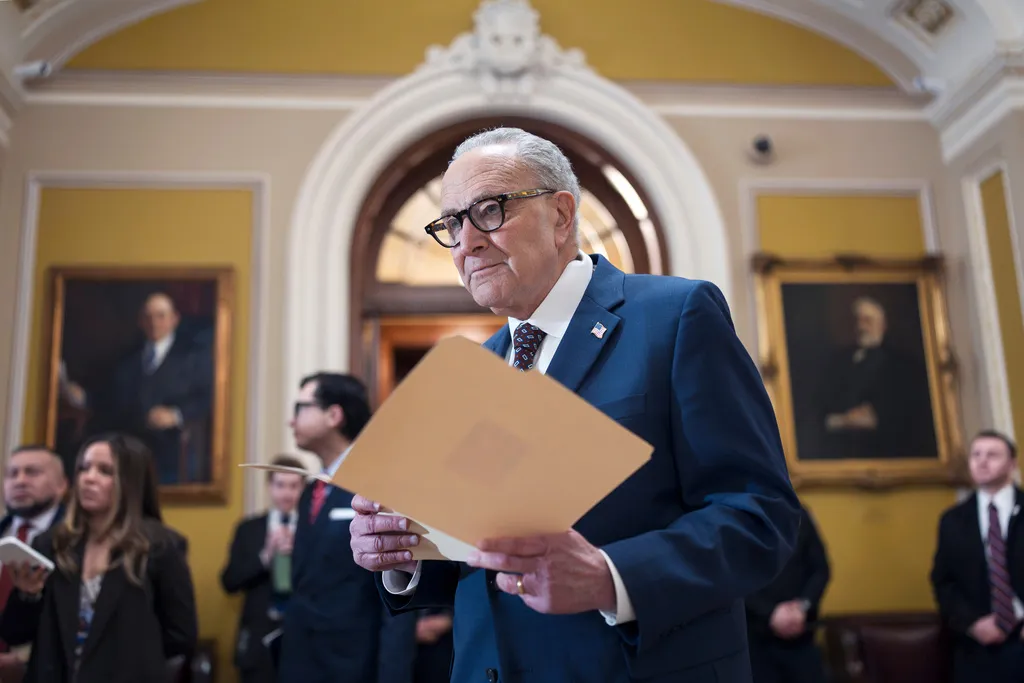
In separate quarters, negotiators hammered out a compromise to keep the broader government funded through September while temporarily extending DHS funding through mid‑February. Senate Democratic Leader Chuck Schumer and Senate Majority Leader Richard Blumenthal both expressed guarded optimism about the agreement, emphasizing that it “buys time” for further discussions.
“This is not a final resolution,” Schumer said during a Capitol news conference. “But it ensures that essential services remain operational and that we have space to work toward meaningful, lasting reforms.”
President Donald Trump also addressed the deal, urging lawmakers to support the temporary measure and signaling his willingness to engage in further talks. “We have a duty to keep the government running,” he said. “Now we must focus on finding pragmatic solutions that protect our borders, uphold our laws, and respect the rights of all Americans.”
Despite the breakthrough, the political landscape remains deeply divided. Democrats have made clear they intend to insist on concrete changes to immigration enforcement, including enhanced oversight of ICE agents, improved transparency in operations, and limits on certain types of raids deemed overly aggressive. They argue that these reforms are necessary to restore public confidence after high‑profile incidents that resulted in civilian deaths and widespread protests across the country.
Republican lawmakers, particularly those representing conservative districts, have largely stood by the administration’s approach to immigration enforcement, emphasizing the need for robust border control and backing continued funding for ICE and Customs and Border Protection (CBP). Speaker of the House Mike Johnson acknowledged the urgency of preventing a shutdown but reiterated opposition to what he described as “punitive restrictions” on federal law enforcement.
“We support accountability,” Johnson said, “but we cannot tie the hands of the very agents who are charged with protecting our citizens and securing our borders.”
The two‑week extension for DHS funding was crafted to allow congressional negotiators to bridge these divides without triggering a lapse in appropriations. However, if talks collapse or progress stalls, parts of the federal government — particularly those tied to DHS appropriations — could face a shutdown as early as mid‑February.
Analysts said the temporary deal — while averting immediate disruption — highlights the broader political impasse over immigration policy that has become one of the most polarizing issues in contemporary U.S. politics. Public opinion appears deeply split, with recent polls suggesting rising dissatisfaction with federal enforcement tactics but continued concern about border security and immigration control.
Advocacy groups on both sides of the debate reacted strongly to Thursday’s agreement. Immigration reform activists hailed the congressional willingness to delay final action as a victory for accountability and public input, while conservative advocacy organizations warned that further concessions could weaken national security.
Amid this charged atmosphere, lawmakers face mounting pressure from constituents and activist movements alike to deliver substantive changes. The coming weeks are expected to include intense negotiations, amendments, committee hearings and, possibly, floor votes that will test both parties’ ability to compromise on one of the nation’s most divisive issues.
For now, government operations continue uninterrupted, and federal employees remain on the job. But with momentum building on all sides, the temporary funding extension may prove merely the opening chapter in the year’s most consequential legislative battle.

