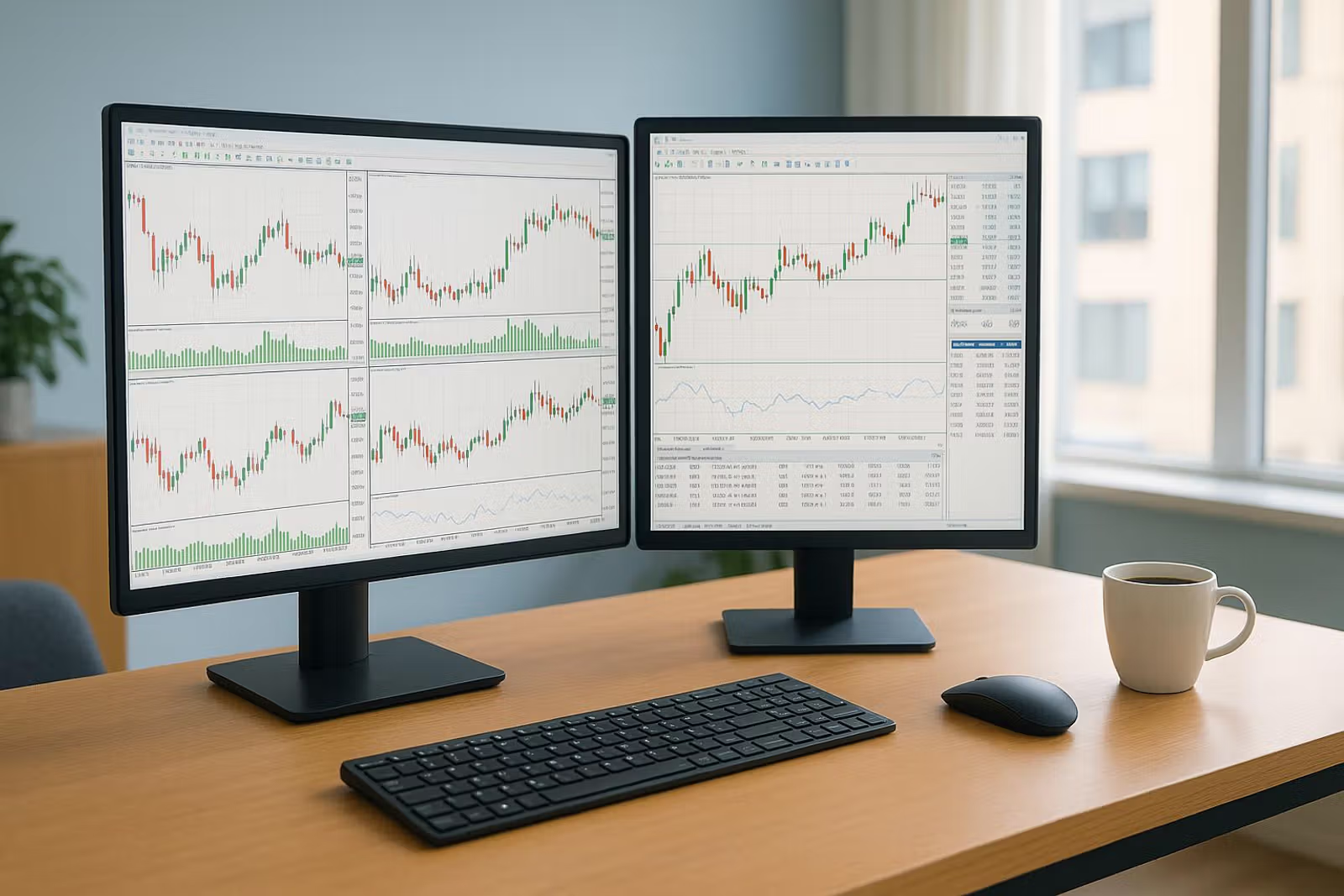
MetaTrader 5 (MT5) has become the default platform for a large share of retail forex and CFD traders, but many traders only ever use a fraction of what it actually offers. Understanding the full feature set — beyond just placing buy and sell orders — can materially change how effectively a trader analyzes markets, manages risk, and executes a strategy.
Why MT5 became the industry standard
MT5 succeeded its predecessor, MT4, by expanding well beyond forex into stocks, indices, commodities, and other asset classes, while adding a more powerful set of analytical and automation tools. Its combination of broad market access, cross-device availability (desktop, web, and mobile), and support for algorithmic trading is why most multi-asset brokers build their offering around it rather than a proprietary platform.
Charting and technical analysis tools
MT5 ships with a substantial charting toolkit that goes beyond basic candlestick views:
- Multiple timeframes and chart types. From one-minute charts up to monthly views, with candlestick, bar, and line options, letting traders zoom between short-term entries and longer-term trend context without switching tools.
- Built-in technical indicators. Dozens of standard indicators — moving averages, RSI, MACD, Bollinger Bands, and more — are available natively, with support for custom indicators built or downloaded separately.
- Drawing tools and objects. Trendlines, Fibonacci retracements, channels, and geometric shapes, useful for traders who rely on price-action analysis rather than indicators alone.
- Depth of Market (DOM). A view into pending buy and sell orders at different price levels, giving more experienced traders a sense of short-term supply and demand around the current price.
Order types and execution features
Beyond simple market orders, MT5 supports a broader range of order types that allow more precise trade management: stop and limit orders, stop-loss and take-profit levels attached directly to a position, and trailing stops that adjust automatically as a trade moves in a trader’s favor. Execution speed and order type flexibility together determine how closely a trader’s actual results match their intended strategy, particularly during fast-moving news events.
Algorithmic trading and automation
One of MT5’s most significant advantages over simpler platforms is native support for Expert Advisors (EAs) — automated trading programs written in MQL5, MT5’s proprietary programming language. Traders can build, backtest, and deploy their own automated strategies, or use pre-built EAs, without needing a separate platform. The built-in Strategy Tester allows a strategy to be run against historical data before it’s ever used with live capital, which is a meaningful risk-reduction step many traders skip when using less capable platforms.
Portfolio and risk visibility
MT5’s account and trade history views give traders a consolidated look at open positions, margin usage, and floating profit/loss across every open trade — not just position-by-position, but at the account level. For traders holding multiple positions across different instruments, this account-level visibility is what actually reveals overexposure or correlated risk that isn’t obvious when looking at a single chart.
Cross-device access
MT5 is available as a desktop application, a web-based platform requiring no download, and mobile apps for iOS and Android — all synced to the same account in real time. This matters practically: a trader can set up a position on desktop, monitor it from a phone during the day, and adjust a stop-loss from a web browser if desktop access isn’t available, without any gap in visibility.
Getting the most out of the platform
Most traders only scratch the surface of what MT5 offers, sticking to basic order placement and a couple of familiar indicators. Getting real value from the platform usually means deliberately exploring the tools that go unused by default — the Strategy Tester, Depth of Market, and account-level exposure views in particular. A MT5 forex and CFD trading platform that supports the full range of these features, rather than a stripped-down or proprietary alternative, gives traders room to grow into more advanced tools as their strategy develops, instead of hitting a ceiling on what the platform can actually do.

