February 11, 2026 (Wednesday) SEATTLE — Downtown Seattle erupted in celebration Wednesday as hundreds of thousands of fans turned out to honor their Super Bowl LX World Champion Seattle Seahawks, marking one of the largest civic celebrations the city has hosted in years.
The festivities kicked off early with a “Trophy Celebration” at Lumen Field at 10 a.m., drawing dedicated supporters who secured free but ticketed access to witness the presentation of the Lombardi Trophy following Seattle’s 29‑13 victory over the New England Patriots in Super Bowl LX this past Sunday.
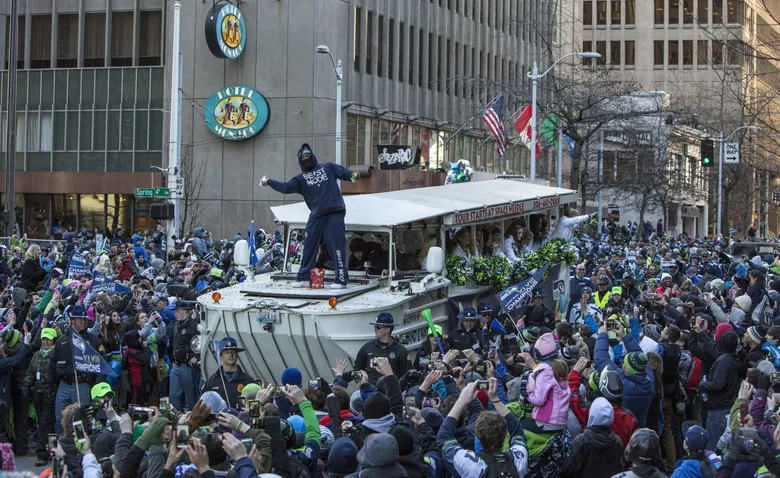
By 11 a.m., the parade officially rolled down Fourth Avenue through downtown — a route stretching roughly two miles — as an estimated 700,000 to 1 million fans lined sidewalks, perched on balconies, and waved team colors in the brisk February morning.
Police, emergency responders, and transit officials worked together to maintain order and safety as the throngs gathered. Road closures across central Seattle stretched from Lumen Field northward, and transportation agencies urged parade‑goers to use public transit — including buses, light rail, and ferries — to ease congestion, with additional service deployed throughout the day.
Spectators of all ages — from toddlers in Seahawks jerseys to long‑time fans with decades of team loyalty — packed sidewalks hours before the parade’s scheduled start. Street vendors, food trucks, and local businesses along the route saw an early surge of activity, reflecting the economic boost that major sporting celebrations often bring to urban cores.
“Seattle knows how to party,” said longtime fan Marianne Lopez, waving a pennant above her head. “We waited a long time for another championship, and the city turned out in full force to celebrate these heroes.”
Players and coaches appeared on open‑top vehicles and floats, waving to cheering crowds and soaking in the adulation. Head coach Mike Macdonald, his face lit with a wide grin, stood beside quarterback Sam Darnold as spectators chanted and cheered. Fans held homemade signs, chanted player names, and buzzed with energy that built steadily throughout the procession.
Along the route, security measures were visible but unobtrusive. Seattle Police coordinated closely with regional partners, setting up steel barriers and crowd control points to separate pedestrians from moving vehicles, and ensuring parade participants and attendees could share the celebration safely.
The event’s timing — a Wednesday morning — posed unique logistical challenges for residents, with schools remaining open and normal work schedules in effect. Seattle Public Schools officials confirmed that classes would proceed without excused absences tied solely to parade attendance, prompting many families to juggle celebration plans with educational commitments.
Public transportation remained packed throughout the event, with King County Metro buses and Link Light Rail services running at high frequency to accommodate fans. Many residents and visitors alike noted that leaving personal vehicles behind and opting for transit was essential due to downtown road closures and limited parking availability.
Local businesses reported brisk sales, especially restaurants and cafes along Fourth Avenue and adjacent neighborhoods. “This is like a holiday for us,” said cafe owner David Kim, whose small eatery had lines out the door by late morning. “It’s amazing to see community come together like this.”
The parade concluded in the early afternoon, but celebrations continued throughout the city as fans lingered, sharing photos, exchanging stories, and joining in spontaneous street chants. Festive energy spilled into Pioneer Square, Pike Place Market, and Seattle Center, where families and fans alike mingled long after the last float passed.
City officials estimate that the economic impact of the parade and associated tourism could exceed tens of millions of dollars in direct and indirect spending — a notable boon for local businesses and service sectors.
For supporters who waited years for another Seahawks title, the jubilant march through Seattle represented not just a sporting triumph, but a moment of communal identity and pride.

