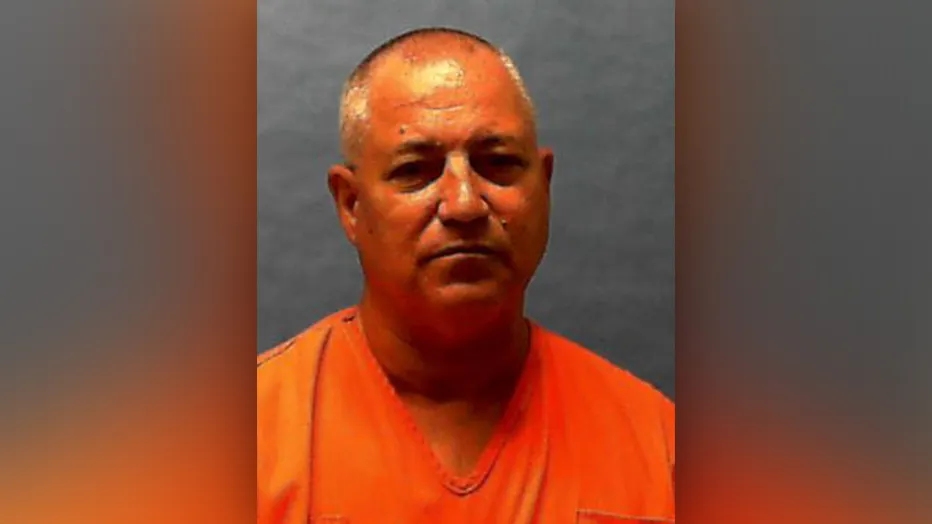
February 10, 2026 – Tuesday – Starke, Fla. — Florida officials prepared Tuesday for the state’s first execution of 2026, underscoring a renewed era of capital punishment activity that has drawn national attention. At approximately 6 p.m. Eastern, death row inmate Ronald Palmer Heath, 64, is scheduled to receive a lethal injection at Florida State Prison after more than three decades of legal battles over his conviction for murder and robbery.
Heath’s execution carries particular weight because Florida last year set a modern‑era state record with 19 executions, a number far surpassing any other year since capital punishment was reinstated in the United States in 1976. Gov. Ron DeSantis, who championed the aggressive use of the death penalty during his tenure, has signed a series of death warrants that have kept the state at the forefront of the national debate over capital punishment.
The case stems from the May 1989 killing of traveling salesman Michael Sheridan, whom Heath and his brother, Kenneth Heath, encountered at a Gainesville bar. Initially socializing with Sheridan, the brothers later lured him to a remote wooded area, saying they would smoke marijuana. Prosecutors allege that Kenneth Heath then pulled a handgun on Sheridan and shot him in the chest when he refused to hand over his belongings.
According to court records, once Sheridan emptied his pockets, Ronald Heath assaulted the victim with kicks and a knife, and his brother fired two fatal shots to the head. The brothers then disposed of the body and used Sheridan’s credit cards to make purchases at a mall, authorities said. Investigators later connected Ronald Heath to the crime through surveillance footage and the recovered items purchased with Sheridan’s cards.
While Kenneth Heath accepted a plea deal and is serving a life sentence, Ronald Heath was sentenced to death. Over the years, his defense attorneys have argued that Florida corrections officials mismanaged execution protocols and that Heath’s incarceration as a juvenile stunted his brain development, potentially in violation of constitutional protections.
Last week, the Florida Supreme Court denied Heath’s appeal, clearing the way for Tuesday’s execution. However, defense attorneys indicated that additional appeals are pending before the U.S. Supreme Court, which could yet intervene and delay the execution.
In recent months, state and federal courts have grappled with challenges to the lethal injection process itself, as attorneys raised concerns over drug administration practices and the potential for cruel and unusual punishment. In one filing, counsel argued that past executions exhibited inconsistencies and errors, arguing that the state’s protocols did not meet constitutional standards.
Amid these legal wranglings, opponents of capital punishment have continued to voice their objections. The Florida Conference of Catholic Bishops, civil liberties groups, and human rights activists have urged Gov. DeSantis and other officials to reconsider the use of the death penalty, pointing to ongoing debates over fairness, racial disparities, and the irreversible nature of the sentence.
Despite this, the state appears set to proceed. Authorities have already scheduled two additional executions in the coming weeks, with inmates Melvin Trotter and Billy Leon Kearse slated for February 24 and March 3, respectively.
Supporters of the death penalty in Florida argue that executions serve justice for victims and deter future violent crimes. “We uphold the law and ensure that individuals who commit the most heinous acts face the consequences,” said a spokesperson for the Florida Department of Corrections, emphasizing the procedural safeguards involved.
Critics, however, insist that the justice system’s imperfections — from reliance on eyewitness testimony to socioeconomic disparities in legal representation — make capital punishment an inherently flawed tool of justice. Nearly half a century after its reinstatement, the debate over its morality, legality, and effectiveness continues to divide Americans.
As Florida moves ahead with Heath’s execution Tuesday evening, the state once again finds itself at the center of the national discourse on the use of the death penalty, reflecting broader tensions in American society over crime, punishment, and the limits of the criminal justice system.

