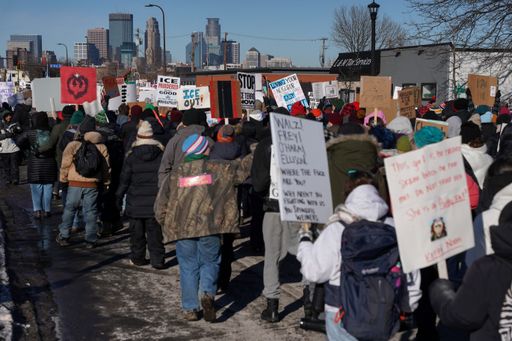
Washington, D.C., February 1, 2026 — In a move stirring national debate, the Trump administration has issued new directives instructing the Department of Homeland Security (DHS) to refrain from intervening in protests within cities governed by Democratic officials. The policy shift, announced on Sunday, emphasizes a reduced federal footprint in handling urban demonstrations while leaving law enforcement responsibilities largely to local authorities.
The directive arrives amid growing tensions between federal and city governments over handling large-scale protests that have emerged in recent years. Supporters argue that the move respects local governance, allowing city police departments to manage demonstrations without federal interference. Critics, however, warn that the decision may embolden unrest and lead to uneven enforcement of laws across the country.
“The federal government should support, not supplant, local authorities in managing public gatherings,” a senior White House official stated under the condition of anonymity. “This policy ensures resources are used wisely while respecting city-level decision-making.”
Civil liberties organizations expressed concern over the timing and implications of the directive. “Reducing federal oversight may sound appealing, but it risks leaving vulnerable communities without necessary protection during volatile protests,” said a spokesperson for a major civil rights group. “The administration must ensure that public safety and constitutional rights are not compromised.”
Recent protests in cities such as New York, Chicago, and Los Angeles have highlighted the delicate balance between citizen rights to assemble and maintaining public order. In some cases, demonstrations have escalated into clashes with local law enforcement, drawing national attention. Federal authorities, until now, have occasionally deployed DHS personnel to assist city police, particularly during high-risk events.
The Trump administration insists that the policy is designed to strengthen local responsibility rather than diminish federal authority. Officials highlighted that the DHS will remain on standby to offer logistical support, intelligence sharing, and advisory assistance, but will not directly engage in protest control unless explicitly requested by city officials.
Political analysts suggest that the directive may carry broader implications for the upcoming midterm elections, framing a narrative around federal overreach and urban governance. “This is as much a political message as it is an administrative decision,” said a Washington-based political strategist. “It signals to voters that the administration supports local control while simultaneously appealing to constituencies critical of federal intervention in traditionally liberal cities.”
The response from city mayors has been mixed. While some officials welcomed the emphasis on local governance, others expressed reservations about preparedness and safety concerns. “We support collaboration with the federal government,” said one urban mayor, “but we also must ensure we have sufficient resources to handle situations independently. This directive adds a layer of uncertainty that must be addressed proactively.”
Legal experts are also scrutinizing the directive, questioning whether it could open the federal government to liability should incidents occur during protests without federal intervention. The DHS has assured that liability concerns have been considered and that protocols will remain in place to mitigate risk.
As demonstrations and civic engagement continue to be a central feature of American democracy, the new policy underscores the evolving tension between local and federal authorities. Citizens, advocacy groups, and political leaders alike will be watching closely as cities navigate the balance between civil liberties and public safety under the latest federal guidance.
The full impact of the directive will likely unfold over the coming months, potentially influencing not only local law enforcement strategies but also the national discourse on federal involvement in civic matters.

