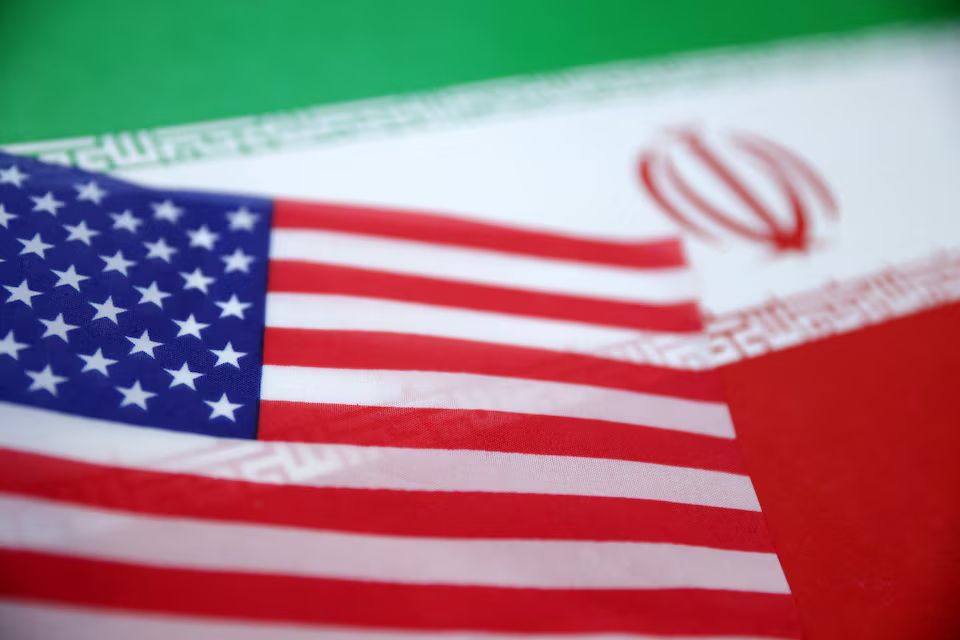
TEHRAN / WASHINGTON, January 30, 2026 — Geopolitical tensions between the United States and Iran intensified this week as Tehran issued stern warnings of retaliation against U.S. forces in the Middle East, in a development that comes amid a broader backdrop of domestic unrest and international scrutiny.
The Iranian government, facing widespread antigovernment protests and a severe crackdown characterized by mass arrests and a near‑total internet blackout, has threatened that any hostile actions by the U.S. military in the region “will not be limited” in scope, escalating concerns of a broader confrontation. Tehran’s hard‑line rhetoric comes against a backdrop of ongoing anti‑U.S. sentiment and deepening internal strife within Iran — factors that complicate diplomatic engagement and heighten regional instability.
In recent weeks, Iranian authorities have moved to suppress nationwide demonstrations triggered by a combination of economic hardship, political grievances and dissatisfaction with government policies. During this period, state security forces have reportedly detained thousands of protesters and restricted communication channels in and out of the country, contributing to limited independent reporting on the ground situation. Human rights advocates describe the crackdown as one of the most severe in recent Iranian history, marked by heavy military presence and restrictions on fundamental freedoms.
Amid these internal pressures, Tehran’s leadership has repeatedly criticized U.S. policy in the region, accusing Washington of interference and hostility. State media outlets have amplified messages framing U.S. actions as part of a broader agenda to destabilize Iran, while officials have suggested that any direct military engagement by the United States could trigger a robust and far‑reaching response.
From Washington, U.S. officials acknowledged Tehran’s warnings but underscored that American military deployments in the region are aimed at protecting U.S. personnel and interests, not provoking conflict. A senior U.S. defense official, speaking on condition of anonymity, reiterated that the United States seeks de‑escalation but remains prepared to defend itself and its allies if necessary.
The situation has drawn international attention, with diplomats from Europe and the Middle East urging restraint on both sides. The United Nations has called for dialogue and cautioned that increased military posturing could lead to unintended escalation in a region already plagued by complex conflicts and rivalries.
Economic factors also compound the geopolitical tension. The region’s oil markets reacted to the prospect of heightened conflict, with prices fluctuating as traders assessed the potential impact of instability on global energy supplies. Analysts noted that even the perception of conflict can influence market behavior, particularly when major oil‑producing nations are involved.
Within Iran, the government’s dual focus on internal security and external threats reflects an attempt to consolidate power and assert regional influence amid domestic challenges. Critics argue that Tehran’s hard‑line stance serves to divert public attention from internal grievances while reinforcing the narrative of external hostility.
In Washington, lawmakers have debated U.S. strategy toward Iran, weighing the risks of military confrontation against diplomatic channels and sanctions. Some members of Congress have called for increased diplomatic engagement and negotiations mediated by international partners, while others advocate for a firmer posture in response to perceived Iranian provocations.
Despite the rhetoric on both sides, diplomatic officials from intermediary nations have held informal discussions with representatives from Washington and Tehran, exploring pathways that could reduce the risk of confrontation. These efforts, though tentative, reflect a shared interest among many international actors in preventing a broader regional conflict.
As January draws to a close, the U.S.–Iran dynamic remains fraught with uncertainty. Tehran’s warnings and Washington’s strategic posturing underscore the fragile balance between deterrence and escalation — a balance that global policymakers are watching closely amid a period of heightened geopolitical volatility.

