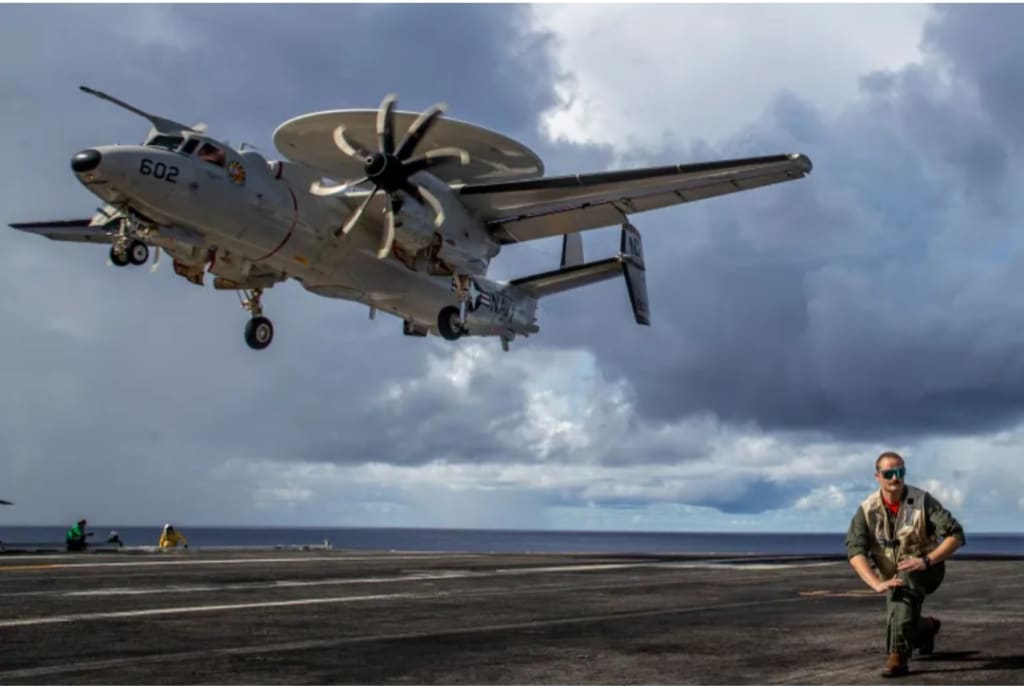
WASHINGTON, Jan. 26, 2026 — The United States is repositioning naval and air force assets to strategic locations in the Middle East in response to rising geopolitical tensions, a move officials describe as precautionary amid escalating regional instability.
Pentagon officials confirmed that multiple Navy vessels, including aircraft carriers and guided-missile destroyers, along with Air Force fighter and surveillance aircraft, are being deployed closer to hotspots across the Persian Gulf and surrounding areas. The military said the deployment is intended to ensure rapid response capability and maintain deterrence in the face of potential provocations.
“This is a strategic adjustment designed to maintain stability and protect U.S. interests,” a senior defense official told reporters. “We are monitoring the situation closely and working with allies to prevent any escalation.”
The move comes amid renewed tensions between Iran, regional proxies, and U.S. allies. Recent incidents in international waters, including attacks on commercial shipping and military exercises near contested zones, have raised concerns about security in critical shipping lanes and energy supply routes.
President Donald Trump emphasized that the deployment is defensive in nature. Speaking from the White House, he said, “We are not looking for conflict, but we will act decisively to protect American citizens, forces, and interests abroad.” The president also noted that the administration is consulting with Congress and allied nations to ensure coordinated responses.
U.S. allies in the Middle East welcomed the redeployment as a stabilizing measure. Officials in Saudi Arabia and the United Arab Emirates expressed support for enhanced security measures, highlighting the importance of protecting commercial traffic and critical infrastructure. NATO representatives, though less directly involved in the region, indicated ongoing cooperation and intelligence sharing with U.S. forces.
Analysts say the redeployment signals Washington’s intent to maintain influence in the region without engaging in immediate military confrontation. “It’s a show of force designed to deter potential actors, not to escalate a conflict,” said an international security expert at the Center for Strategic Studies.
The redeployment has also stirred debate within U.S. political circles. Congressional members raised questions about cost, duration, and the potential risks associated with extended military presence abroad. Some lawmakers emphasized the importance of maintaining congressional oversight, while others called for increased diplomatic efforts to address underlying tensions.
Meanwhile, regional powers are assessing U.S. actions cautiously. Iran’s state media described the deployment as “provocative,” while emphasizing that Tehran remains committed to its own security policies. Other nations in the Gulf Cooperation Council are reportedly increasing their own surveillance and defense readiness.
U.S. defense officials stressed that the operations are routine in nature, involving pre-positioning of forces and readiness drills designed to improve coordination among military branches. Training exercises are planned in tandem with allied forces to simulate rapid response scenarios and maritime security operations.
Experts also noted the broader context of energy security. The Persian Gulf region remains critical for global oil supply, and any disruption could have significant economic implications worldwide. Analysts suggest that maintaining a visible U.S. military presence could deter interference with shipping lanes and reassure international markets.
Despite reassurances, human rights and peace advocacy groups expressed concerns about escalation risks, urging diplomatic solutions and emphasizing potential consequences for civilians in the region.
As U.S. military assets reposition, the administration continues to highlight a dual-track strategy: show strength while actively engaging in diplomatic efforts to defuse tensions. Officials said discussions with regional allies, international organizations, and U.S. partners in Europe and Asia are ongoing to ensure stability and prevent miscalculations.
The coming weeks are expected to be closely monitored by both global media and defense analysts, with attention focused on how regional actors respond and whether further U.S. military adjustments are needed.

