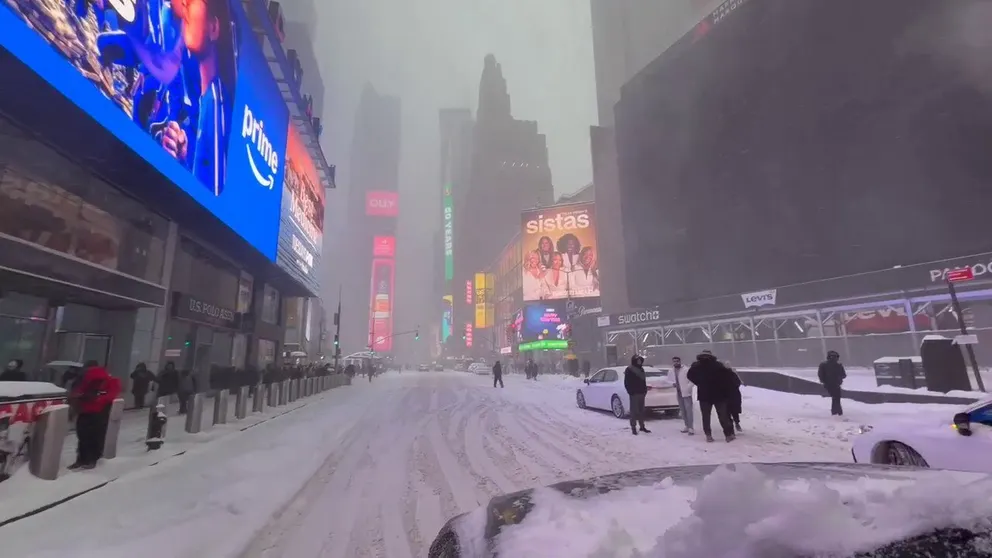
WASHINGTON, Jan. 26, 2026 — A sweeping winter storm has hammered much of the United States, forcing the cancellation of thousands of flights, triggering widespread power outages, shutting schools and stretching emergency services to their limits as frigid Arctic air grips the nation.
The storm, which began late last week, continued to batter the country through Monday, covering states from the southern plains to the Northeast with heavy snow, freezing rain and dangerous conditions. Meteorologists say this system is among the most powerful to hit the U.S. so far this winter, leaving millions of residents contending with travel chaos and hazardous weather.
Air travel was particularly hard hit. By Monday morning, airlines had canceled more than 3,600 flights and delayed hundreds more as airports struggled to manage operations amid snow and ice. Just days earlier, cancellations had soared to over 11,000, making it one of the worst weekends for U.S. travel since the early days of the COVID‑19 pandemic. Major hubs including Dallas‑Fort Worth, New York’s JFK and LaGuardia, and Atlanta’s Hartsfield‑Jackson saw significant disruptions, stranding passengers and pushing airline recovery plans into overtime.
Federal aviation and weather officials warned that travel chaos could persist as roads remained treacherous and crews worked to clear runways. “This is not a typical winter storm,” said one National Weather Service meteorologist. “We’re seeing record snowfall in some areas and ice accumulation that is keeping power lines down and airports operating at minimal capacity.”
Across many states, schools remain closed or have shifted to remote learning as road conditions deteriorate. In parts of New York, Boston and Philadelphia, snowfall totals exceeded a foot, and Interstate highways were reduced to icy stretches where only emergency vehicles were advised to travel.
Power grids also came under strain. More than 800,000 customers across the Midwest and Southeast were without electricity amid the deep freeze, raising the risk of exposure and complicating recovery efforts for families and communities. Utility companies scrambled crews to restore service, but officials cautioned that repairs could take days in rural and hard‑to‑reach areas.
Emergency responders have been inundated with calls, from road accidents to reports of hypothermia, as the bitter cold settled in behind the storm. At least a dozen weather‑related deaths have been reported, including motor vehicle crashes on slick road surfaces and incidents linked to exposure to frigid conditions.
State governments in more than a dozen regions declared weather emergencies, mobilizing National Guard units and coordination centers to support local response teams and extend assistance where needed. Governors urged residents to delay non‑essential travel and to seek shelter from the extreme temperatures.
The storm’s impact has also rippled into commerce. Grocery supply chains, already strained by seasonal demand, reported delayed deliveries, and some retailers temporarily closed stores in the hardest hit regions. Trucking companies warned of delivery backlogs that could extend into next week.
Despite the chaos, some airlines and transportation officials said they are taking steps to help travelers, offering waivers on change fees and encouraging passengers to use online tools to track flight status. Still, frustration remains high among travelers who say they were given little notice before cancellations.
For many communities, the storm’s effects go beyond travel and weather. Hospitals in snow‑heavy regions are treating more patients for cold‑related illnesses, and local officials are opening warming centers to support unhoused populations and residents without power.
National weather authorities predict that the worst of the precipitation has passed in some areas, but bitter cold and icy conditions will linger, especially in the Northeast and Midwest. Drivers are warned that refreezing could turn roads even more dangerous later in the week.
As the nation digs out, the storm serves as a reminder of the disruptive power of winter weather — and the challenges it poses when transportation networks, utilities, and emergency systems are stretched simultaneously by ice, snow, and subzero temperatures.

