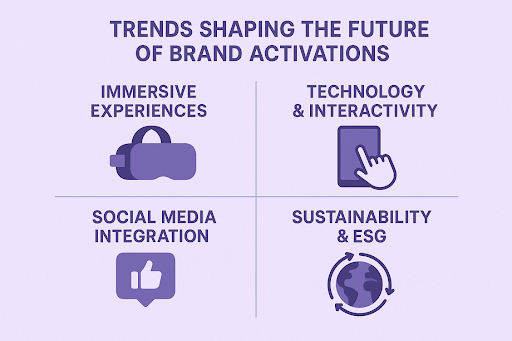
As we look toward 2026, the experiential marketing landscape continues to evolve at a rapid pace. Brands that stay ahead of emerging trends will find new opportunities to connect with consumers in meaningful ways, while those that cling to outdated approaches risk falling behind. Understanding what’s next allows marketers to plan strategically, allocate budgets wisely, and create activations that resonate with increasingly sophisticated audiences.
Sustainability and Technology Integration
Sustainability is no longer optional in brand activations. Consumers, particularly younger demographics, expect brands to demonstrate genuine environmental responsibility. In 2026, successful activations will incorporate eco-friendly materials, minimize waste, and communicate sustainability efforts transparently. This means battery-powered trucks instead of gas generators, compostable serving materials instead of single-use plastics, and donation programs for leftover materials. Brands that integrate sustainability authentically into their experiential strategy will earn consumer trust and positive sentiment that extends far beyond the activation itself.
Technology integration continues to enhance physical experiences without replacing the human element. Augmented reality features, interactive digital displays, and app-based engagement tools create layers of interaction that deepen the brand experience. However, the most successful activations in 2026 will use technology to enhance rather than dominate. A QR code that unlocks exclusive content or an AR filter that lets consumers visualize products in their own space adds value when it serves the experience, not when it becomes the experience.
Localization and Personalization
Hyper-localization is becoming increasingly important in multi-city tours. Rather than deploying identical activations in every market, brands are customizing elements to reflect local culture, preferences, and trends. This might mean adjusting menu items for regional tastes, partnering with local artists or influencers, or timing activations around city-specific events. Consumers appreciate when brands demonstrate understanding of and respect for their community.
Data collection and personalization capabilities are advancing rapidly. In 2026, experiential activations will increasingly leverage first-party data to create personalized experiences. Privacy-conscious data collection that provides clear value exchange will allow brands to deliver increasingly relevant experiences while building rich customer profiles for ongoing engagement.
Entertainment Value and Extended Campaigns
The line between entertainment and marketing continues to blur. Consumers expect brand activations to provide genuine entertainment value, not just product promotion. Successful campaigns in 2026 will feature elements like live performances, interactive games with meaningful prizes, or celebrity appearances that create buzz and draw crowds. When brands invest in entertainment that stands on its own merits, consumers engage willingly and enthusiastically, associating positive emotions with the brand itself.
Extended campaign lifecycles are replacing one-off events. Rather than a single activation in a single location, brands are planning ongoing series that build momentum over time. Multi-month tours that revisit cities, seasonal campaigns that align with product launches throughout the year, and recurring events that become anticipated community traditions create sustained engagement and deeper brand relationships.
Wellness Focus and Advanced Measurement
Wellness and community focus reflect broader cultural priorities. Activations that promote physical activity, mental health, social connection, or community building align with consumer values in 2026. Fitness-focused tours, meditation moments integrated into activations, or campaigns that bring people together around shared interests create positive brand associations while contributing meaningfully to consumer wellbeing.
Measurement and attribution become more sophisticated as experiential marketing matures. Brands in 2026 demand clear ROI proof, and experiential marketing companies are responding with advanced analytics, real-time reporting, and sophisticated attribution models that connect experiential engagement to downstream conversions.
The future of brand activations is dynamic, consumer-centric, and increasingly strategic. Brands that embrace sustainability, leverage technology thoughtfully, personalize experiences, provide genuine entertainment, and measure results rigorously will thrive in 2026 and beyond. The experiential marketing companies that help brands navigate these trends will become invaluable partners in creating campaigns that build lasting relationships and drive measurable business growth.
Stay in touch to get more updates & news on Magazine!

